
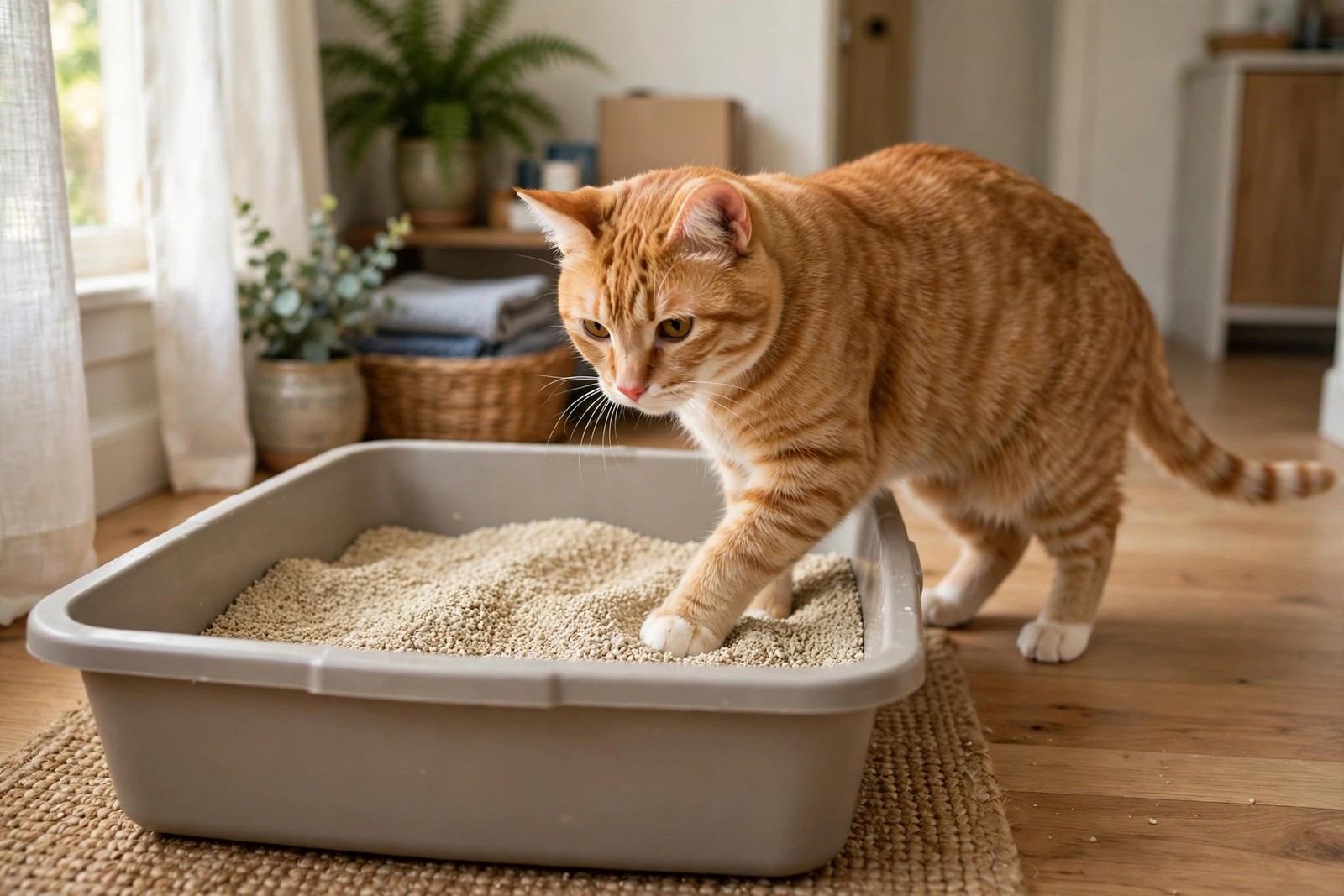
Most cats prefer unscented, fine-grained clumping litter: it feels soft and sand-like underfoot, it is easy to dig in, and it does not overwhelm a sense of smell many times stronger than ours. If your cat is using the box happily, the best litter is honestly the one they already like — change it only for a good reason, and change it gradually.
The Main Types, Honestly Compared
Clumping clay litter is the popular default because it forms solid clumps that are easy to scoop, keeping the rest of the box cleaner for longer. Non-clumping clay is cheaper but needs full changes more often, as urine soaks into the base.
Plant-based litters made from corn, walnut, paper, or wood — often as pellets — appeal to owners wanting lighter weight or flushable and compostable options (always check local rules before flushing anything). Pellet textures, though, are a deal-breaker for some cats raised on fine litter. Silica crystal litter absorbs urine and controls odour well with less frequent full changes, but its texture and sound underfoot divide cats, and it is not a choice for kittens who might nibble litter — for young kittens, vets often advise plain non-clumping litter until they are past the tasting-everything stage.
Scented versions of any type are made for humans. Many cats tolerate them; some quietly do not, and you will learn that from puddles beside a pristine box.
Letting Your Cat Vote
If you want to test alternatives, run a fair trial: keep the familiar box exactly as it is and add a second box with the new litter nearby. Over a week or two, the usage pattern tells you the truth more reliably than any review. In multi-cat homes, expect split opinions — offering two litter types across your boxes is a perfectly sensible permanent arrangement.
When switching in the same box, mix gradually: mostly old litter with a little new, then half and half, then mostly new over about a week. A sudden overnight swap is a common trigger for refusal, even of a litter the cat would otherwise accept.
Troubleshooting and Safety Notes
Litter refusal, straining, crying in the box, or frequent small urinations are not litter reviews — they can signal urinary or digestive problems, and difficulty urinating needs a veterinarian the same day. Kittens, senior cats with arthritic paws, and cats recovering from paw or abdominal surgery may do better with softer, lower-dust options and low-sided boxes; your vet can advise for your cat's situation.
Keep litter dry, store it sealed away from curious pets, and wash your hands after handling used litter. If you are pregnant, hand litter duty to someone else where possible and ask your doctor about hygiene precautions.
Learning From Other Cat People
There is no single 'best' litter in the abstract — there is the best match for your cat, your home, and your routine, and other owners' lived experience is genuinely useful for narrowing the field. KinsLe's Circle of Love is the community network that every account joins, with Pet Lovers able to join free, and it is the same network that powers Lost Pet Alerts to nearby members. It is a natural place to hear what is working in real homes like yours.
Start with your cat's preference, test fairly, and let results decide. Circle of Love can surface, on KinsLe, how those pellet, crystal, and fine clay options actually played out in multi-cat homes before you commit to a switch.