
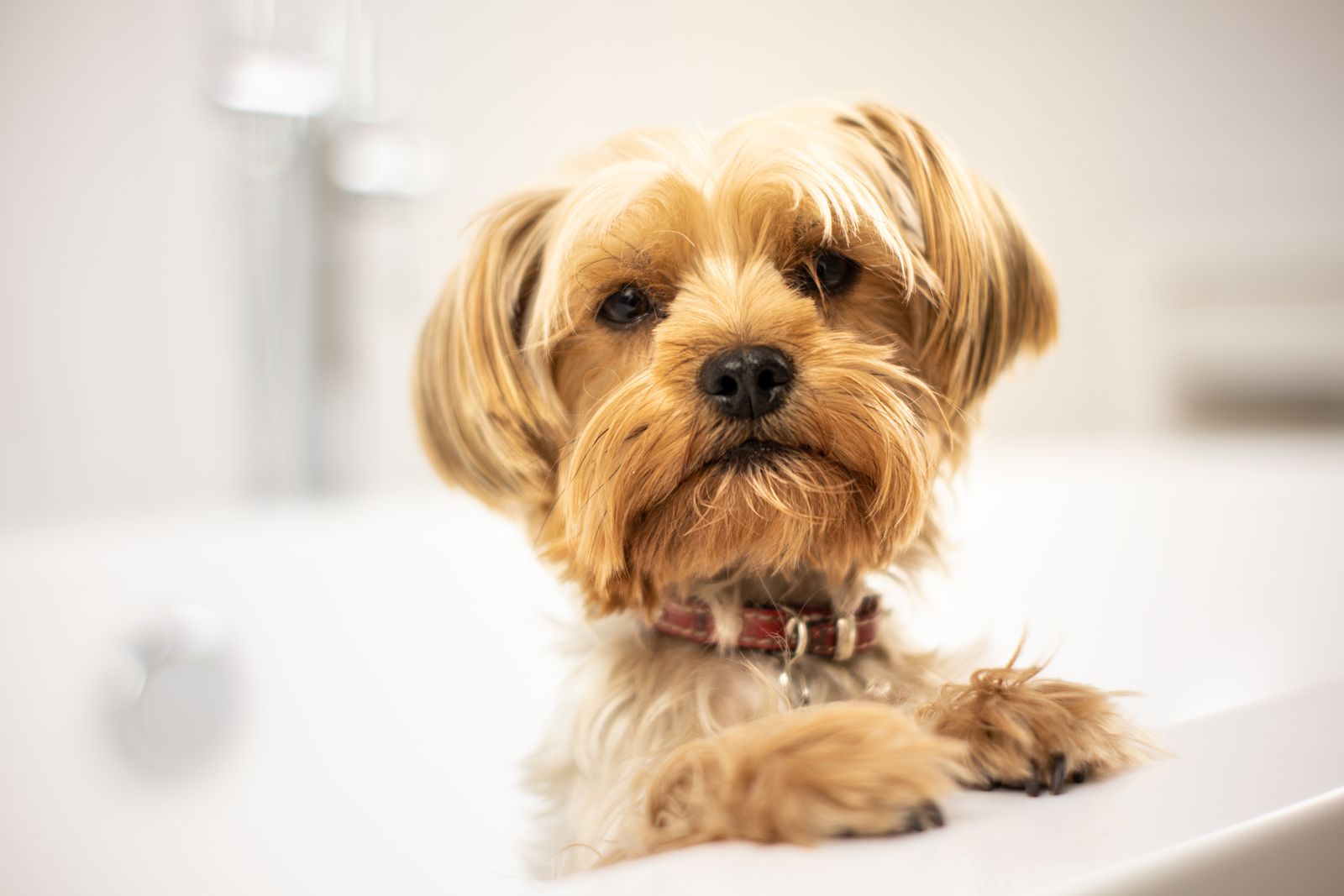
Most puppies can enjoy their first bath once they have settled into your home for a few days and are healthy and eating well — often around eight to ten weeks old. There is no magic date; what matters is making it short, warm, and positive, with lukewarm water and a shampoo made for puppies. Done gently, bath time becomes an easy lifelong routine instead of a wrestling match.
Before the Water: Set Up for Success
First baths go better when a puppy already accepts being handled. Spend a few days touching paws, ears, and tail with treats before bath day ever arrives. Gather everything in advance — puppy shampoo (never human shampoo, which can irritate their skin), towels, a non-slip mat, a cup for rinsing, and treats — because you cannot leave a wet puppy unattended to fetch supplies. Brush out tangles first; mats tighten and hurt when wet. A little play beforehand burns off energy so your puppy is calmer in the tub.
The Bath Itself, Step by Step
Place your puppy in a tub or sink with a non-slip surface underfoot, since slipping is what frightens most first-timers. Wet them gradually with lukewarm water — test it on your wrist as you would for a baby — starting from the neck down. Keep water and soap out of the ears and eyes; a damp cloth handles the face. Massage in a small amount of puppy shampoo, rinse far more thoroughly than you think necessary, since leftover residue causes itching, and finish with praise and a treat. Keep the whole experience to about five minutes at first.
Drying, Warmth, and Frequency
Dry your puppy thoroughly with a towel right away — small puppies chill quickly, especially short-coated and toy breeds. A low, cool blow-dryer held at a distance works for puppies who tolerate the noise, but never force it; a frightened puppy can be towel-dried just fine. As for frequency, most puppies only need a bath every few weeks or when genuinely dirty. Over-bathing strips natural oils and dries the skin, so muddy paws alone just need a rinse or a wipe.
Make It a Positive Association
Treats during the bath, a favorite toy afterward, and a calm voice throughout teach your puppy that the tub predicts good things. If your puppy panics, end early on a calm moment rather than pushing through — a shortened, happy bath beats a completed, traumatic one. Many owners do the first few baths in a sink or basin, where a small puppy feels more secure than in a big echoing tub.
Turn Baths Into a Calm Routine
Bathing, nail checks, ear looks, and brushing all stick better when they are scheduled rather than squeezed in. KinsLe's Care Teams let you assign grooming duties like baths and nail checks to specific household members, with timestamped completions so everyone can see what has been done and what is due next. That way bath day never sneaks up or gets doubled. Care Teams can turn that plan into named assignments — one person bathes, another checks nails and ears — with each finished job marked complete on KinsLe.