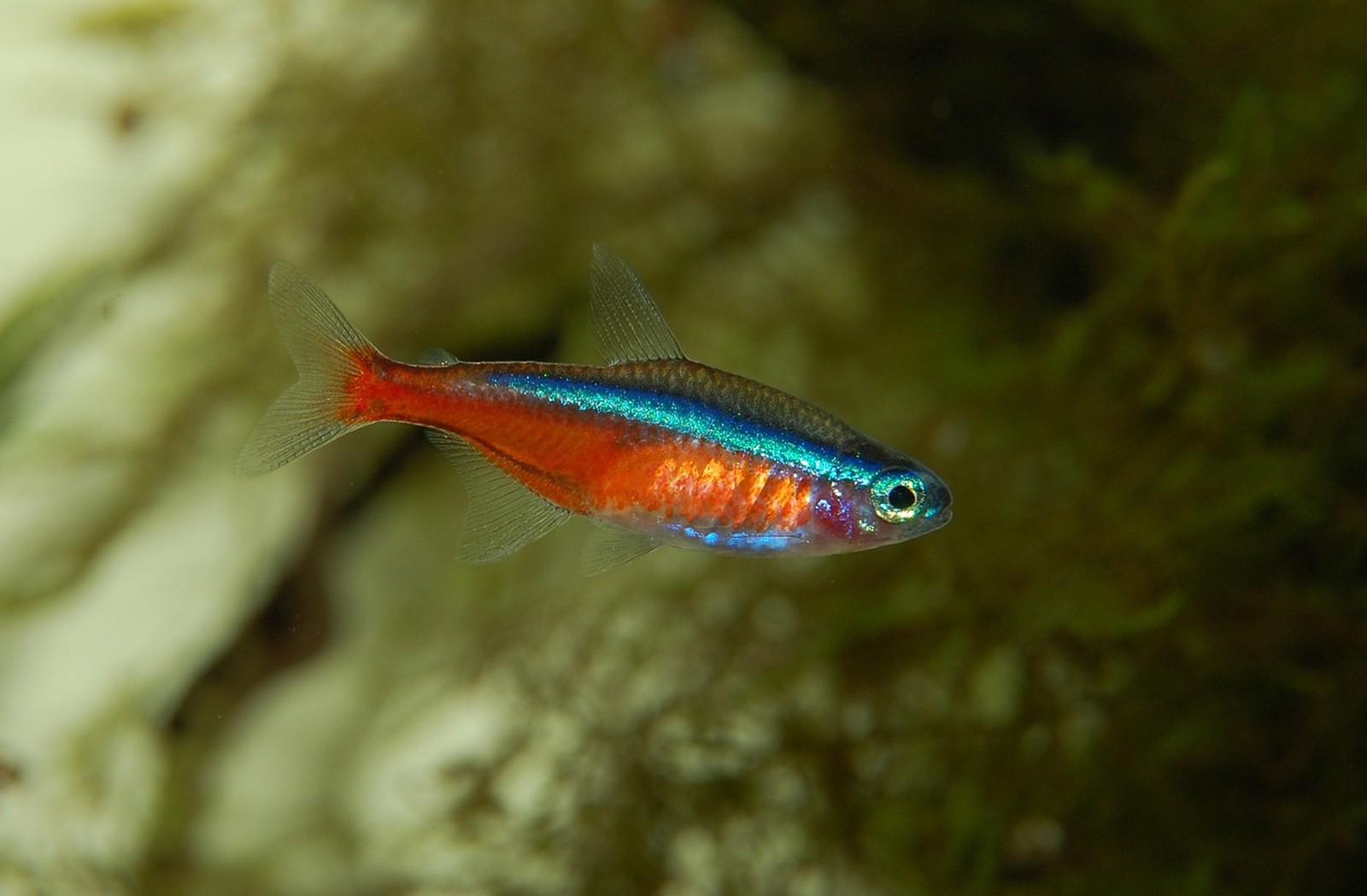
The first time many keepers switch on a room light at night and see ghost-pale neon tetras drifting near the plants, it looks alarming. In fact the nightly fade is a normal, built-in response for this species. Neon tetras wear their famous red and blue stripes in pigment cells in the skin, and those cells respond to light: in darkness the pigment draws inward, the reflective stripe dulls and the red band looks washed out or almost grey. The fish are resting, their metabolism slowed, coloured down in a way that also makes them less visible to predators in dim wild waters at night.
What Normal Night Fading Looks Like
Expect the fade to follow the light, not the clock. Tetras pale after the tank lights go off and stay pale while the tank is dark, whether that is midnight or early morning before the timer switches on. Within minutes of proper light returning — typically before the group has fully woken and begun shoaling — the blue stripe brightens and the red deepens back to full strength. Individual fish fade at slightly different rates, and newly added tetras may look paler for their first nights while they settle.
Use the pattern as your test: pale at night and richly coloured by the time the tank has been lit for a short while means the system is working exactly as it should. Nothing needs fixing, no treatment is needed, and the kindest response is a consistent light schedule with a properly dark night, because tetras rest properly only when the tank genuinely darkens. Avoid snapping bright lights on over a dark tank late at night for a look — gradual room light first is far less startling for resting fish.
When Paleness Means Something Else
Lasting paleness during lit hours is a different signal and deserves investigation. Check the pattern across the group and the day:
- Whole group pale well after lights-on, especially with clamped fins, hiding, rapid gill movement or skipped feeds — test ammonia, nitrite, nitrate, pH and temperature first, because water problems are a frequent cause and a prompt partial water change with matched, conditioned water is the standard first response.
- One fish pale and separating from the shoal, losing weight or developing white patches or a fading patch along the back — isolate the fish if you can and seek advice from an aquatic veterinarian or experienced aquatics retailer promptly, because individual persistent fading can accompany infectious disease, and early separation protects the group.
- Paleness after a change — new tankmates, moved decor, a filter change, a house move — often reflects stress and usually resolves over a few days once conditions stabilise, provided feeding and behaviour stay normal.
Sudden bright-light exposure, bullying from larger tankmates and water that has drifted from the soft, slightly acidic conditions tetras favour can all wash colour out during the day, so review recent changes before assuming disease. Never add medication on colour alone; colour is a prompt to test and observe, not a diagnosis.
Habits That Keep the Signal Readable
Keep lights on a timer so day length and darkness are predictable, feed after the fish are fully coloured and active, and do your colour checks at the same point each morning. Note anything unusual — how long colour took to return, who stayed pale, what the test results showed — while it is fresh. Writing those morning observations in KinsLe's Family Sharing gives everyone who feeds or checks the tank the same baseline, so a genuinely pale morning stands out against the normal nightly fade instead of blending into guesswork.