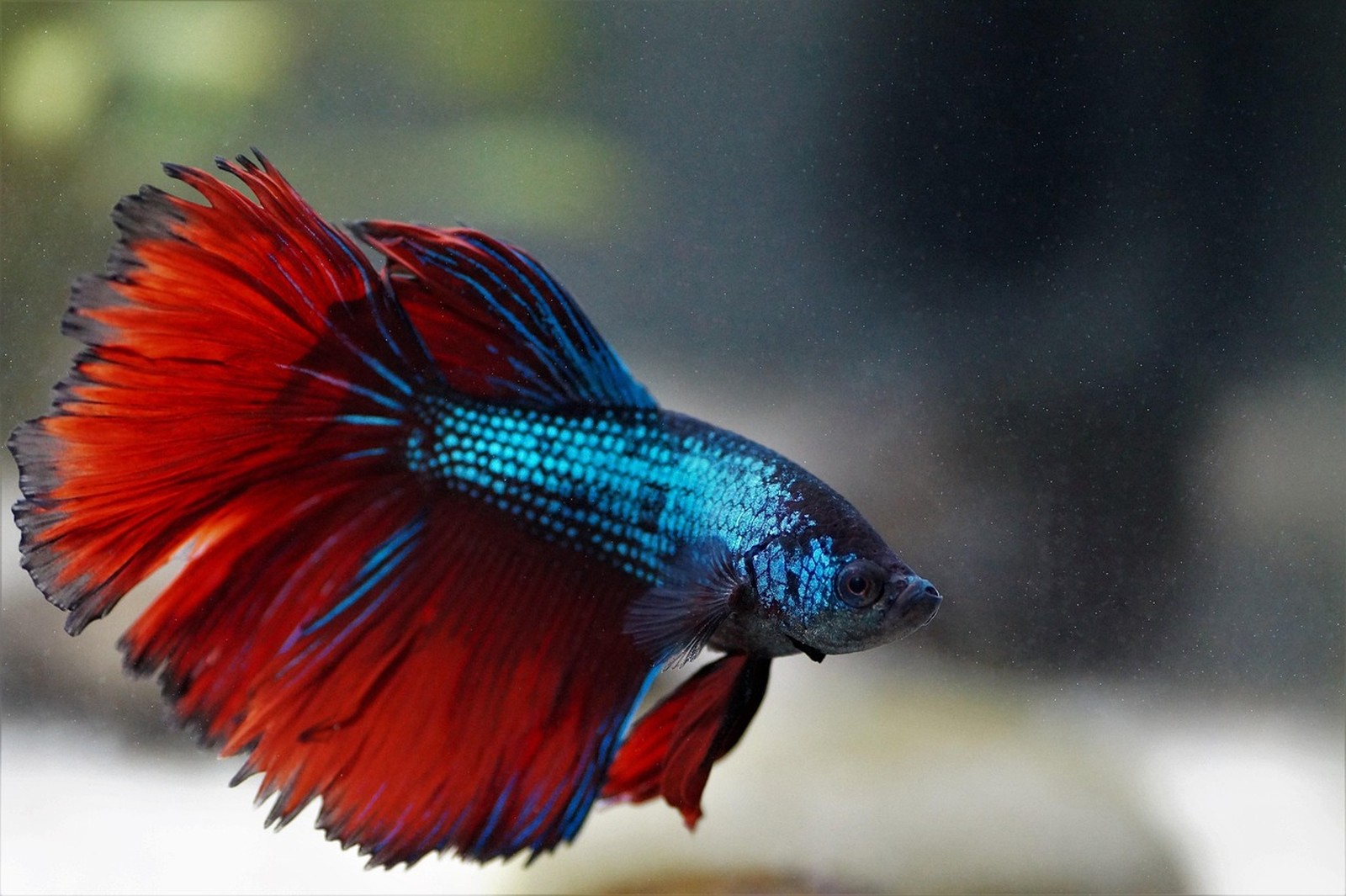
A betta's fins are thin, delicate tissue with almost no protection, so several quite different problems all show up as the same ragged edge. The pattern of the damage is your best clue, and it is worth looking closely under a good light before changing anything.
Fin Rot: Shrunken, Darkened Edges
Fin rot is a bacterial or fungal breakdown of fin tissue that takes hold most often when water quality slips. The edges look frayed, milky, or darkened, the fin gets steadily shorter over days, and the fish may become quiet and lose interest in food. Test ammonia, nitrite, and nitrate first: ammonia or nitrite above zero, or a tank cleaned so rarely that waste builds up, is the usual background. Clean, warm, stable water with regular partial changes is the foundation of recovery, and a betta whose fins keep receding, or who stops eating, should be seen by a veterinarian promptly rather than treated with guesswork.
Biting, Nipping, and Tearing
Some long-finned males bite their own tails, leaving neat, U-shaped bites, often because the heavy finnage makes swimming hard work or because the fish is bored or stressed by bright light and bare surroundings. Tankmates are another cause: quick fish may nip flowing fins whenever the betta rests. Clean tears with no darkening usually point to the decor instead — run a fingertip over plastic plant edges, rough rock, and ornament openings, check that the filter intake is guarded, and swap anything sharp for smooth, soft planting.
Working Through It in Order
Test the water before anything else and correct it with partial changes if readings are off. Then remove or soften sharp decor, watch tankmates at feeding time when nipping peaks, and add cover and rest spots near the surface for a self-biter so swimming feels less exposed. Photograph the fins against the same background every few days; healthy regrowth often shows first as a clear, transparent edge, while continued shortening means the cause is still present and veterinary advice is the next step, especially if you see clamped fins, white patches, loss of colour, or laboured breathing.
Daily checks only help if the readings and photographs build into a record someone reviews. KinsLe's Care Teams lets the people sharing betta duty record each water test and fin check as a completed, timestamped task, turning a vague worry into a clear trend you can show a vet.