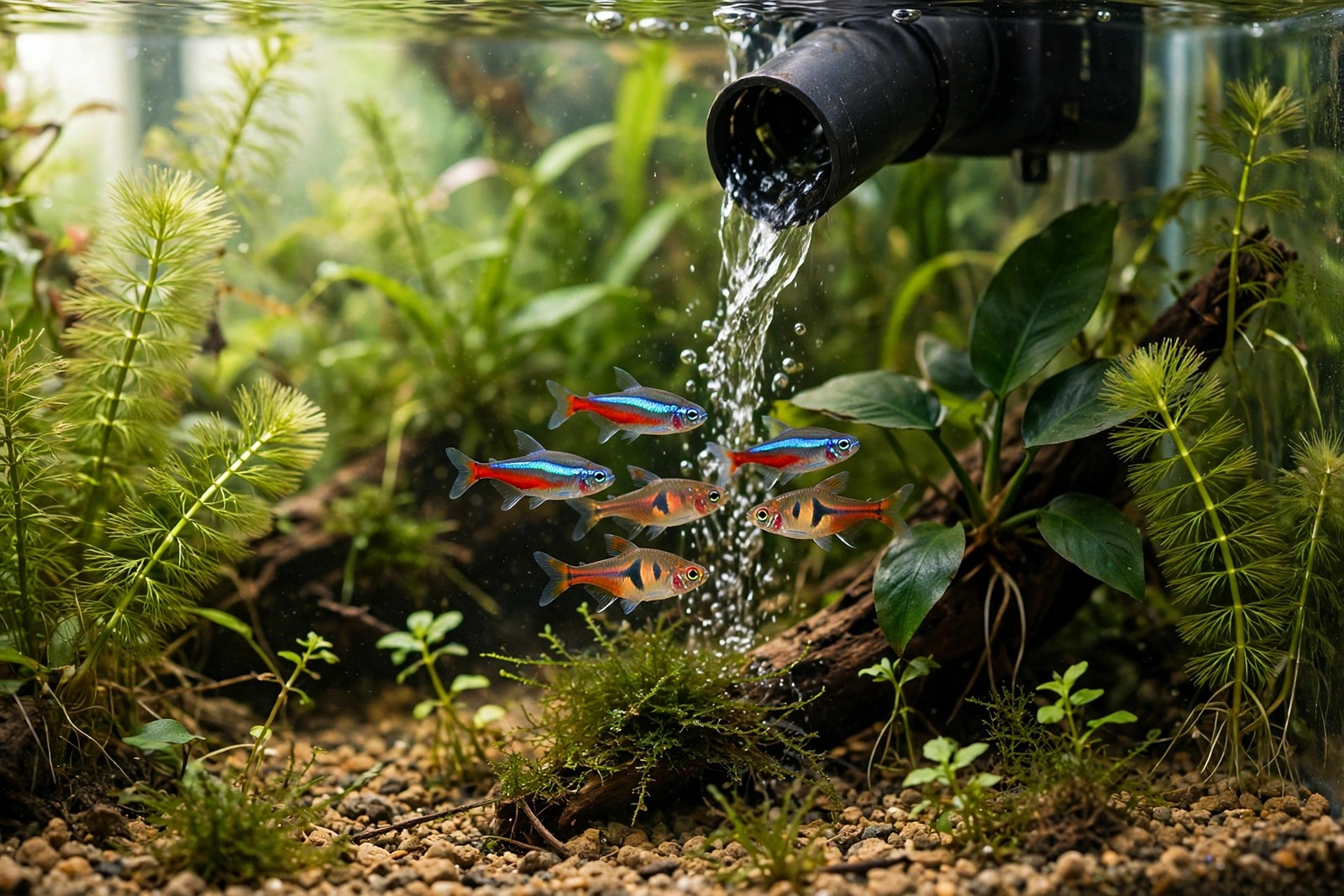
The patch of water directly in front of a filter outlet is unlike anywhere else in the aquarium, and fish know it. Water returns there freshly filtered and fully aerated from its passage through the system, carrying the richest oxygen mix in the tank, and it moves — a steady current in an otherwise still box. A cluster of fish at the outlet is therefore often a sign of fish making use of a favoured spot. It becomes a warning only when the gathering is constant, involves the whole stock and comes with visible effort to breathe.
The Ordinary Reasons Fish Hold at the Outlet
- Oxygen. After water passes through the filter and splashes or streams back in, it carries more dissolved oxygen than the quieter corners. Fish recovering from a chase, a feed or a warm afternoon often park in that flow briefly to breathe easy water, then drift away.
- Current to swim against. Riverine species in particular are wired to face into flow and hold station — the behaviour aquarists call playing in the current. Tetras, danios, many loaches and other stream fish will ride the outflow repeatedly, drop back and ride it again, which is exercise and enrichment rather than distress.
- Food delivery. Anything drifting — flake fragments, micro-pellets, thawed food — rides the circulation and passes the outlet zone, so experienced fish learn that hovering there at feeding time pays. Expect the crowd to peak when you feed and dissolve within minutes afterwards.
- Shelter and novelty. New arrivals often sit near equipment where cover, shadow and flow combine, until confidence spreads them through the tank over the first days.
When the Same Picture Means Low Oxygen or Bad Water
Context decides. Warning signs are the whole group crowding the outflow for hours rather than minutes, fish breaking the surface to gulp air, gill covers pumping visibly fast or flared, and species that normally live near the bottom abandoning it for the top layer. Warm water holds less oxygen, so this pattern often appears during heatwaves, after a filter has been off, in an overstocked tank, or where ammonia from overfeeding or a stalled filter is irritating gills and driving fish to the cleanest water available.
Respond by testing, not guessing: check ammonia, nitrite, nitrate and temperature straight away. If ammonia or nitrite reads above zero, or fish are gasping, increase aeration immediately with surface movement or an air stone, carry out a prompt partial water change with conditioned, temperature-matched water, and check that the filter is actually running at full flow — a clogged intake or exhausted media can quietly halve circulation while the motor still hums. Reduce feeding until readings settle, since uneaten food consumes oxygen as it decays.
Keeping the Outlet a Playground, Not a Refuge
Arrange the tank so the outlet is one good spot among several: plants and decor in different zones, feeding spread across the surface rather than dropped in one place, and filtration and aeration sized generously for the stocking so oxygen stays even throughout. Watch who gathers and for how long across a few days — brief visits by different fish after feeds are the healthy pattern, while the same fish camped there all day deserve a closer look at their gills, fins and appetite as well as at the water. If breathing stays laboured despite clean test results and strong aeration, or individual fish show clamped fins, spots or weight loss, consult an aquatic veterinarian, because gill parasites and disease can drive outlet-seeking in a single fish even when the water is sound.
Noting each period of outlet crowding, who was there and what the tests showed, in KinsLe's Care Teams lets the household compare days objectively — a playful ten minutes after feeding reads very differently in the record from a silent all-day crowd, and the log shows which pattern your tank is actually producing.