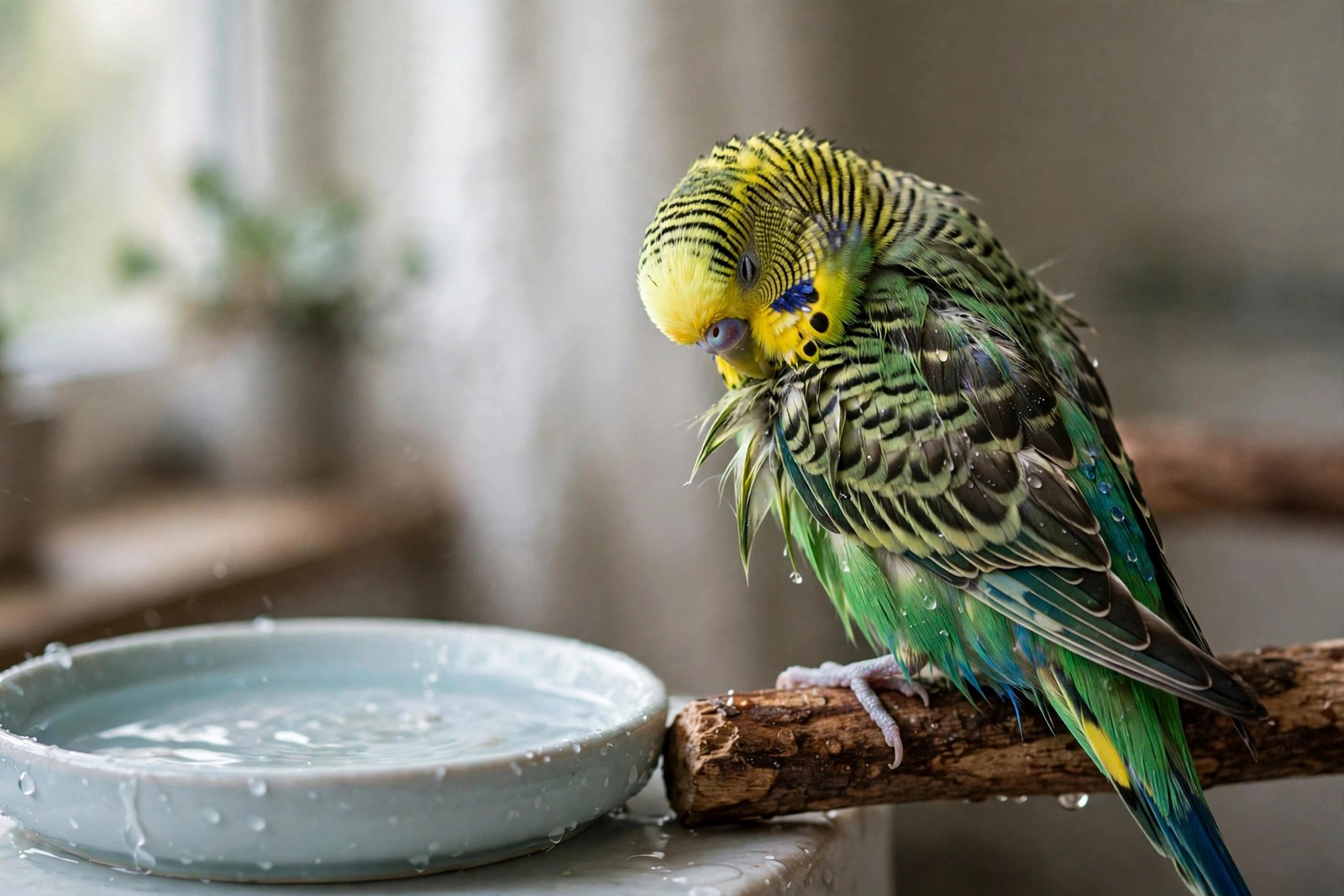
A bird emerging from a bath looks like a drowned mop, and the long, focused preening session that follows is how it becomes sleek again. Far from vanity, that session is scheduled maintenance, and the bath is what makes it possible: water softens and loosens everything the beak is about to work on.
Rezipping the Feathers
Each flight and body feather is made of fine strands called barbs, held together by microscopic hooks that work like a zip. Daily flying, climbing, and squeezing through cage bars unzips sections, and trapped dirt and the waxy sheaths of new feathers keep them from closing again. Bathing washes the debris out, and as the bird draws each feather through its beak it pulls the barbs back into alignment, which is why preening is so systematic — feather by feather, wing, tail, then chest, with shakes in between to throw off water and settle everything into place.
Spreading Preen Oil and Restoring Warmth
Many birds have a preen gland at the base of the tail, and during the post-bath session the bird presses its beak there and works the oil through its plumage. That coating helps feathers resist soaking and keeps them supple, while the fluffing and realigning restores the trapped-air layer that insulates the body. Wet feathers insulate badly, which is why birds bathe most happily earlier in the day, in a warm, draft-free room, and prefer to be fully dry, sleek, and warm again before the house cools at night.
Normal Preening Versus a Problem
Healthy post-bath preening looks unhurried: the bird is relaxed, works all over, sings or mutters, and finishes with a nap. Preening deserves attention when it turns damaging — feathers being chewed or snapped, feathers pulled out, bald or sore patches appearing, or a bird that preens frantically for much of the day instead of eating, playing, and resting. Those patterns can reflect skin irritation, parasites, dry air, boredom, or illness, and a bird showing them should be seen by a veterinarian rather than simply bathed more often. Keep baths themselves simple: plain lukewarm water in a shallow dish or a gentle mist, never soap or sprays, and let the bird choose to get wet rather than soaking an unwilling one.
A bird that bathes on a predictable weekly rhythm preens, dries, and settles far more calmly than one surprised by the bath dish. KinsLe's Care Teams lets you set bath day as a shared, recurring duty for your bird, so everyone in the home knows when it last happened and when it is due again.