
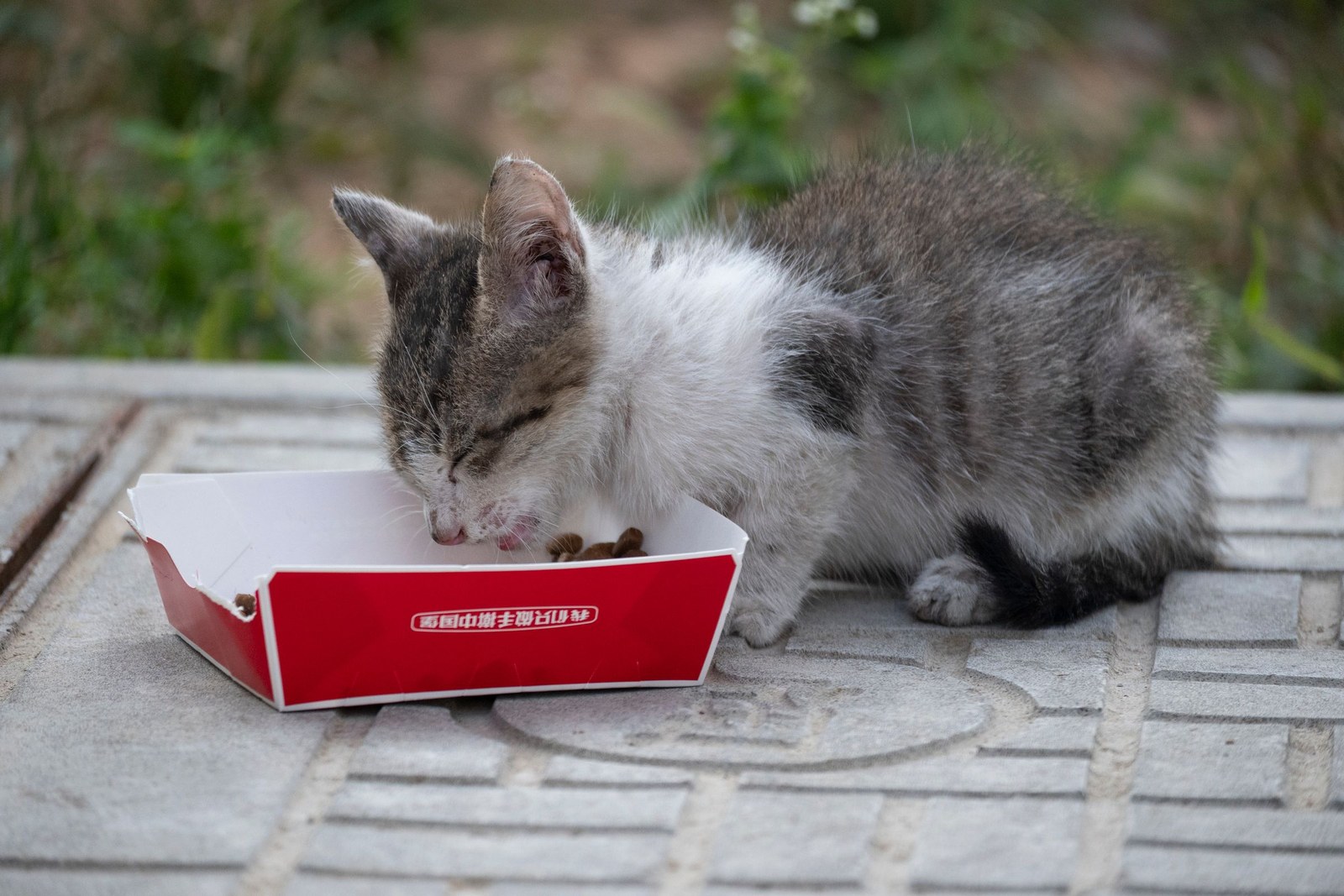
Most cats who beg right after eating are not still hungry — they're repeating a habit that has worked before, filling a boring moment, or treating mealtime as the highlight of the day. If the portion is right for your cat's size and body condition, the answer is usually routine and enrichment, not an extra scoop.
First, Rule Out 'The Portion Really Is Too Small'
Before assuming it's theatre, check the basics. Is your cat actually getting the intended daily amount, or has the scoop crept smaller, the food changed to a lower-calorie formula, or another pet been stealing from the bowl? Weigh your cat and do the rib check: ribs should be feelable under a thin fat layer. A cat who is losing weight, feels bony, or seems frantically hungry all day needs a veterinary visit, not behaviour advice — increased appetite can accompany genuine medical conditions, and sudden changes in appetite, thirst, or weight always deserve a vet's attention.
How Begging Gets Trained — By Us
Cats are superb operant learners. If meowing, ankle-weaving, or sitting by the bowl has ever produced food — even once in a while, even a tiny bit — the behaviour is rewarded on the most reinforcing schedule there is: unpredictable success. One household member who 'just gives her a little something' can maintain begging that everyone else is trying to extinguish.
Begging also blooms at predictable trigger moments: when you enter the kitchen, when a cupboard opens, when the dog gets fed, when you eat. The cat is not necessarily hungry at those moments; food has simply become associated with them. Note your cat's triggers — they'll tell you where to change the routine.
What to Offer Instead of Food
- A play session. Ten minutes of wand-toy hunting after meals gives the energy somewhere to go, and many cats then groom and nap — the natural sequence after eating.
- A puzzle feeder or a few kibbles scattered to 'hunt' — taken from the measured daily portion, not in addition to it.
- A grooming session, a window perch reset, or a cardboard box rotation. Boredom eating is real in indoor cats whose day contains few events.
- Fresh water or a water fountain check. Some 'food' requests are actually a cat leading you toward an empty or stale water bowl.
Consistency is the hard part: everyone in the home must respond the same way, every time, for a couple of weeks. Begging often gets louder before it stops — an extinction burst — and giving in at the peak teaches the cat that louder works.
Protecting the Routine at the Bowl
Feed at set times in a set place, pick the bowl up after the meal, and avoid eating your own meals with a cat being fed titbits from the table. If treats are part of your bond, keep them tiny, scheduled — such as a small bedtime portion from the day's allowance — and delivered away from begging moments, so treats stay connected to calm behaviour or training rather than demands.
Care Teams Keep One Person's Snack From Undoing Everyone
The classic failure is invisible: you hold firm, your partner doesn't know the cat already had dinner, your teenager slips her leftovers. KinsLe's Care Teams help your household stay consistent by assigning feeding duties with set portions and timestamped completions, so one person's extra snack doesn't quietly undo the routine everyone else is keeping. When the record shows the cat was fed, the sympathetic second supper disappears. Care Teams in KinsLe turns that agreement into assigned feedings at set portions, with each completed meal timestamped so nobody guesses whether dinner already happened.