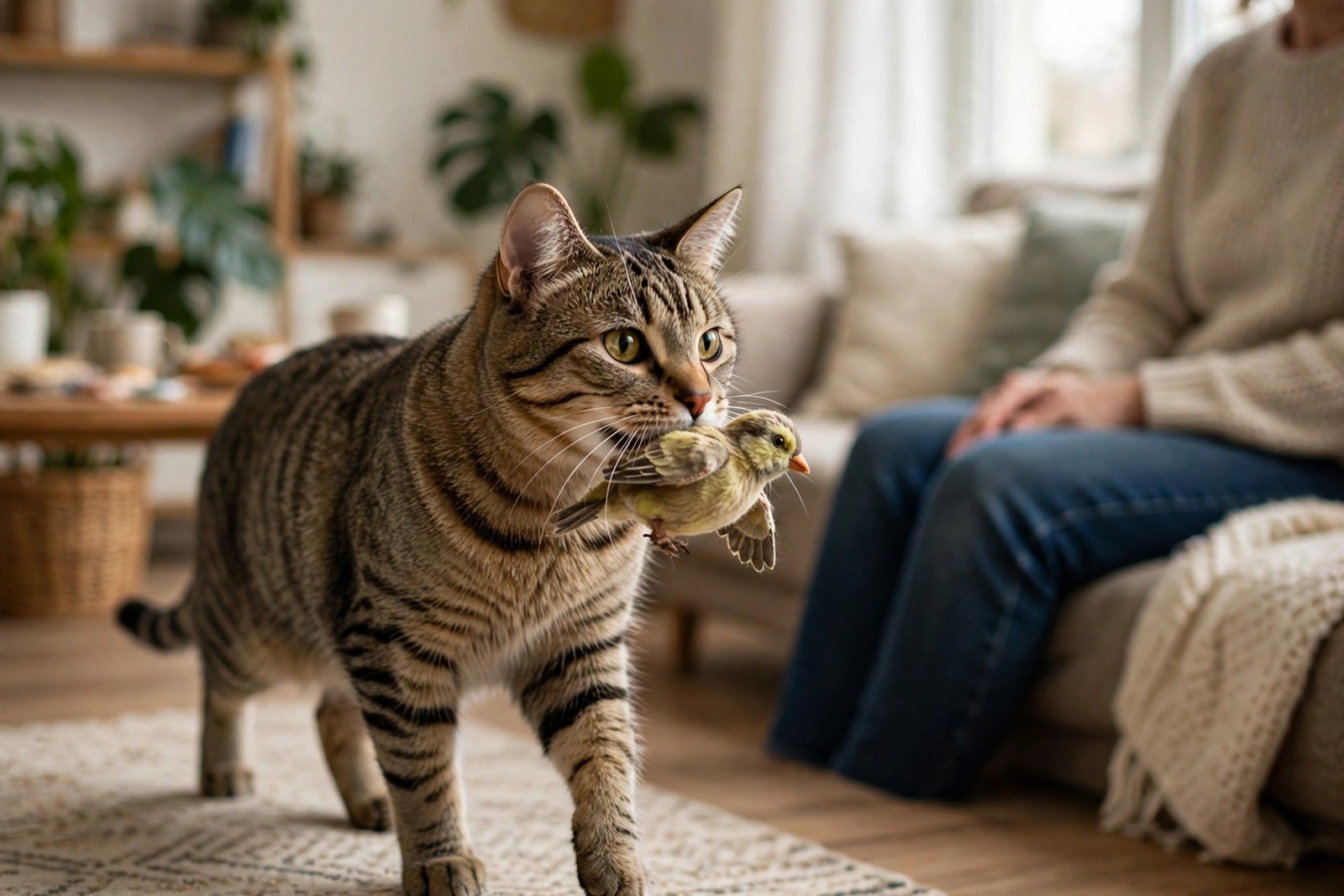
It is not a thank-you present in the human sense, it is not spite, and it is definitely not a comment on your cooking. A cat bringing you a dead mouse, a bird, or — from an indoor cat — a toy delivered with the same ceremony is completing one of the oldest behaviours she owns.
Home Is Where Prey Is Eaten
A hunting cat ranges widely but eats in safety. Prey caught at the edge of the territory gets carried back to the core — near the den, the food source, and the family — where it can be eaten, cached, or shared without a rival stealing it. Your house is that core, and you are the centre of it. The doorstep, the hallway, and your feet are simply the delivery points of a cat who has done exactly what a successful hunter is supposed to do, which is why the yowling announcement beforehand often sounds so pleased with itself.
The Teaching Instinct
Mother cats run a deliberate curriculum: dead prey first for young kittens, then injured prey they can practise on, then supervised hunts. That drive to deliver prey to family members who need it does not switch off in a spayed house cat with no kittens. You, from her perspective, are a large, loved, and hopelessly unskilled member of her group — you have never once been seen to catch anything. Bringing the catch to you fits the same pattern as bringing it to kittens, and a toy carried over with the distinctive muffled cry is the indoor version of the lesson.
Responding Well, and Reducing the Toll
Punishing the delivery teaches nothing except that you are unpredictable; the hunt happened hours before your reaction. Accept the offering calmly, remove it with gloves once the cat has moved off, wash your hands well, and let your veterinarian know your cat hunts, since hunters need their parasite prevention and health checks kept current. To reduce real kills, keep the cat in at dawn and dusk when prey is most active, fit outdoor time around supervised sessions where possible, and drain the hunting drive indoors with daily wand-toy play that ends in a meal. Indoor-only cats transfer the whole ceremony to toys, which is the outcome everyone, wildlife included, prefers.
Noting when deliveries happen — dawn, dusk, after a missed play session — turns an unpleasant surprise into useful information. KinsLe's Care Teams lets everyone in the house record those incidents and tick off the evening play session, so the pattern, and whether redirection is working, is there in the timestamps.