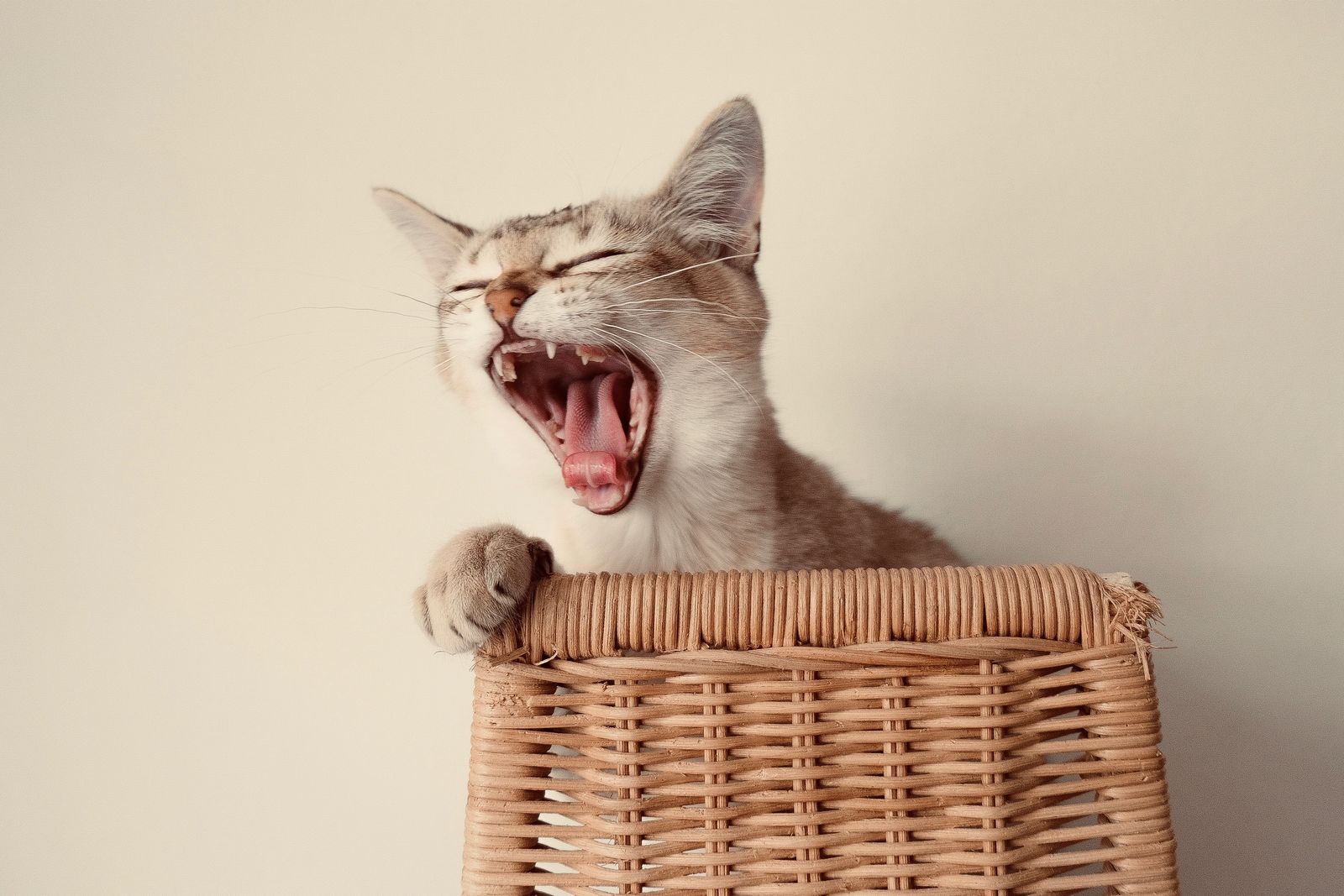
A brief whiff of fish after a fishy dinner is normal, but persistent, strong bad breath in a cat most often points to plaque, tartar, or gum disease building up in the mouth. Occasionally it is linked to health issues beyond the teeth, which is exactly why a constant odor — rather than a post-meal pong — is worth a vet visit.
What normal cat breath is (and isn't)
Let's be fair to cats: their breath was never going to smell like mint. A healthy cat's breath has a mild, slightly meaty smell that you notice mainly at close range, during a yawn in your face. What isn't normal is breath that makes you recoil, smells rotten or unusually sweet or chemical, or has clearly worsened over recent weeks. Owners often adapt gradually and stop noticing, so a visitor's comment — "whoa, the cat's breath" — is worth taking seriously. Changes matter more than absolutes: breath that is noticeably worse than your cat's usual is information.
The mouth causes, which are the usual suspects
Most feline halitosis starts between the teeth and the gumline:
- Plaque and tartar: bacterial buildup produces the classic stale, sour smell
- Gingivitis and periodontal disease: inflamed, infected gums smell worse and can bleed
- Tooth resorption or a broken tooth: a damaged, infected tooth can produce a strong localized odor
- Something stuck: a sliver of bone, a piece of string, or packed food between teeth
- Mouth ulcers or growths: less common, but another reason a look inside matters
Because so much dental disease hides below the gumline, a cat can have bad breath and pain with teeth that look acceptable from the doorway. Smell is often the earliest alarm an owner gets.
When breath points beyond the mouth
Less commonly, persistent bad breath travels with problems elsewhere — certain metabolic or organ conditions can change breath odor, and chronic mouth inflammation sometimes connects with wider health issues. You cannot diagnose any of this from a smell, and you shouldn't try. What you can do is notice the company it keeps: bad breath plus increased thirst, weight loss, appetite change, drooling, or reduced grooming is a cluster that deserves a prompt appointment, not a wait-and-see. Kittens with bad breath are also worth a look, since erupting teeth and baby-tooth problems occasionally play a part.
What to do about it
Start with a vet dental check. Your vet will examine the mouth properly, may recommend a professional clean and a closer look under anesthesia, and can check overall health if the picture suggests more than tartar. At home, once your vet confirms the mouth is comfortable, toothbrushing with cat toothpaste, dental diets, or approved chews can help keep a cleaned mouth cleaner for longer. What won't fix it: masking products, human toothpaste (unsafe for cats to swallow), or scraping tartar yourself, which risks damaging teeth and gums while leaving under-gum disease untouched. Treat the cause, not the smell.
Recording the timeline on your cat's KinsLe profile
Vets think in timelines — when did it start, is it worsening, what else changed — and owners reconstruct them from memory in the car park. KinsLe gives every pet a profile with its own unique QR ID, and noting when you first spotted the bad breath in your cat's profile means you arrive with a clear record instead of a guess. That same QR ID profile is your cat's anchor for their details wherever they're shared. Beyond the clinic notes, the same profile guards against the worst day: a neighbor who finds your cat across town can scan the tag, pull up its Verified QR ID Pet Profiles entry in KinsLe, and message you from the opened page.