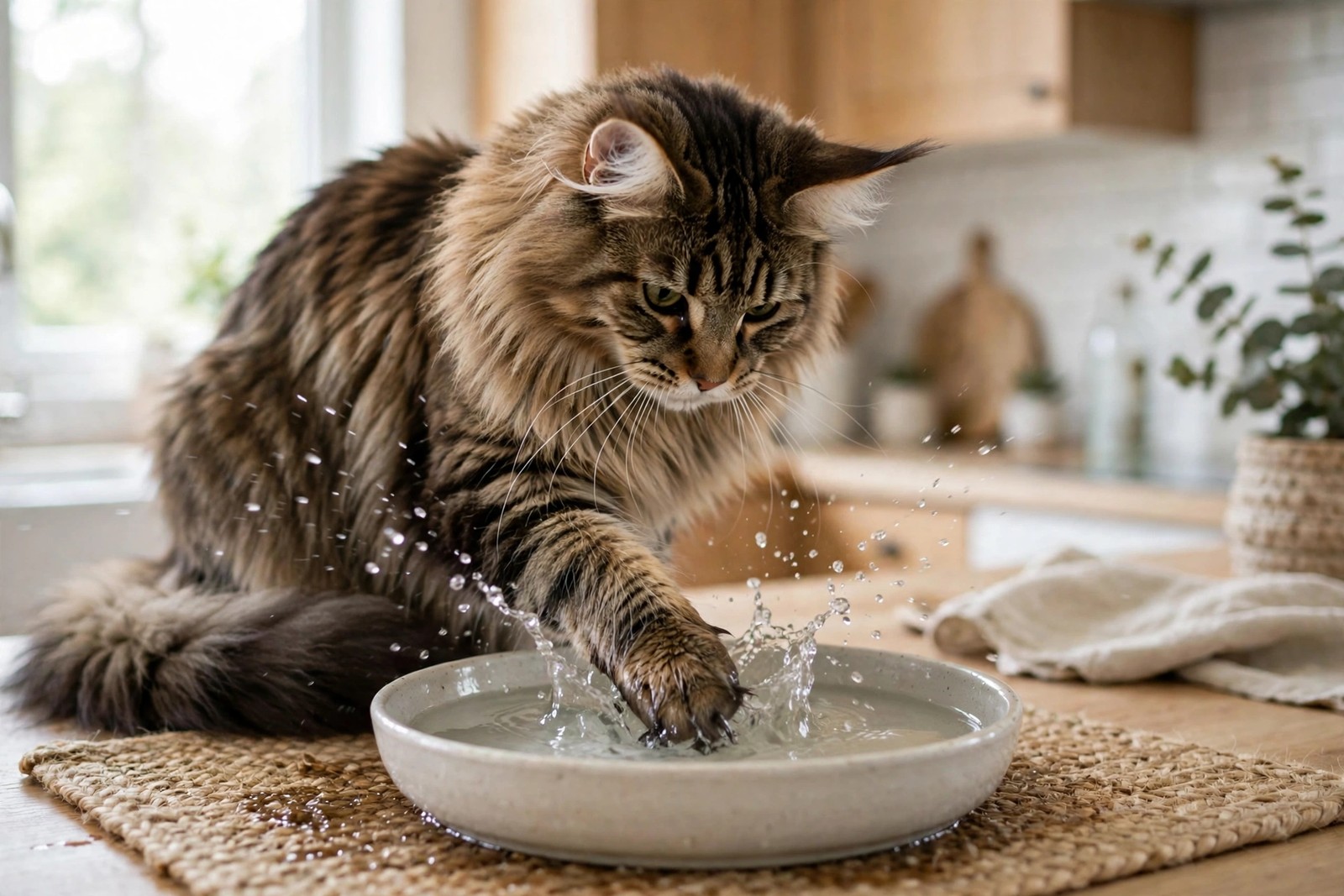
A cat elbow-deep in her water bowl, flicking droplets across the kitchen floor, is not clumsy and not usually naughty. She is solving a problem with the tools she trusts, and once you see still water from a cat's eye level, pawing at it stops looking like mischief and starts looking like measurement.
Still Water Is Hard to Judge
Cats focus poorly at very close range, and a still, clear surface in a bowl gives almost no visual clue about where the water starts. A paw dip answers the question before her nose gets dunked: she touches the surface, watches the ripple, and knows the depth. You will see the same careful test at a new bowl, a freshly moved bowl, or a garden puddle. The paw also sets the water moving, and movement is what many cats are really after.
The Pull Toward Moving Water
Wild cats drink from streams and drips more readily than from stagnant pools, and the preference survives in the kitchen. Running or rippling water signals freshness to a cat, tastes well oxygenated, and can be located by sound. Splashing is her way of manufacturing that signal in a bowl. Some cats take it further and drink from the paw, lapping the water off their fur, a technique that keeps their face clear of the surface entirely. Others graduate to the tap, the bath, or any glass you leave unattended, all of which offer the same moving, elevated, or novel water.
Play is layered over the instinct. Ripples catch light and move, floating specks behave like tiny prey, and the fishing swipe she uses at a stream edge is a deeply satisfying movement to practise. Kittens and young adults splash the most, and a cat may splash more on days when play and company have been scarce.
The Bowl Itself May Be the Problem
Whiskers are instruments, not decoration, and a deep, narrow bowl that presses them back every time she drinks can make the whole experience irritating. Cats coping with that discomfort often dip a paw and drink from it, or drag the bowl to tip water onto the floor and drink from the puddle, where nothing touches their whiskers. Bowl placement matters too: water set right beside food can pick up food smells that some cats dislike, and a bowl in a busy thoroughfare invites drive-by splashing.
Calmer Water, Same Cat
Swap to a wide, shallow, heavy bowl that cannot skate across the floor, set it on a large washable mat or a tray with a lip, and keep it topped up so the surface sits near the rim where she can see and reach it easily. Refresh the water daily and wash the bowl properly rather than just refilling it, because a slimy surface puts cats off and stale water encourages experimental pawing. Try a second water station in a quiet spot away from her food; many cats settle once they find a location they like. If she adores moving water, a supervised dripping tap session or an ice cube bobbing in a wide dish can give her the game in a contained place.
Separate play from a health change with one observation: how much is she actually drinking? A cat that suddenly drinks far more, urinates more, or loses weight while splashing needs a veterinary check promptly, because thirst changes carry information pawing alone does not. For the ordinary water player, freshness is the routine that keeps the game small, and KinsLe's Care Teams lets your household assign the daily refresh and proper bowl wash to a named person with the duty marked complete, so her water never sits forgotten for days.