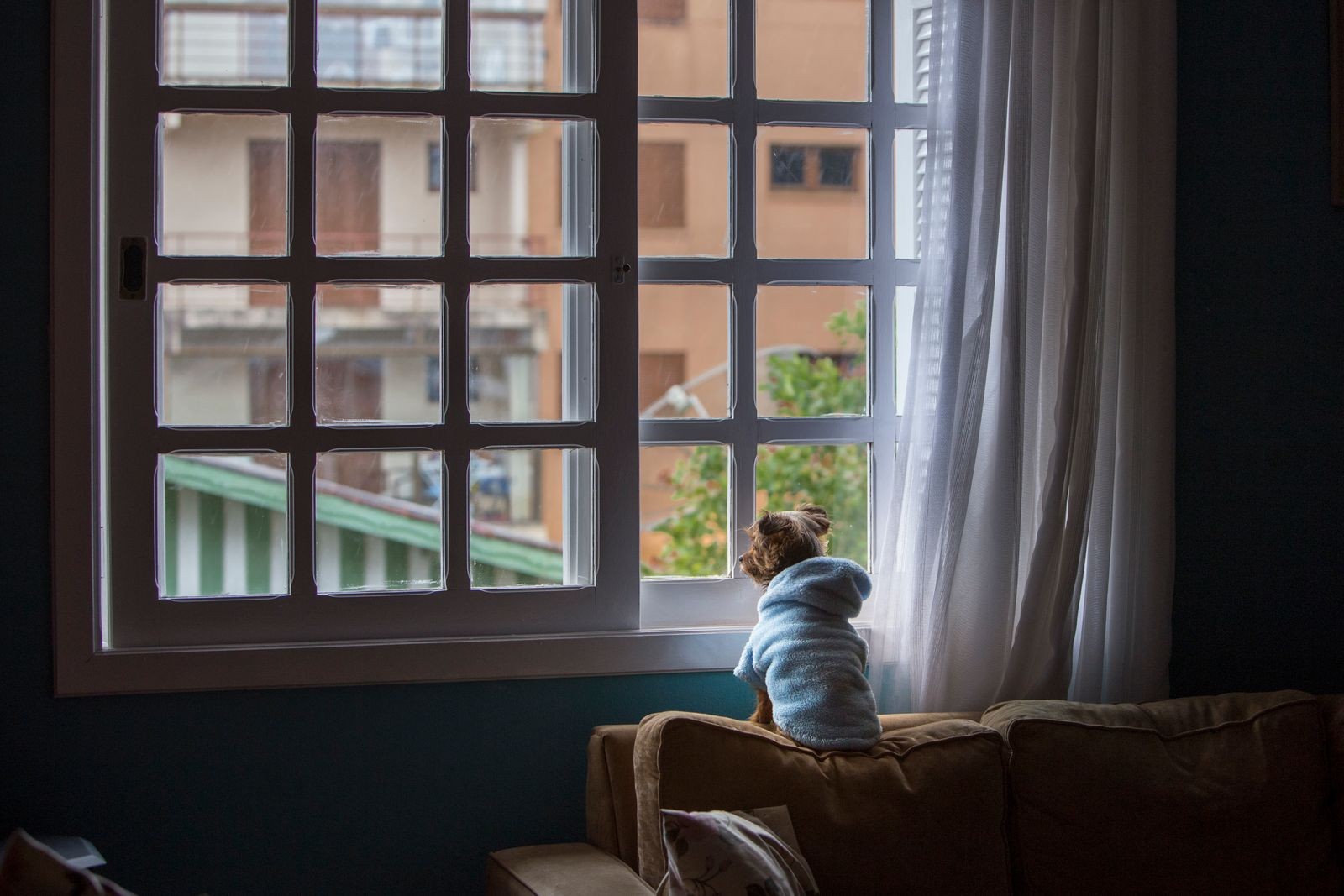
Your dog barks at everything outside the window because, from his point of view, it works every single time: he barks at the mail carrier, a jogger, or the neighbor's cat, and that intruder always leaves. The departure rewards the barking, so the habit strengthens daily. Add boredom, pent-up energy, and a front-row seat to a busy street, and the window becomes the most exciting show in the house.
A Guard Dog's Job Description
Many dogs see watching the territory as their job, and some breeds take it especially seriously. Terriers, shepherds, livestock guardians, and alert little spitz breeds were shaped by generations of noticing movement and announcing it. Your dog is not distinguishing between a delivery driver and a genuine threat — movement plus novelty is enough to trigger the announcement, and a dog behind glass often feels bolder than he would outside.
Frustration adds fuel. Your dog can see the squirrel but cannot reach it, see the dog across the street but cannot greet it. That barrier frustration can turn a few alert barks into a long, escalating performance, sometimes with scratching at the sill or racing from window to window.
Boredom Is Often the Real Engine
A dog who has had a morning walk, something to chew, and a job to do will often watch the same street scene with mild interest. A dog left alone with nothing to do for eight hours will treat every leaf-blower as breaking news. Under-stimulated dogs invent entertainment, and window barking is self-rewarding entertainment that never runs out of episodes.
Practical Ways to Turn the Volume Down
- Increase the morning exercise and add sniffy, decompression-style walks, not just a quick loop.
- Leave puzzle feeders, a frozen stuffed toy, or a safe long-lasting chew for quiet hours.
- Limit unsupervised window access when you are out — close blinds or use a baby gate to keep your dog in a back room.
- When you are home, calmly call your dog away after a bark or two, then reward quiet watching and looking back at you.
- Avoid shouting over the barking; to your dog, it sounds like you are joining in.
Practice in short bursts. Let your dog notice a passerby, thank him quietly, offer a treat for turning toward you, and release him to a chew or game. You are teaching an alternative routine, not punishing an alert — a dog who learns “see it, check in, get paid” barks far less than one who is simply scolded.
When to Look Deeper
Barking paired with drooling, pacing, destruction near doors and windows, or accidents in a house-trained dog can point to separation anxiety rather than entertainment. Sudden new barking in an older dog can also reflect pain, hearing or vision changes, or cognitive shifts. In those cases, talk to your veterinarian rather than relying on training alone.
Keep the House Rules Where Everyone Can See Them
Consistency matters here too: one person rewarding quiet while another shouts at the dog undoes the plan. KinsLe Messenger is the per-pet communications hub, so the window routine — blinds down when out, reward the quiet look-back — lives in one place everyone in your dog's circle can check, including a sitter or family member stopping by at midday.
When the midday sitter texts that the blinds stayed down and he settled after two barks, that update belongs in his KinsLe Messenger hub on KinsLe, where his family can read how the routine held up.