
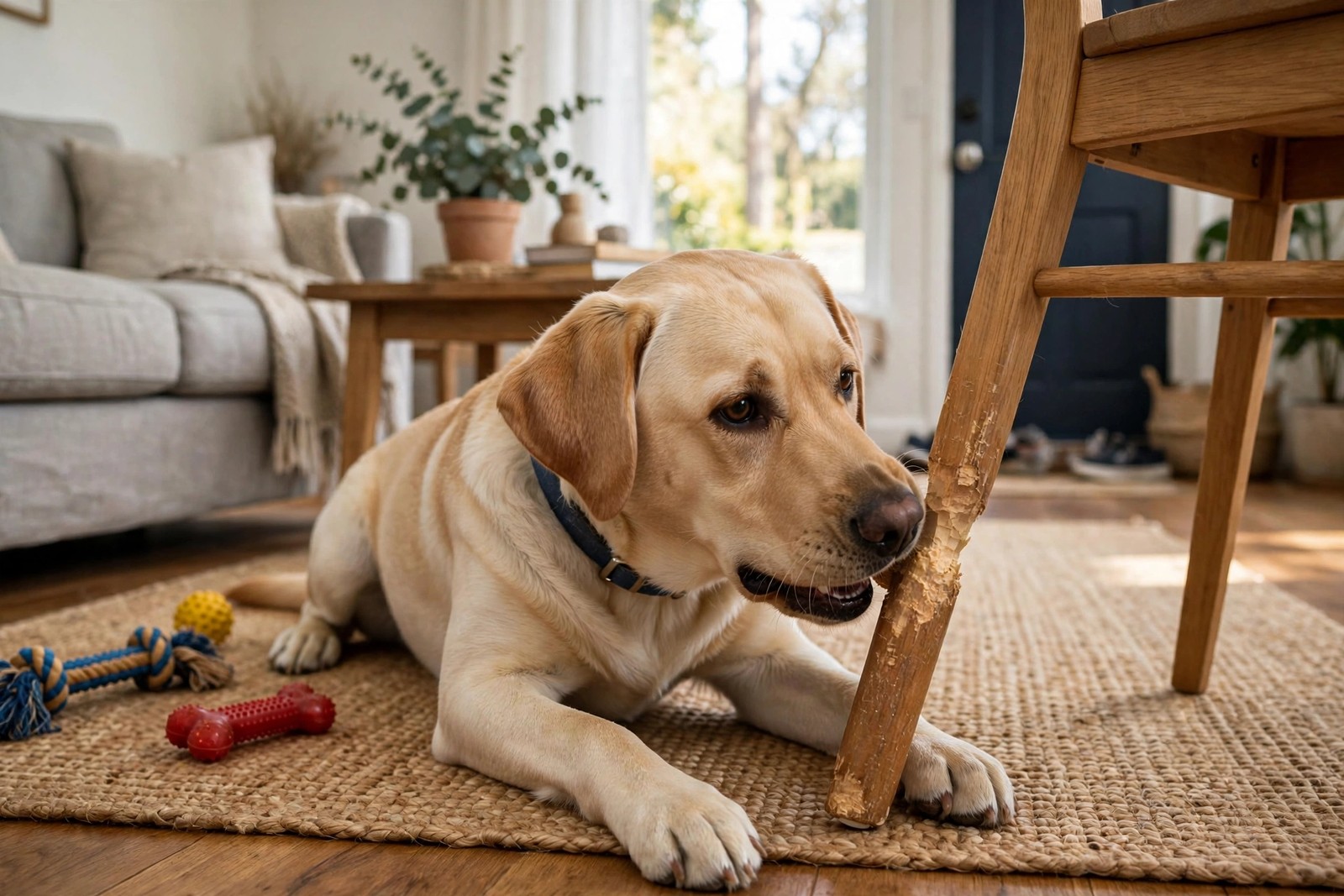
Your dog chews furniture when you are out because chewing relieves boredom and stress, and furniture that carries your scent is especially appealing to a dog left alone with nothing assigned to do. The chair leg is not spite — it is the most interesting, owner-scented, perfectly chewable object within reach. The fix is to make legal options more available and more interesting than the furniture, while blocking access until the new habit sticks.
What the chewing is really telling you
Start by reading the pattern. Chewing scattered through your absence, aimed at varied objects, usually signals boredom or youthful energy with nowhere to go. Chewing concentrated at doors, window frames, or one exit route, especially alongside drooling or accidents, leans toward anxiety about being left. A dog who chews only in the first half hour may simply be burning off departure excitement. A camera session or two will show you which dog you have, and the remedy differs: bored dogs need a better day; anxious dogs need gradual confidence-building, and sometimes professional help.
Age matters too. Puppies chew because they are teething and exploring. Adolescents chew because they have adult teeth, enormous energy, and unfinished impulse control — the classic sofa-cushion demographic.
Win the comparison game
Your dog will chew something; your job is to choose what. Set him up to succeed:
- Leave several appropriate chews and a stuffed food puzzle, rotated so they stay novel.
- Choose textures that compete with wood and fabric — if he loves chair legs, offer safe chew toys with some give and resistance.
- Make the legal options easy to find and the furniture hard to reach: close doors, use baby gates, or cover prized pieces while training.
- Exercise and give him a sniff-rich walk before you leave, so he is ready to rest rather than redecorate.
Bitter-taste deterrent sprays, reapplied as directed, can tip the comparison for specific pieces, but they work as a supporting actor, never the whole plan.
What to do when you come home to damage
Nothing — at least, nothing aimed at the dog. He cannot connect your reaction now with chewing done hours ago, and a tense homecoming teaches him that your return is unpredictable, which can worsen anxiety-driven chewing. Photograph the damage for your own pattern-tracking, tidy up calmly, and put your energy into tomorrow's setup: more exercise, better chew options, tighter management. If destruction is severe, frequent, or involves exit points, talk to your veterinarian about whether anxiety support belongs in the plan.
Structure the day so chewing is not the job
Long, empty stretches invite self-employment. Breaking up the day with a midday walk, play session, or even a short training game gives your dog a schedule instead of a void. Rotating who provides that break — partner, teenager, neighbor, sitter — keeps it sustainable for busy households.
Put the plan on a Care Team
That coordination is exactly what Care Teams on KinsLe are for. You can assign care duties — feeding, walks, medications, and grooming — to the people in your dog's life, and each task is marked complete with a timestamp, so everyone can see the midday chew-and-play visit actually happened. Adding a scheduled chew-and-play stop to your dog's Care Team turns a hopeful intention into a tracked routine, and the written notes keep every helper working from the same playbook.
Care Teams in KinsLe turns that intention into written assignments — your partner taking Monday's midday stop, a neighbor covering Thursday — with every finished visit timestamped so nobody has to guess whether he got his break.