
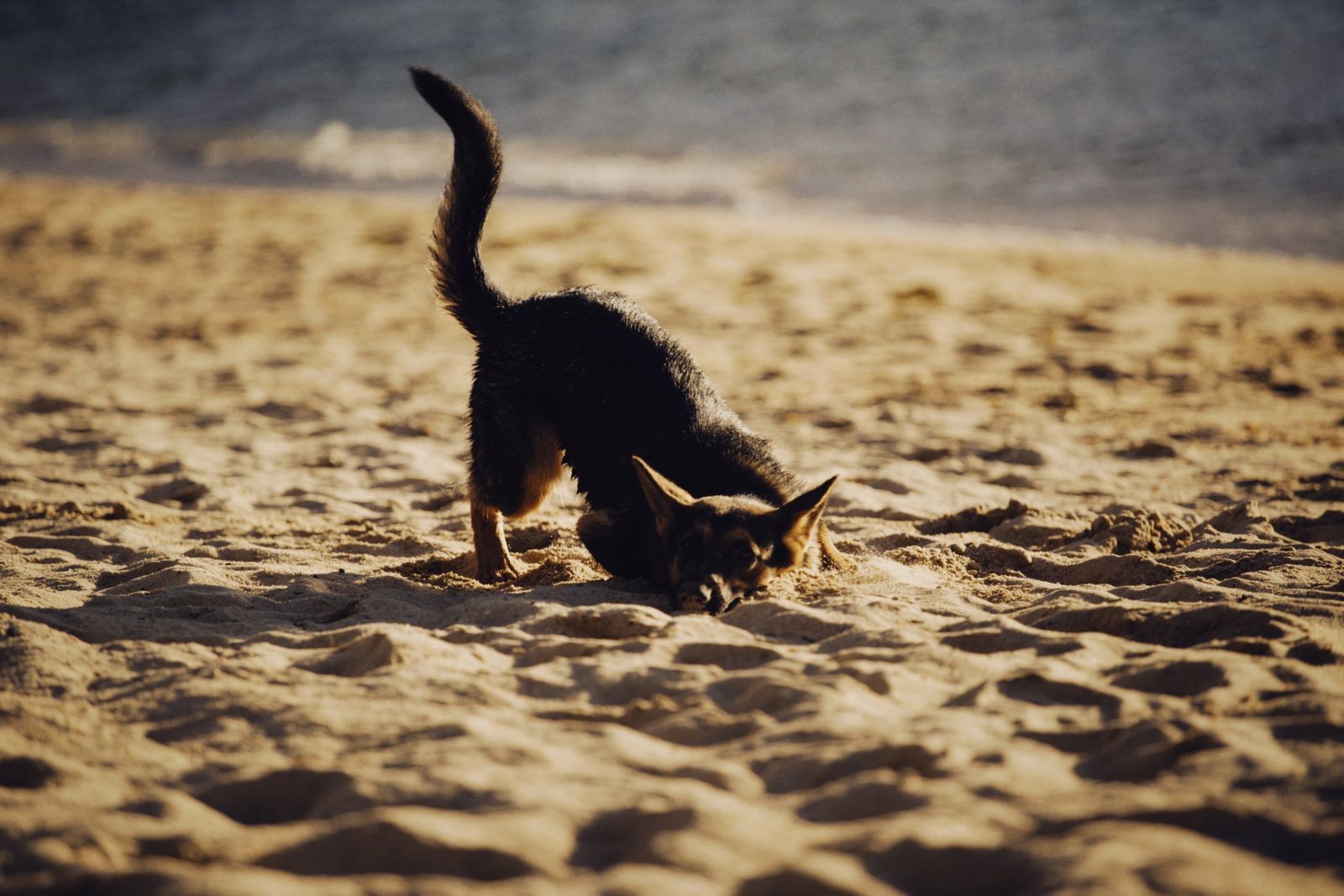
Dogs dig for a handful of honest reasons: to hunt something they smell or hear underground, to excavate a cool resting spot on a hot day, to attempt an escape, or simply because digging feels wonderful — and some breeds were literally bred for it. More exercise and mental work reduce the boredom digging, while shade and water cut down the cooling-off kind. Identify your dog's reason first, because each motive has a different fix.
Read the holes like clues
The location and timing of the digging tell the story. Holes along the fence line suggest escape or an attraction on the other side — a neighbor's dog, wildlife, passing joggers. Holes in shady spots that your dog then lies in are cooling pits; the earth a few inches down is noticeably cooler, and dogs know it. Random craters in open lawn, especially from terriers and other earthdog breeds, are often hunting or pure instinct — dachshunds, Jack Russell terriers, and beagles carry generations of selection for going to ground. Holes that appear only when your dog is left out alone for long stretches usually indict boredom.
Weather matters as well. Digging often spikes in heat, after rain softens the ground, and when rodents are active in the garden.
Fix the motive, not just the hole
For the cooling digger, offer a better option: deep shade, a raised bed with airflow, a shallow paddling pool, and access to water — many dogs happily trade the pit for the pool. For the hunter, supervise yard time, discourage rodents humanely by removing food sources and cover, and redirect that intensity into games like scent work and flirt-pole play. For the bored digger, the answer is a fuller day: a real walk with sniffing time, training games, food puzzles, and play, rather than simply more hours alone in the same yard.
Filling holes only resets the canvas. Some owners bury the dog's own droppings in a favorite hole, which deters many dogs from re-digging that spot — effective, if unglamorous.
Give digging a legal address
The most elegant solution for a committed digger is a designated digging pit: a framed sand or loose-soil box in a corner of the yard. Bury treats and toys just under the surface, praise extravagantly when he digs there, and redirect him to it every time he starts elsewhere. Most dogs, given a choice between a boring lawn and a pit where treasure reliably appears, choose the pit. It respects the instinct while saving the flowerbeds — a far better bargain than a war against a behavior his breed was created to perform.
Safety checks for digging dogs
Check paws regularly for cracked pads, torn nails, or soil packed between toes, and keep vaccinations current for a dog whose hobbies involve dirt and wildlife. Watch for signs of overheating in dogs who dig and sunbathe in summer, and always supervise around any digging near structures, pipes, or cables. If digging suddenly escalates alongside restlessness or appetite changes, mention it at your next veterinary visit.
A busier day, on a gentle nudge
Boredom digging thrives on routine days when enrichment quietly slips. Kinny, the built-in AI assistant on KinsLe, lets you work through those choices question by question: whether holes that appear only on hot afternoons call for shade and a paddling pool first, whether a framed sand pit would satisfy a terrier bred to go to ground, or how to rotate sniff games, food puzzles, and short training rounds across the week so boredom never builds up.
You can ask Kinny in KinsLe why a fresh hole beside the gate points toward escape rather than cooling, with replies drawn from the KinsLe Answers library.