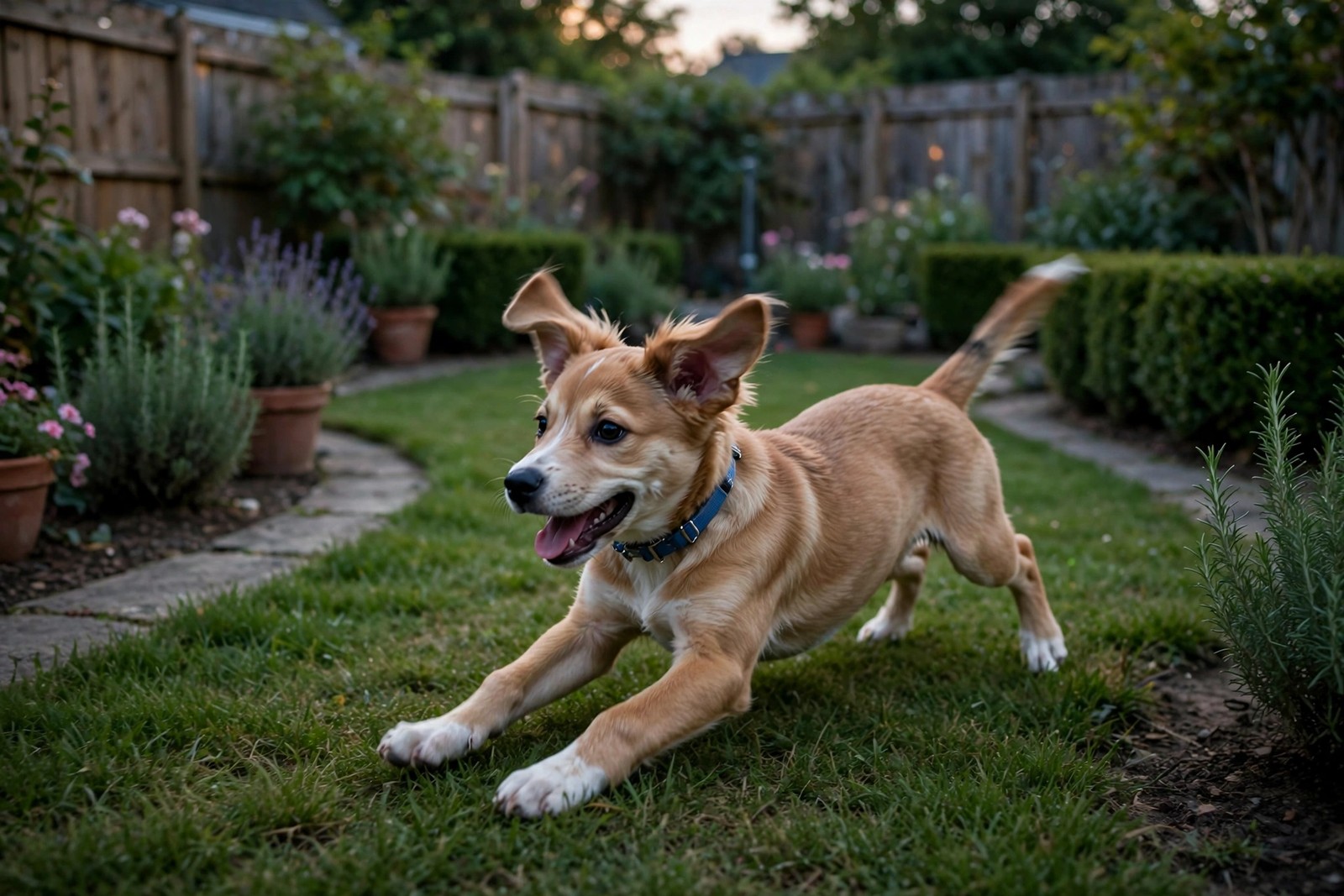
One moment your dog is dozing, the next she is thundering laps of the sofa with her rear tucked, eyes bright, ricocheting off the rug in figures of eight. These are zoomies, known more formally as frenetic random activity periods, or FRAPs. They are a normal, healthy discharge of energy, closer to a pressure valve opening than to misbehaviour, and almost every dog owner learns to read the signs and step aside with the coffee table cleared.
Why the Evening, and Why So Sudden
Timing follows the day's energy account. A dog who has rested or waited through a quiet day, with walks and play still owed, reaches the evening with a full tank. Then the household's busiest hour arrives: people come home, dinner smells appear, children are at their liveliest, and the dog's excitement and stored energy ignite together. Post-bath zoomies are the other classic, part relief, part celebration, and part drying strategy. Puppies and adolescents FRAP most often and hardest, because their tanks are bigger and their brakes are still under construction. Most episodes burn out within a few minutes and end in a dramatic flop and a deep sleep, which is itself a clue that what just happened was a discharge, not a problem escalating.
Making Zoomies Safe Instead of Stopping Them
You cannot train a dog out of a normal behaviour she needs, and grabbing at a zooming dog usually fails anyway, since a collar grab mid-lap can frighten her or swing the game toward mouthing hands. Manage the arena instead:
- Learn her usual window and clear it in advance: move breakables, open the door to the garden if that is her circuit, and put a rug or runner over polished floors where she scrambles for grip.
- Step children and older dogs out of the racing line and let the lap finish on its own.
- Afterwards, offer water and a calm activity, such as a lick mat or a chew, to bring arousal down smoothly rather than launching straight into rough play.
- If the flying furniture bothers you more than the running, spend the energy earlier: an evening walk with sniffing time and a short play session before the usual zoom hour moves the discharge outdoors and shrinks the indoor version.
When Zooming Is Not Just Zooming
Happy FRAPs have a loose, wiggly quality, with play bows, soft ears, and a dog who can pause, respond, and settle. Pay closer attention if the behaviour looks driven rather than joyful: fixed, repetitive circling or tail chasing that she cannot be called out of, snapping at her own flank, episodes that end in agitation rather than sleep, or a senior dog whose frantic activity is new and paired with night-time restlessness. Those patterns are worth a conversation with your vet, because compulsive behaviour, pain, and cognitive change can hide inside what first looks like energy. For the ordinary evening tornado, though, the prescription is a safe room, an earlier walk, and an audience that appreciates the show, and KinsLe Care Teams helps you time that walk by assigning the pre-evening exercise duty to whoever is home first, timestamped when it is done.