
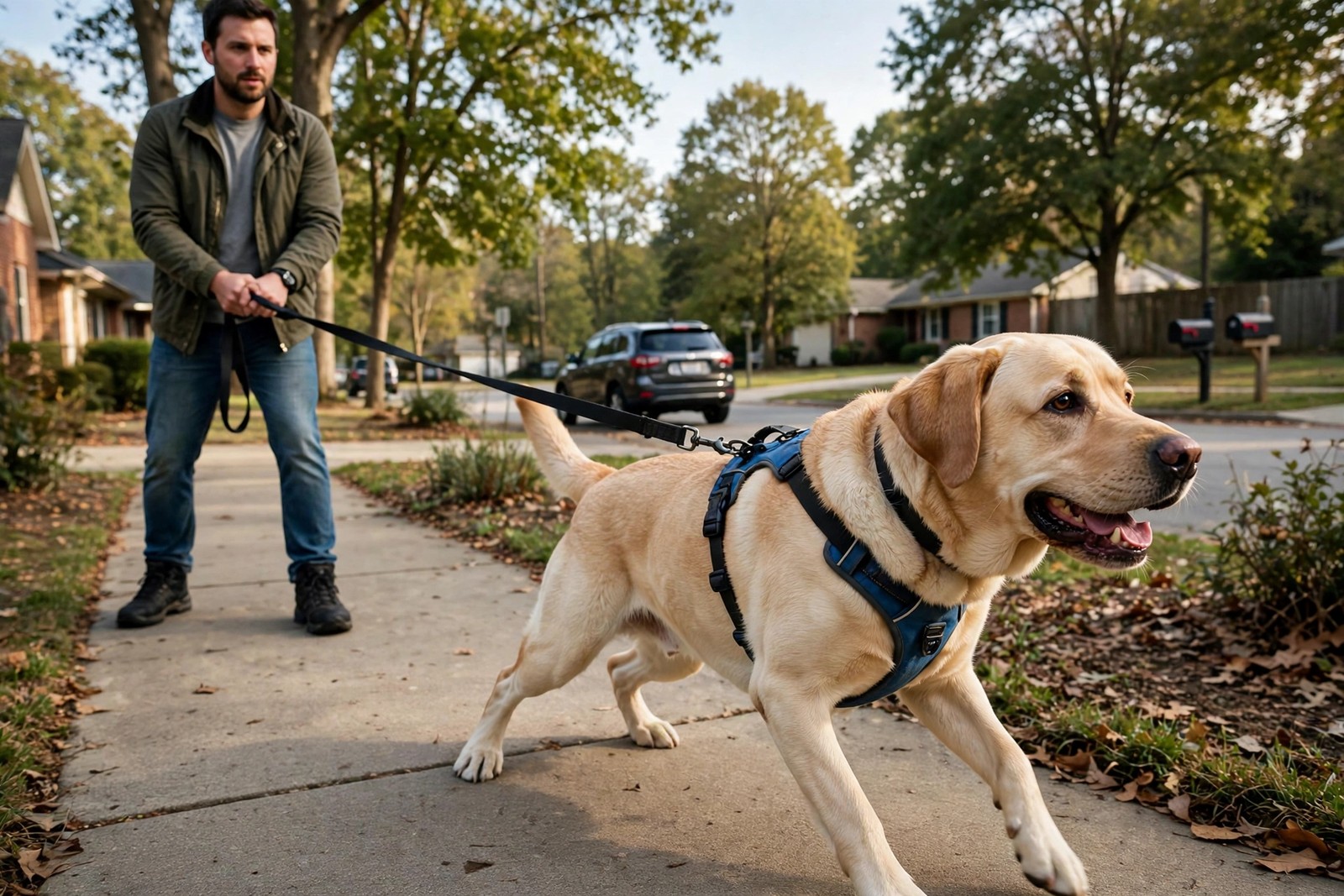
Your dog pulls because pulling works, plain and simple. When he surges ahead and you follow, he reaches the fire hydrant, the other dog, or that fascinating patch of grass faster. Add a dog's natural walking pace — most healthy dogs, from a brisk beagle to a big Labrador, naturally move faster than a relaxed human stroll — and a loose-leash walk can feel frustratingly slow to him from the very first step outside.
The Opposition Reflex and the Power of Smells
Dogs have something trainers call an opposition reflex. When steady pressure pushes or pulls against the body, the automatic response is to lean into it, the way you brace when someone nudges your shoulder. A tight collar and a taut leash can therefore trigger exactly the pulling you are trying to stop, without your dog making any conscious decision to be difficult.
Scent makes it stronger. A walk is not just exercise for a dog; it is his news feed. Every tree and lamppost carries information about who passed by, and getting to the next smell quickly is deeply rewarding. A young, under-exercised dog or a breed built to work all day, like a husky, border collie, or pointer, will often pull hardest in the first ten minutes, when energy and excitement are highest.
What Pulling Is Not
Pulling is rarely about dominance or disrespect. Dogs who seem perfectly obedient at home can still haul on leash because the skill was never actually taught outdoors, where distractions are far more interesting than you and your treats. Pain can also play a role: a dog who lunges or darts erratically, pants heavily, or suddenly pulls differently than usual may be uncomfortable, and a veterinarian should rule out injury, arthritis, or harness rub before you treat it purely as training.
First Steps That Actually Help
- Let your dog sniff and burn off steam for a few minutes in a safe spot before you ask for tidy walking.
- Stop walking the instant the leash tightens. Stand still, wait for slack, then move again.
- Reward the position you want — treats delivered beside your leg make that spot valuable.
- Change direction when your dog forges ahead, so following you becomes part of the game.
- Keep sessions short at first and practice in quiet streets before tackling a busy park.
Equipment can support this work, but it does not replace it. What matters most is that every walk does not undo the last one. One person letting the dog tow them to the dog park can quickly rebuild the habit another person spent a week softening.
How Care Teams Keep Every Walker Consistent
That consistency problem is exactly where KinsLe Care Teams help. You can assign walking duties to family members or helpers and share the same plan — the cue word you use, when to stop, how to reward — so your dog gets identical rules from everyone who holds the leash. Completed walks are marked with a timestamp, so you can also see whether your dog has already had a long morning outing, which often explains a calmer, or more wired, evening walk.
Loose-leash walking is a learned skill, not a personality trait, and most dogs improve noticeably within a couple of consistent weeks. Care Teams in KinsLe puts those assignments in writing for his walkers — your partner on weekday mornings, a neighbor on Saturday afternoons — and timestamps each finished outing, so the stop-and-reward routine survives every handoff.