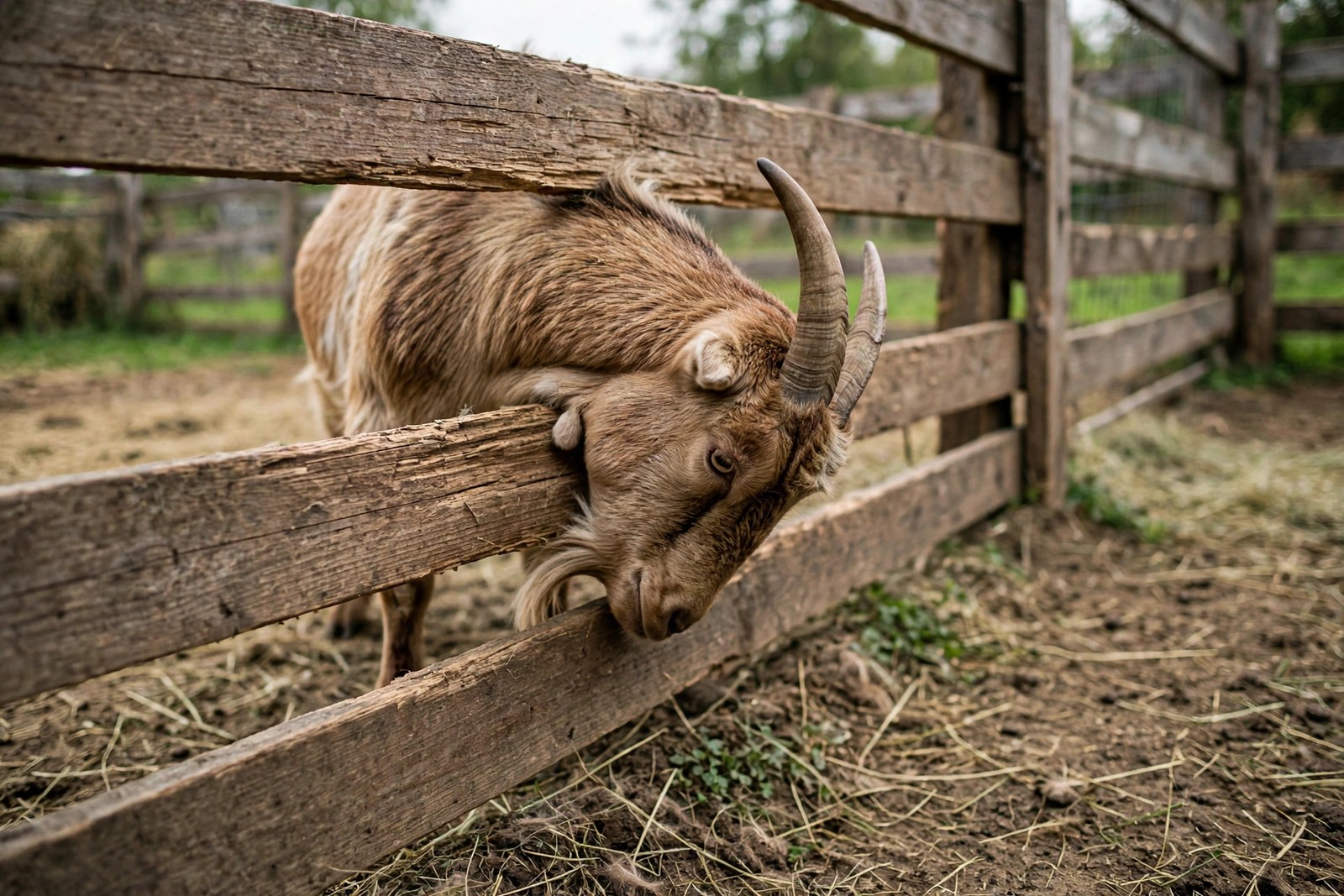
Headbutting is normal goat language, not naughtiness. Goats spar head to head to settle rank, practise balance and read each other's strength, and a fence often becomes the sparring partner that is always available. A goat that returns to the same fence line again and again is telling you something about its body, its mood or its pen, and the fix works far better once you work out which message it is sending.
Five Triggers Worth Checking First
Work through these in roughly this order, because each one points to a different remedy.
- Play and practice: kids, wethers and young does butt posts and panels as sparring practice. It looks cheerful, happens in bursts, and the goat bounces away and comes back for more.
- An itch it cannot reach: goats rub and strike to scratch around horn bases, scurs and ears. Dry skin, shedding winter coat or lice are possibilities a vet or experienced keeper can check if the rubbing is constant and the coat looks thin or flaky.
- Boredom and loneliness: a goat kept alone, or in a bare pen with nothing to climb or browse, invents its own entertainment. Fence butting that peaks when you leave or at quiet times of day often fits this pattern.
- Rut: an intact buck in breeding season paces, calls, urinates on his own legs and beard, and throws his weight at fences, especially if does are in sight or scent across the line.
- A fence that rewards pushing: if the mesh flexes, a gate rattles or the goat can reach browse through the wire, every push pays. Goats repeat what works.
Make the Fence Boring and Safe First
Before adding anything new, remove the payoff and the danger. Walk the line and look for flexing panels, loose posts and gaps a head can enter but horns cannot back out of, because a horned goat that pushes its head through woven wire and panics can injure its neck or strangle itself. Tighten or replace weak sections, keep openings either small enough that a head cannot enter or large enough that it withdraws freely, and move tempting browse, mineral feeders and neighbouring animals away from the shared line if contact across it is winding your goat up. Check horn bases, forehead skin and ears after a heavy session; swelling, broken skin or a goat that goes quiet and off its feed afterwards deserves a prompt veterinary call.
Give the Head a Better Job
Goats need something to push, rub and climb, and a pen that offers those outlets usually sees fence butting fade. Fix a stiff brush or a rough scratch post at head height and let the goat work its forehead and horn bases against that instead of the wire. Add stumps, a low platform or a sturdy ramp for climbing, hang safe browse branches to strip, and rotate simple challenges — a new log, a moved feeder, a different corner to explore — so the pen keeps changing. A companion goat matters more than any toy, because a lone goat pushes its social energy into objects. Never push back on a goat's head with your hands or join the butting game yourself: the goat reads that as an invitation to spar with you, and a game that is funny with a kid becomes dangerous with a grown buck.
Watching the Pattern Over a Week
Note the time, the trigger and the target for each bout across several days. Butting aimed at one flexing corner is a fencing job, butting that follows feeding time is often anticipation, and butting paired with rubbing, coat loss or restlessness points toward skin or health checks first. Share those notes with everyone who feeds or handles the goat so the whole group responds the same way and nobody rewards the behaviour by accident. KinsLe's Care Teams helps here by letting you assign the daily fence walk, scratch-post check and enrichment swap as named duties, with every completed task marked by a timestamp, so a week of pattern notes builds up without anyone guessing who checked what.