
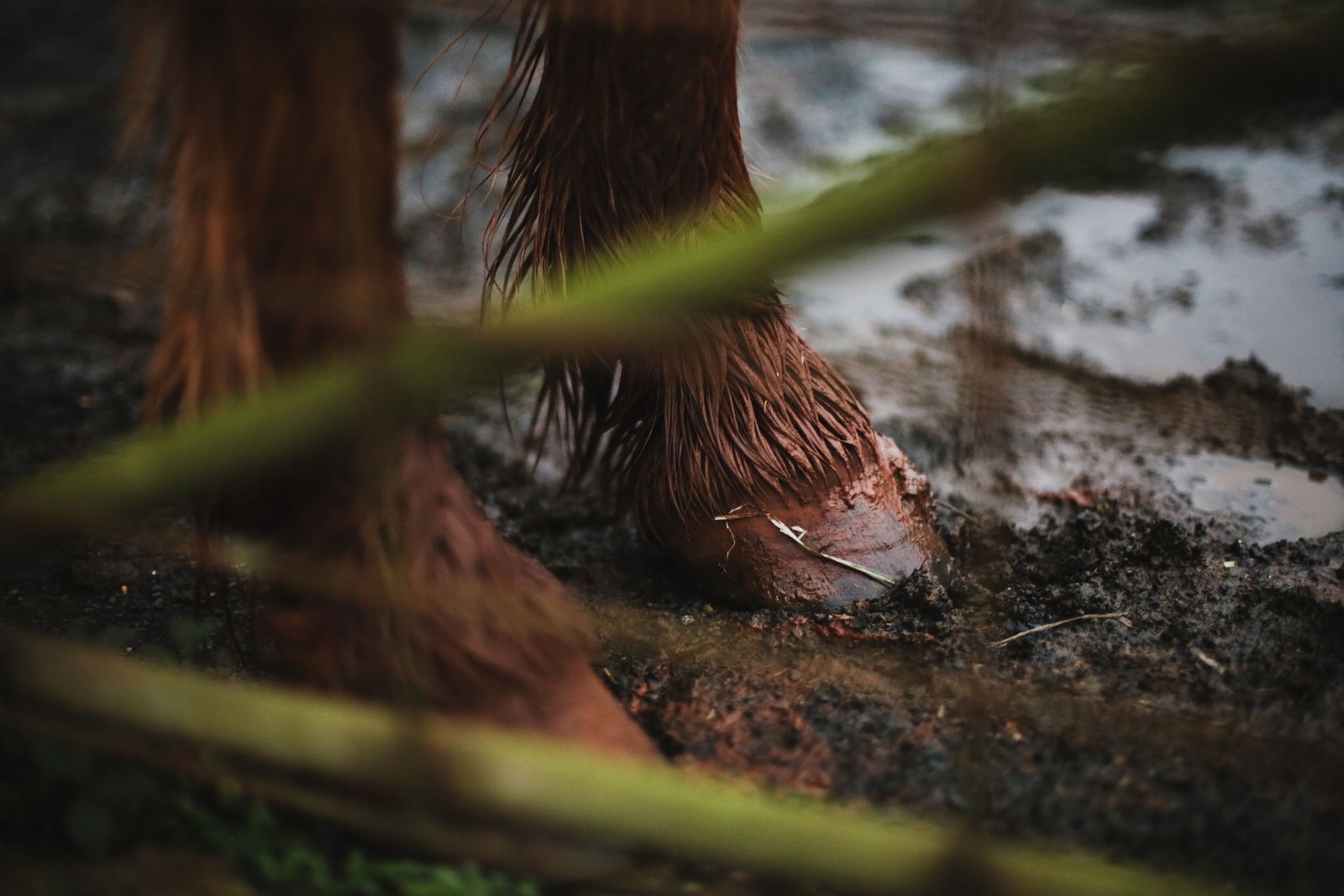
Your horse gets muddy because rolling in mud is normal, satisfying horse behavior — and in wet seasons the pasture itself conspires to help. Mud can protect skin from biting insects and sun, cool a hot horse, and simply feels good to roll in after exercise. Keeping up is less about keeping the horse clean, which is a losing battle, and more about managing the muddiest areas so wet ground does not start causing skin and hoof problems.
Why Horses Roll — and Why Pastures Turn to Soup
Horses roll to scratch, to shed loose coat, and to coat themselves in a layer that insects dislike. The mud itself concentrates where hooves churn the same ground daily: gateways, water troughs, hay feeders, and shelter entrances. Repeated traffic on wet soil destroys the grass root mat, soil compacts and drains poorly, and each rain turns those patches deeper. Mares and geldings with a favorite rolling spot will keep it nicely worked in for you.
The result is a horse plastered fetlock-to-belly after turnout, and an owner wondering whether all that mud is actually harmful.
When Mud Stops Being Harmless
Dried mud on a healthy coat is mostly cosmetic. Persistent wet mud is different. Legs standing in mud for hours day after day can develop pastern dermatitis — often called mud fever or scratches — with scabby, sore skin around the heels and fetlocks. Constant moisture softens hooves, encourages thrush, and increases the chance of losing shoes. Deep mud also strains tendons and makes horses slip, and frozen rutted mud in winter is hard on joints.
So the goal is twofold: give your horse dry ground to stand and feed on, and keep legs clean enough that you can see the skin underneath.
Managing the Mud at Its Source
- Fix the hotspots: scrape and add gravel, stone dust, or mud-control grids at gates, troughs, and feeder areas; even a small hardstanding pad transforms the worst patch.
- Improve drainage: regrade areas that pond water, clear blocked ditches, and consider French drains where water naturally collects.
- Move the pressure: shift hay feeders and rotate pastures when you can, and use a sacrifice paddock in the wettest months to spare the main fields.
- Fence off the worst: temporarily electric-fencing a boggy corner saves both the field and your horse's legs.
Cleaning Up Without Over-Bathing
Let mud dry, then curry and brush it off — dried mud releases easily and daily grooming lets you inspect legs as you go. Washing legs every day and leaving them damp can make skin problems worse; if you do wash, dry the heels and fetlocks thoroughly. Check under the mud for scabs, swelling, or heat, and clip very thick feathers only if you need to treat skin — and discuss persistent or spreading pastern dermatitis with your veterinarian rather than picking scabs or applying random creams.
Sharing a Muddy-Leg Worry Quickly
Sometimes you need a second opinion on whether a muddy leg looks concerning. With KinsLe Messenger, the per-pet communications hub for your horse, you can share a quick photo of an irritated patch or swollen fetlock with your care circle and get eyes on it before deciding whether it needs the vet — all in the same thread as his other care updates. When those heels look scabby after turnout, message your barn manager through the KinsLe Messenger thread on KinsLe, attaching a close photo and asking whether the veterinarian should be called that day.