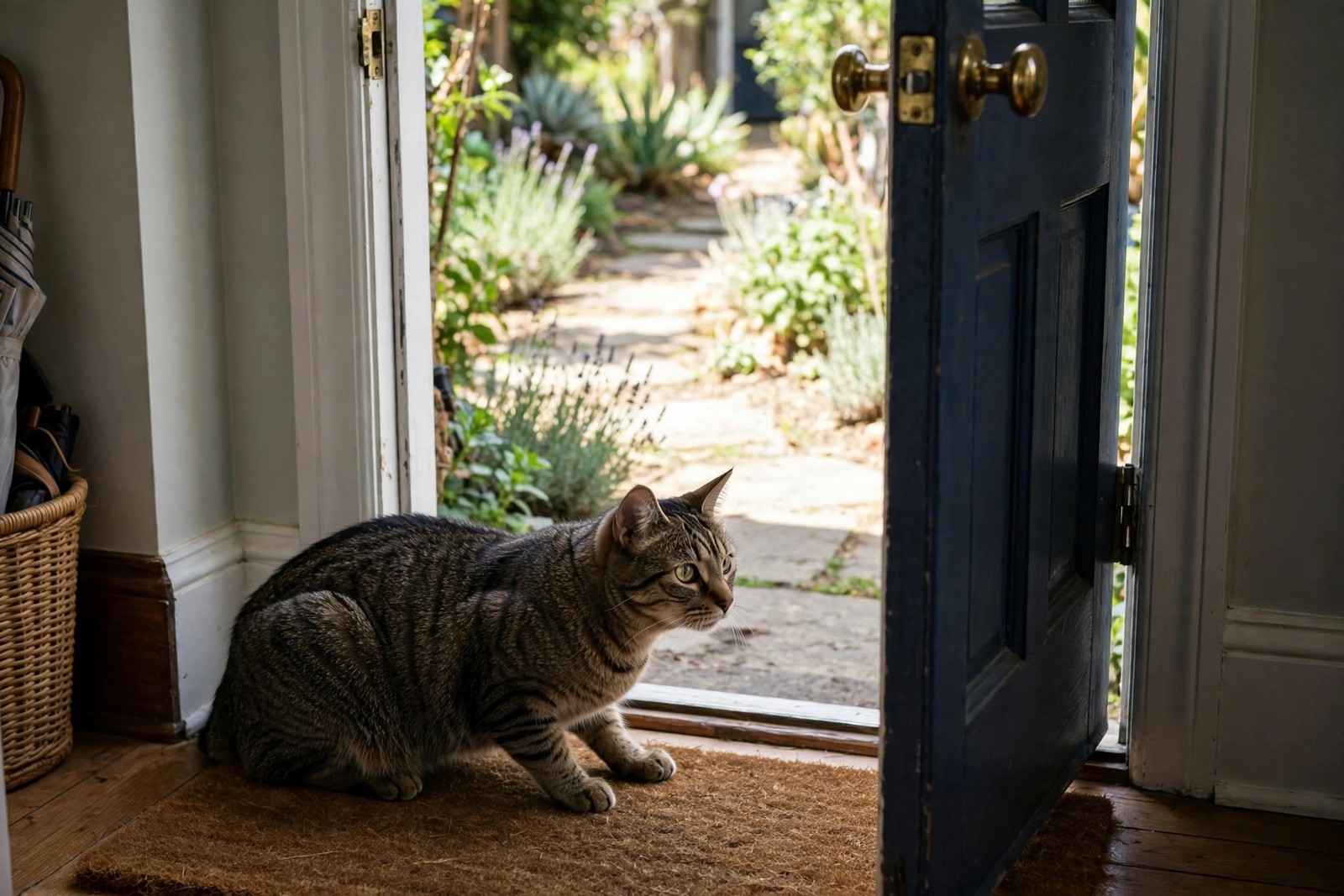
A cat waiting beside the front door is rarely being naughty. From your cat's side, that door is the one break in an otherwise sealed territory, and every opening lets in outdoor smells, birdsong, passing cats, and movement worth investigating. Door-dashing is usually a sign that something outside the door answers an instinct the indoor day has not met, and the work is to identify which instinct that is for your cat, then meet it indoors while making the doorway itself far less rewarding.
The Drives Behind the Dash
Hunting and curiosity lead the list. Cats are wired to notice a gap, a flutter, or a new scent and move toward it, and a door opening for three seconds offers all three at once. Territory matters too: a cat who can see a neighbour's cat through a window may be pushing to patrol, scent-mark, or confront a rival it can smell but never reach. Intact cats add a stronger driver. An unneutered male who scents a female in season, or an unspayed female in heat herself, will work much harder at doors and windows, often with restless calling, and training alone rarely outmuscles that hormonal push — discuss neutering with your veterinarian if your cat is not already neutered.
Boredom is the quieter cause and the most common in well-fed house cats. A cat who sleeps, eats from a plain bowl, and has no hunting-style play may simply be under-stimulated, so the door becomes the most interesting event of the day. Note when the dashing peaks: cats who charge at your morning departure often want the routine and attention around it, while cats who wait at dusk are usually timing their attempt to peak outdoor prey activity.
Make the Indoor Side Win
Give the hunting sequence a daily indoor ending. Two play sessions of ten to fifteen minutes with a wand toy — stalk, chase, pounce, then a small meal or treat to close the hunt — drain the exact energy a dash spends, and scheduling one session shortly before you usually leave removes the build-up at the riskiest moment. Add a window perch facing bird activity, rotate a few toys rather than leaving a stale pile out, scatter part of the food ration in a puzzle feeder or folded cardboard so meals involve searching, and keep a scratching post near the rooms your cat actually uses.
Then train a station. Reward your cat, generously and repeatedly, for sitting on a mat or cat tree placed well back from the door, and practise with the door handle touched, then the door opened a crack, then a step outside and back. Everyone in the household plays by the same entry rules: open the door a crack first and check for the cat, come in promptly rather than holding the door wide for conversation, use a hallway or second door as an airlock where you have one, and never turn a chase through the garden into a game. For determined dashers, put the cat in a closed room with water and a litter tray before guests, deliveries, or suitcase-loading begin.
If Your Cat Gets Out Anyway
Stay calm and search close first. A frightened indoor cat usually hides low and near — under decks, in dense shrubs, inside an open garage — and stays silent even when you call, so search with a torch after dark, when eyes reflect, and call softly near hiding spots rather than shouting across the street. Leave a familiar-smelling blanket and water near the door, ask neighbours to check sheds before closing them, and act the same day rather than assuming your cat will find the way back alone. Prevention and a fast response work as a pair, which is why KinsLe's Lost Pet Alert System belongs in this plan: if your cat does slip past you, it lets you alert people nearby straight away so extra eyes are watching sheds, gardens, and doorways while the trail is still fresh.