
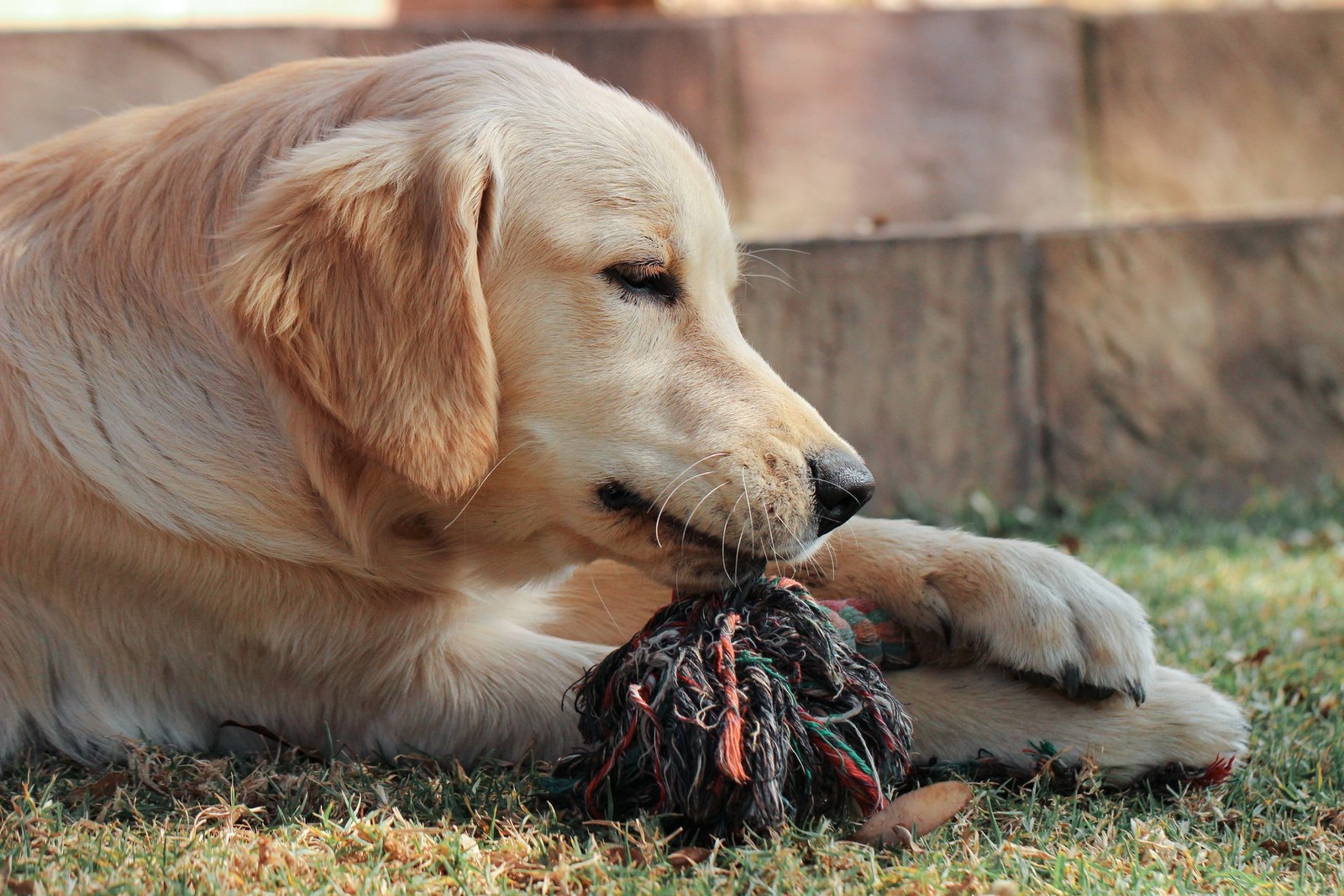
Your puppy bites everything — your hands, your sleeves, the furniture, the skirting boards — because mouthing is how puppies explore, play, and learn about the world. It is normal puppy behaviour, not aggression, but it does need calm teaching now, while your puppy is small and the lesson is easy to learn.
Why puppies mouth absolutely everything
Before they had you, puppies played almost entirely with teeth. In the litter, they grabbed ears, tails, and each other, and their mother and siblings pushed back when a bite went too far. That early rough-and-tumble taught them what mouths are for — and what they are not for has to be taught all over again in a human home.
Teething adds fuel to the fire. Between roughly three and seven months, baby teeth fall out and adult teeth push through, leaving gums sore and itchy. Chewing relieves that discomfort, which is why a teething puppy who was mouthy at nine weeks can turn into a determined chewer at five months. Some breeds mouth more than others. Retrievers were bred to carry things in their mouths, herding breeds may nip at heels and trousers as they try to organise moving people, and terriers tend to grab, shake, and hold on. None of that means your puppy is badly behaved — it means the habit needs a clear, kind outlet.
What to do when teeth meet skin
Start with one simple household rule: hands are never toys. No wrestling games where fingers become the prize, no waving hands in your puppy's face, and no rough play that ramps them up and then punishes them for being ramped up. When teeth touch skin during calm play, go still, say "ouch" in a normal voice or simply pause, and withdraw your attention for a few seconds. Movement and excitement reward biting; stillness and a boring pause do not.
Then show your puppy what teeth are for:
- Keep a legal chew within reach in every room — a rope toy, a rubber chew, a soft plush for supervised play.
- Rotate toys every day or two so yesterday's boring chew feels new again.
- Praise warmly the moment your puppy chooses the toy over your sleeve.
- End the game briefly if biting escalates, then try again once your puppy has settled.
Puppy-proof cables, shoes, and remote controls behind gates or in cupboards. A puppy who can reach twenty forbidden objects will make twenty mistakes a day; a puppy who can reach two legal chews learns faster.
Safety and when to worry
Supervise puppies and children together, always. Small children squeal, wave their arms, and run — all of which read as brilliant play signals to a puppy — so teach children to stand still, fold their arms, and be a "tree" if nipped, and step in yourself rather than letting either side practise the wrong lesson.
Most mouthing fades steadily with consistency, teething passing, and maturity. Book a vet or qualified behaviourist conversation if biting is accompanied by stiffening, growling over objects, guarding food, or if your puppy seems genuinely frightened or in pain — those deserve individual assessment, not a training tip from a webpage.
One rule, shared by the whole household
The fastest progress comes when everyone teaches the same lesson. With KinsLe's Family Sharing, your puppy's care circle can see the same agreed approach — no hands as toys, pause when teeth touch skin, toy offered instead — so a partner, grandparent, or older child is not accidentally undoing your work with a wrestling game in the next room. Posted in the Family Sharing puppy notes on KinsLe, the pause-and-offer-a-toy response stays readable for the grandparent who pops in at lunch.