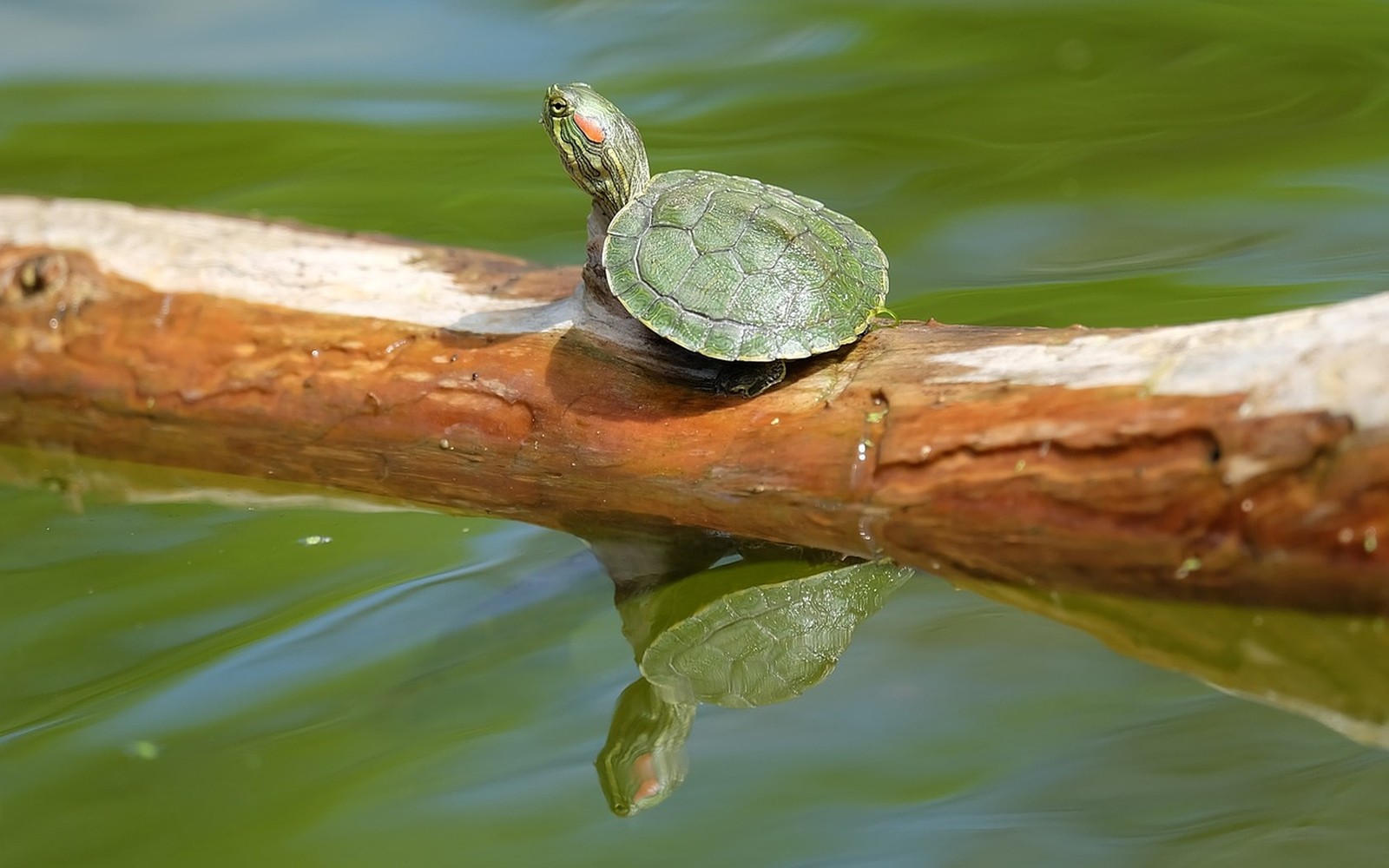
Basking is work for a red-eared or yellow-bellied slider, not idleness. Out of the water a slider raises its body temperature, dries its shell and skin, which helps keep fungal and bacterial growth in check, and absorbs ultraviolet light it needs to use calcium properly. A healthy slider typically divides the day between swimming, feeding and spells on the platform, often basking longest in the morning and after eating. When the balance tips to the platform for the whole day, every day, the turtle is usually telling you the water, the basking spot or its own health needs attention.
Start With the Two Temperatures
Measure before you guess, because sliders choose the warmer option when the setup gives them one. Adult slider water generally sits around 75 to 80°F (24 to 27°C), with a basking surface warmer still, around 85 to 95°F (29 to 35°C), so the turtle gains real warmth by climbing out and has a reason to return to the water to cool down and feed. If the water has drifted cold because a heater has failed or the room has cooled, the turtle stays where the warmth is and may barely swim for days. If the basking lamp is too weak, too far away or on for too few hours, the turtle compensates by staying under it far longer. Check both temperatures with thermometers at water level and on the basking surface itself, not by hand, and replace failed heaters or lamps promptly.
What Normal All-Day Basking Can Still Be
Some long basking days have innocent explanations. A slider often basks heavily after a large meal or a cool night. Shedding skin and shell scutes also bring extra drying time, with pale, lifting edges visible on the shell. The pattern matters more than a single day: a turtle that basks all day but still slides in eagerly at feeding time, swims strongly and evenly, and has clear, open eyes is behaving very differently from one that has quietly stopped doing those things.
Illness Signs That Hide Behind Basking
A sick slider conserves energy in the warmest place it has, so unbroken basking paired with other signs needs a veterinarian who treats reptiles. Watch for a turtle that basks with its eyes closed for long periods, has swollen or puffy eyelids, blows bubbles from the nose, breathes with its mouth open, or wheezes. Refusing food, swimming lopsided or listing to one side in the water, weakness in the legs, and mucus around the mouth all strengthen the concern. Do not simply turn the heat up and wait, because warmth can make a resting turtle look briefly brighter while an infection continues underneath.
The Female Carrying Eggs
A mature female slider may bask far more than usual, eat less, and become restless when she is carrying eggs, whether or not a male is present, because females can produce eggs without mating. The telling extra sign is digging: repeated scraping and kicking movements with the hind legs, on the platform, in corners, or during supervised time out of the tank. A female showing those signs needs a suitable place to lay, such as a deep box of slightly damp soil she can dig in safely, and advice from a reptile veterinarian if the digging continues for days without eggs appearing, because retained eggs are a genuine health risk.
Resetting the Routine Once Checks Are Done
With temperatures corrected, sliders typically return to a mixed day within a short spell: a morning bask, active swimming and feeding, and shorter basks between. Keep the lamp on a steady daytime schedule, feed in the water, since sliders swallow food in water rather than on land, and note how long the turtle actually spends out each day rather than relying on impressions. Recording those temperature checks and basking notes in KinsLe's Care Teams, where each care duty is marked complete with a timestamp, means a slow drift back to all-day basking is caught from the record, not from memory.