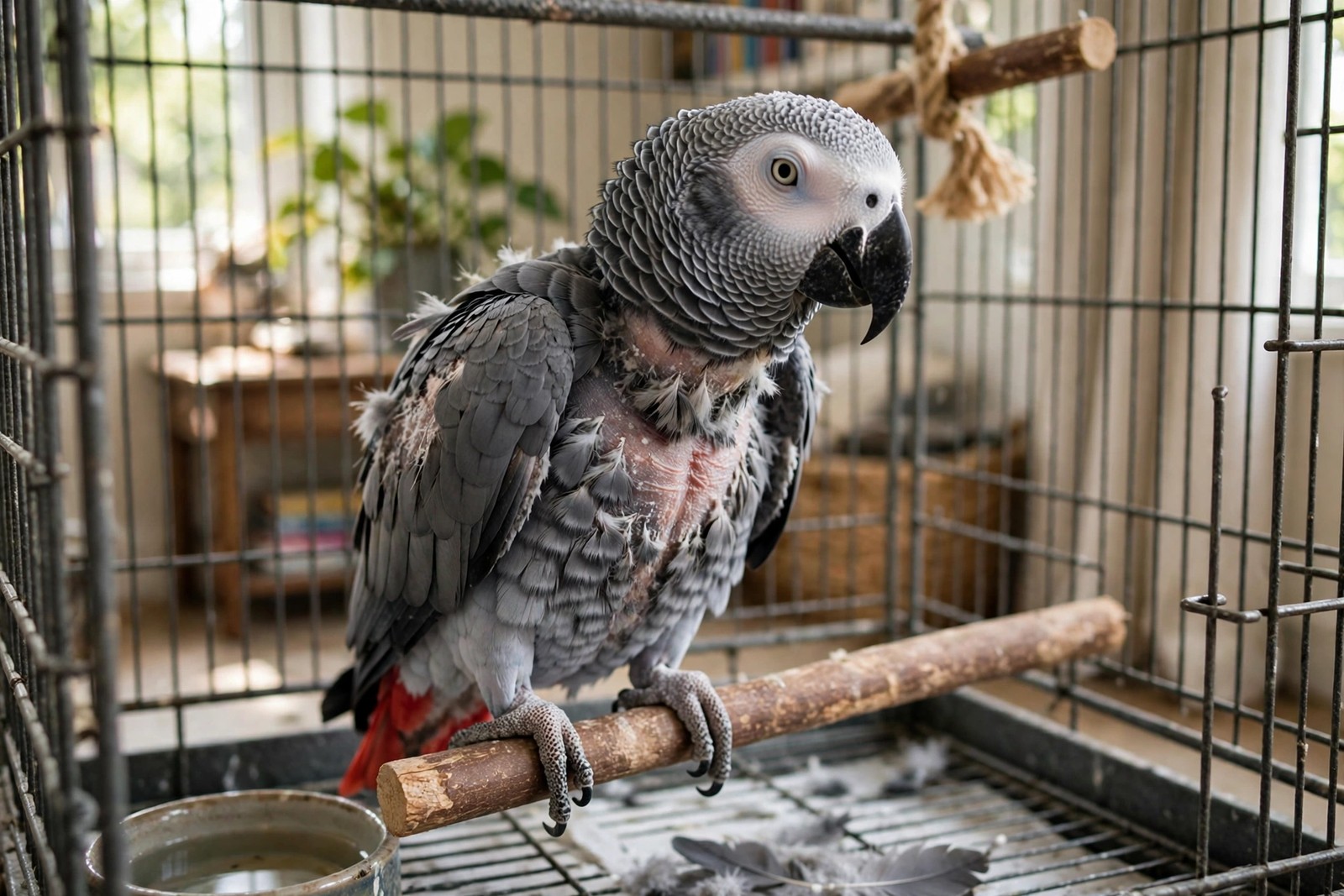
Feather damage a Grey does to itself is never just a bad habit: either something medical is driving it, or something psychological is, and separating those two possibilities is the whole job. Medical causes include skin and feather diseases (including PBFD), parasites, liver and thyroid problems, infections, and nutritional deficiencies. Behavioural and psychological causes are just as real in this exceptionally intelligent species: boredom, loneliness, anxiety, changes in routine or household, lack of sleep, and sexual frustration can all become plucking. Greys are famous for it precisely because they are sensitive, routine-bound, and brilliant — a bored or unsettled Grey turns on their own feathers.
Why the Vet Comes Before the Behaviour Plan
Any new plucking in a Grey should start at an avian vet, not with a collar or a spray: the vet rules out (or treats) disease, checks bloodwork and diet — many plucking Greys are on seed-heavy diets short on vitamin A and calcium — and only then does behaviour work begin on solid ground. The behavioural audit is honest and practical: 10 to 12 hours of dark quiet sleep, daily out-of-cage time and direct interaction, foraging toys that make the bird work for food, a predictable routine, no smoking or aerosol sprays anywhere near the bird (smoke exposure is a real medical contributor), and regular bathing or misting opportunities, since dry skin and low humidity aggravate itching. Never punish or make a fuss over the plucking itself — attention can reinforce it — and address it early: the longer it runs, the more it becomes a habit that outlives its original cause, and damaged feather follicles can eventually stop regrowing feathers at all.
Working With Your Vet
For a plucking Grey, the most useful thing you can hand an avian vet is a dated episode record, not a worried summary. Log when the plucking happens — evening, when the house empties, after a routine change — alongside sleep hours, diet, bathing opportunities and anything new in the bird's world. Photograph the feather damage weekly from the same angle, because spread is hard to judge from memory and easy to see across dated pictures. Note the bloodwork dates and diet changes the vet sets running, so the next appointment can judge them against the episode pattern rather than starting the story again. New plucking with any skin damage, bleeding, weight loss, or behaviour change should be seen by an avian vet promptly; self-mutilation (breaking skin) is a same-day visit.
Pet Passport in KinsLe holds that record together: the Grey's blood results, diet notes and episode dates travel as one packet in KinsLe, ready for the next avian vet who needs the whole story.