
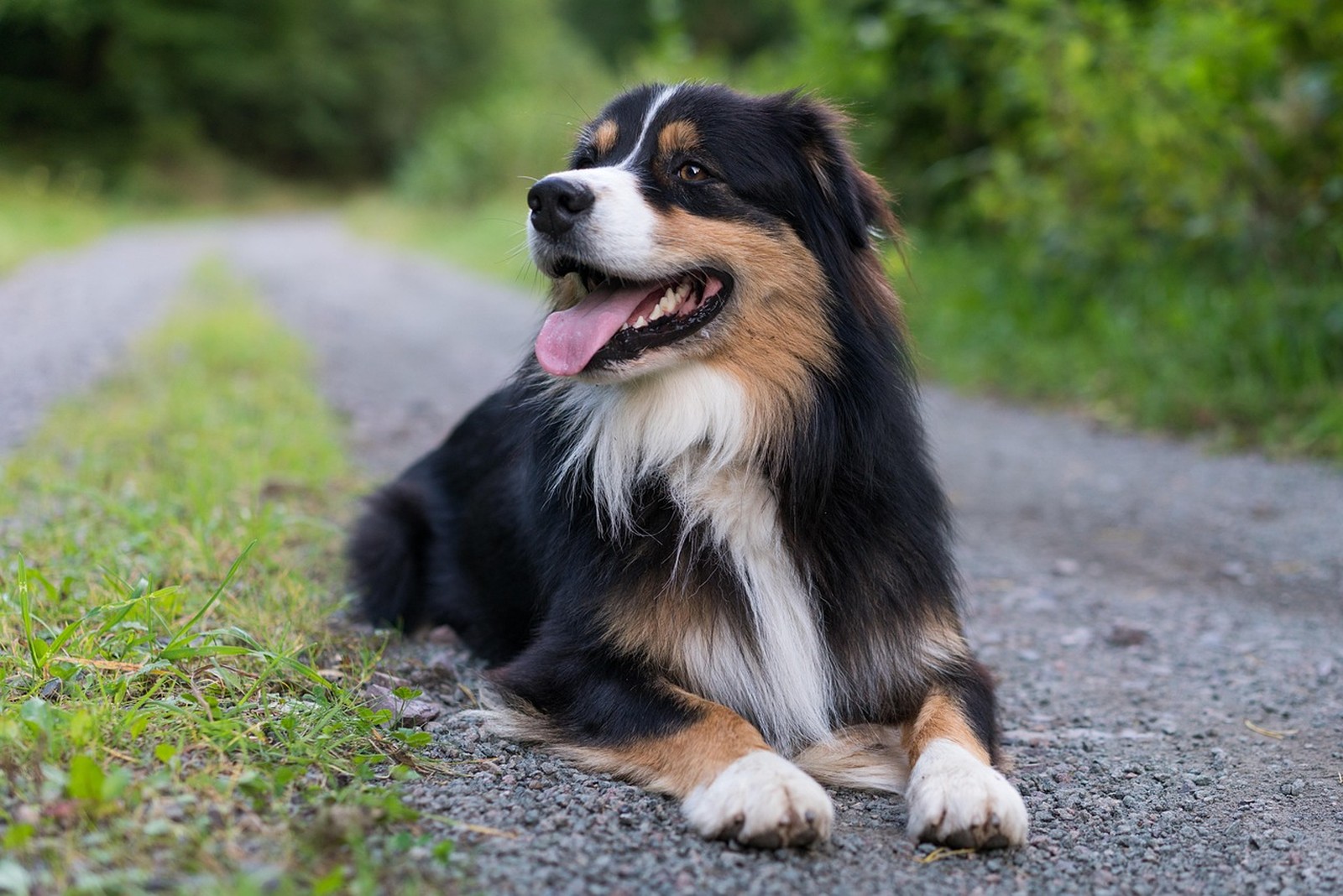
An Aussie's Appetite Runs on His Activity
Australian Shepherds are wired to work, and their eating often follows their workload and their minds rather than the clock. A Shepherd who spent yesterday herding, hiking, training, or ricocheting around a family gathering may be overtired, overheated, or simply still mentally full today, and the bowl loses to sleep. Equally, an under-stimulated Aussie on a rainy, boring day sometimes goes cool on food that normally disappears. One skipped day in a dog who then asks for breakfast as usual is a footnote. What you are really assessing today is whether the dog around the missed meal looks like himself.
Today's Checks, in the Order That Matters
Start with water: a dog drinking normally is in a very different position from one ignoring the bowl entirely. Take him through his normal routine and read his energy honestly — a Shepherd who still brings you a toy, brightens for his walk, and trots as usual is telling you he feels broadly well. Check what comes out as well as what goes in: normal stools and no vomiting support the wait-and-see approach. Run your hands over him for sore spots, check his mouth for a broken tooth or something wedged, and think back over yesterday — unusual mileage, hot weather, car travel, visitors, or a scavenged extra on the walk all explain a quiet stomach today.
Offering Food Without Starting a Negotiation
Put his regular food down at the next normal mealtime, leave it for a reasonable window, and lift what he leaves rather than grazing him all day — a Shepherd is clever enough to train you into upgrading the menu if refusing produces chicken by evening. Avoid rich treats and table extras today, since a tired gut does not need a feast and you lose your baseline for judging tomorrow. If he eats half and seems content, note it; appetite returning in stages after a huge day is normal for this breed. Keep water topped up and let rest do its work, particularly if heat or heavy exercise was yesterday's story.
Why Shepherd Owners Should Watch the Pattern, Not the Day
This breed's appetite is a useful barometer precisely because it fluctuates with workload. Keep a rough mental note of the link: big day, light eating; normal day, normal bowl. A break in that pattern is what matters — refusing food on ordinary days, eating less across a week, or losing visible condition despite his usual exercise. Weight that drifts while exercise stays constant, or appetite changes that arrive with limping, stiffness, or reluctance on the walks he normally demands, all deserve a vet conversation rather than another week of watching. Shepherds push through discomfort to keep working, so changes in drive can lag behind how he actually feels.
When Today Becomes a Vet Call
Ring the clinic if he is still refusing tomorrow, sooner if he stops drinking, vomits repeatedly, develops diarrhoea, seems painful or bloated, or swaps his usual spark for flat lethargy — in a dog this active, flatness is a loud signal. Puppies, seniors, and dogs with known health conditions get a lower threshold, because a day without food costs them more. If he may have raided something unsuitable on yesterday's adventure, say so on the call. With several people feeding and walking a busy Shepherd, KinsLe's Care Teams keeps each attempt at the bowl and its outcome timestamped in one place, so nobody has to guess whether he has truly eaten nothing all day.