
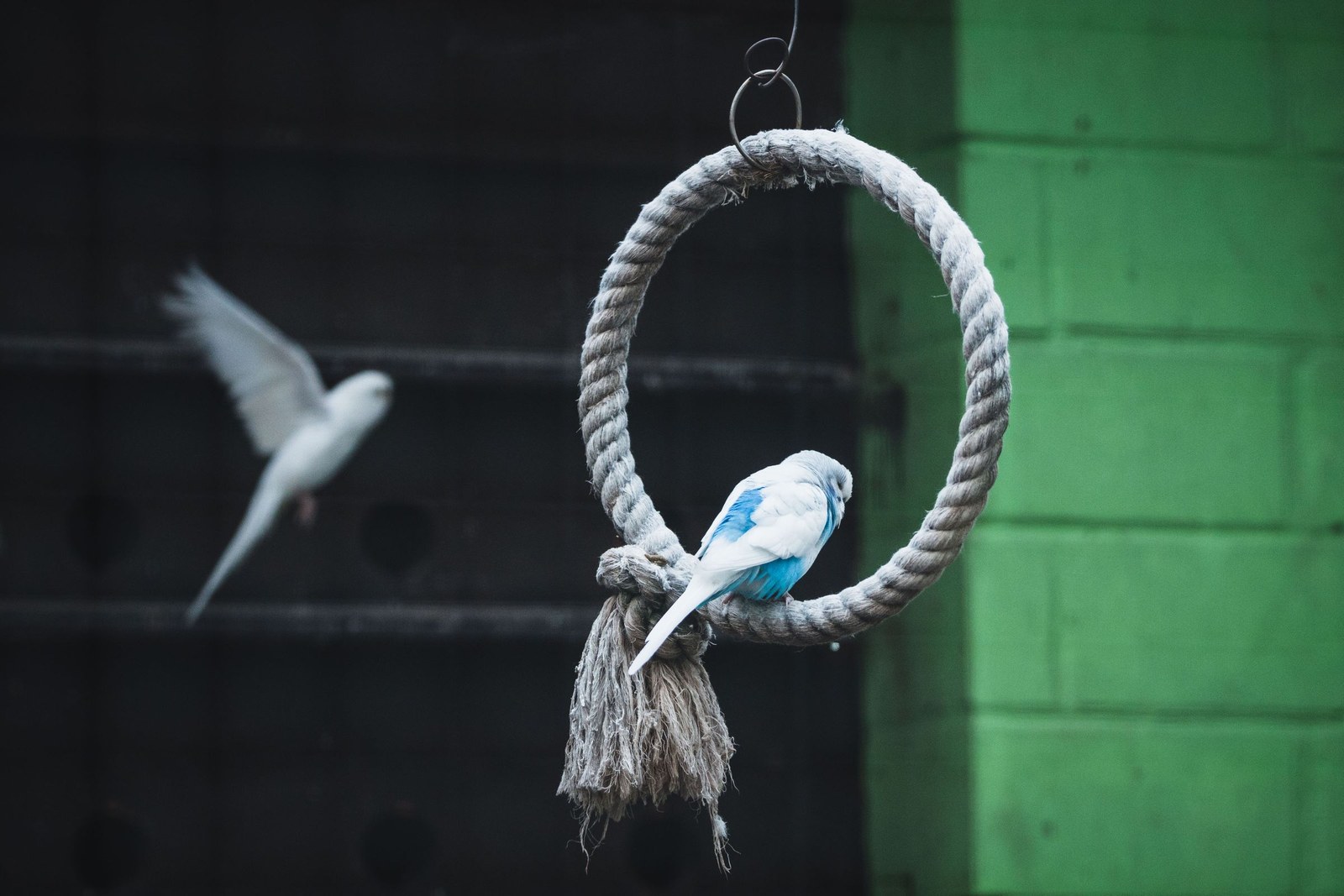
A budgie who stays fluffed up on the cage floor — especially if he is quiet, not eating, or breathing hard — should be treated as urgent. That picture is very different from a brief, cozy fluff during an afternoon nap on a perch. Keep him warm and calm, minimize handling, and contact an avian vet or an emergency clinic that sees birds right away.
Nap Fluff Versus Sickness Fluff
Healthy budgies fluff briefly all the time: a quick shake-and-settle after a bath, a puffy doze after lunch with one foot tucked up, a moment of contentment during a head scratch. Those birds are on a perch, they rouse easily, their eyes are bright between blinks, and they return to eating, chirping, and moving around within a short while.
Sickness fluff looks different in context. The bird stays puffed for a long stretch, often with eyes half closed. He chooses the cage floor because perching takes energy he no longer wants to spend, or because balance feels risky. He ignores seed he normally races for. His tail may bob with each breath, or you may hear clicking or see open-mouth breathing. That combination — floor, fluff, quiet, not eating — is the emergency pattern. Trust the whole picture, not any single detail.
What To Do in the Next Hour
First, reduce stress and heat loss. Move the cage — or, if you must move the bird, use a small, ventilated hospital-style box with a soft lining — to a warm, quiet, draft-free room away from kitchen fumes, candles, and other pets. Dim the lights slightly. Offer familiar seed and water within easy reach on the floor of the space, since a weak budgie may not climb to a usual cup.
Then call. Describe exactly what you see: how long he has been on the floor, whether he is eating, how his breathing sounds, and what his droppings look like. If your regular avian vet is closed, ask them — by phone message or website — which emergency clinic they recommend for birds, and go there rather than waiting until morning. Small birds decline quickly; hours genuinely matter.
Do not attempt to force food or water into the beak, give human medicine, or put him under a harsh heat lamp. Gentle warmth of the room and a fast, calm trip to professional care are the help he actually needs.
While You Travel and Afterward
Keep the carrier covered, quiet, and level in the car, and bring a fresh sample of cage paper with droppings if you can do so without delaying departure — it can be useful to the clinician. After the visit, follow the clinic's instructions on warmth, rest, and follow-up, and watch cage mates for similar signs, mentioning them to the vet if anything appears.
Remove the Panic Search Next Time
A scare like this teaches one clear lesson: the vet's number should already be saved before you need it. Having your vet already saved through KinsLe's Pet Services Directory means you are not searching for help in a panic, and anyone else at home can pull up the same clinic from your budgie's profile. Pet Services Directory makes that avian veterinarian easy to find again in seconds on KinsLe, with the clinic's phone number ready before a quiet, fluffed budgie ever needs a second urgent trip.