
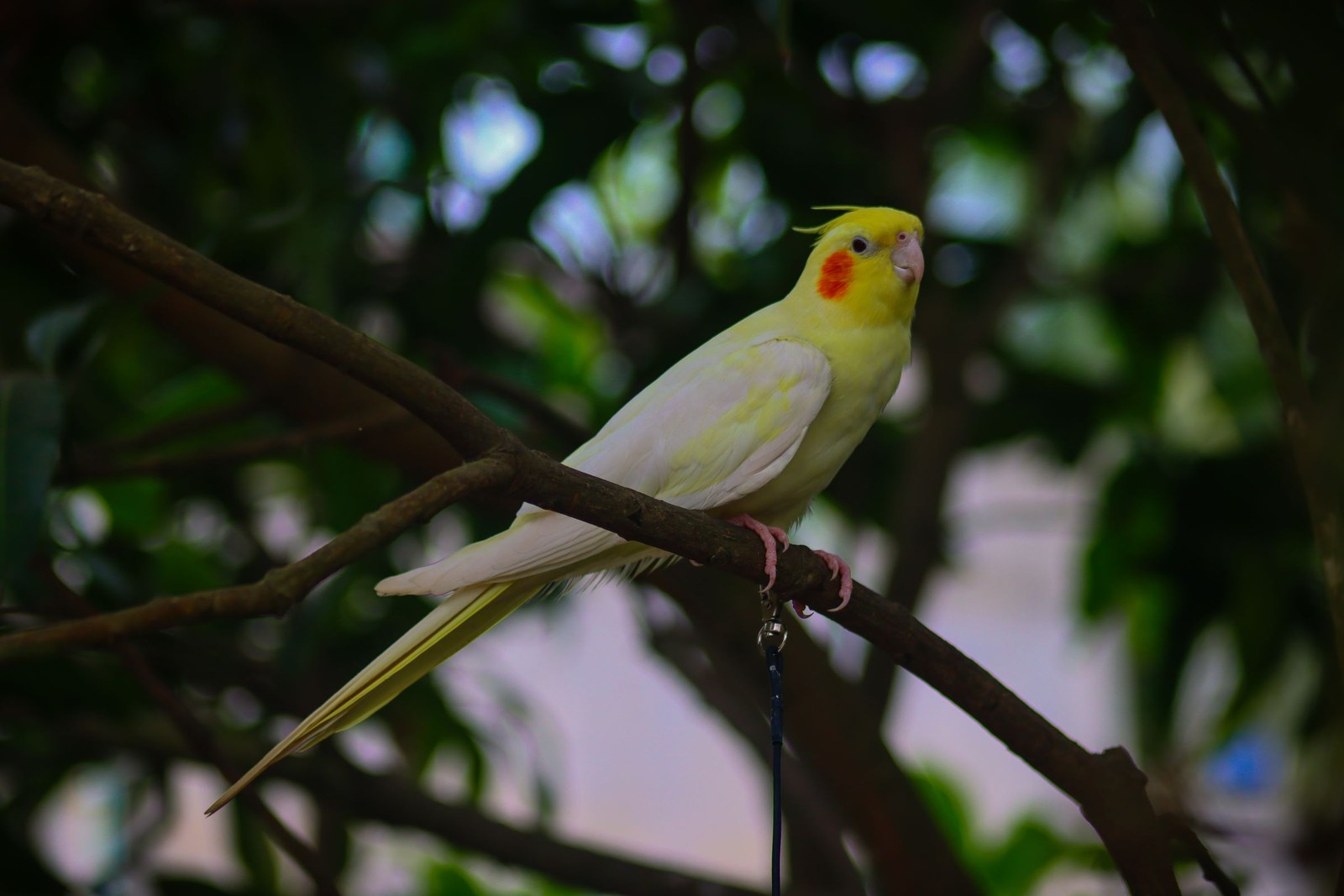
A normal cockatiel molt usually happens once or twice a year: old feathers drop gradually over several weeks, new pin feathers come in, and your cockatiel otherwise eats, plays, whistles, and acts like herself. Bald patches, bleeding pin feathers, broken skin, or a bird who seems unwell, quiet, or itchy to the point of distress during feather loss are not typical molting and deserve a vet check.
What a Healthy Molt Actually Looks Like
Molting is how birds replace worn feathers with fresh ones, and it tends to follow seasonal light changes. You will find loose down and the occasional larger feather at the bottom of the cage, not handfuls all at once. Pin feathers — the spiky, sheathed new feathers on the head, neck, and wings — may make your cockatiel look a little scruffy or punk-rock for a while. Those pins are sensitive, so many cockatiels get a bit crankier about head scratches mid-molt, then happily ask for help preening the ones they cannot reach once the sheaths loosen.
Energy use goes up during a molt because growing feathers takes protein and nutrients. A slightly sleepier bird who is still eating well and interested in the room is usually within normal range. Extra bathing opportunities help too: a shallow dish of water or a gentle mist can soften pin sheaths and ease itchiness.
Signs It Is Not Just a Molt
Feather loss needs a closer look when you see:
- Bare, smooth bald spots rather than even thinning
- Feathers coming out in one area only, especially chest or legs
- Blood, scabs, redness, or chewed feather shafts
- Feather loss paired with appetite, droppings, or behavior changes
- A molt that seems to drag on for months without finishing
Those patterns can point toward plucking, skin irritation, nutrition gaps, or another underlying issue that only an examination can sort out. This article cannot diagnose your cockatiel — and no photo online can either — so an avian vet is the right next step when the pattern does not fit an ordinary molt. Note when you first noticed the loss and whether anything changed at home: new food, new cage position, less sleep, or a new pet in the house.
Supporting Your Cockatiel Through a Molt
Keep the routine steady and the diet consistent. Offer the foods your vet has already approved, ensure your bird gets a full night of uninterrupted sleep in a dark, quiet spot — around ten to twelve hours suits many cockatiels — and keep baths available without forcing them. Resist the urge to pull pin feathers or apply oils or sprays to the skin; those products are rarely appropriate for birds and can damage feather quality.
Handling tip: let your cockatiel set the terms. Some birds want extra gentle scritches during a molt, others want to be left alone with a chew toy. Respecting that mood swing is part of reading the molt correctly.
Tracking the Pattern Year to Year
One molt is a snapshot; several molts are a pattern. Between molts, Kimmy inside KinsLe can field the questions that memory blurs: whether loss limited to the head reads differently from chest loss, how many weeks a molt can run before it counts as dragging, and what details an avian vet will want first. If a future molt starts much earlier, lasts far longer, or looks different, you will have dates to show your vet rather than a vague "sometime last spring." Kimmy in KinsLe can field questions about a bleeding pin feather or a patch that stays bare, giving answers from the library behind KinsLe Answers.