
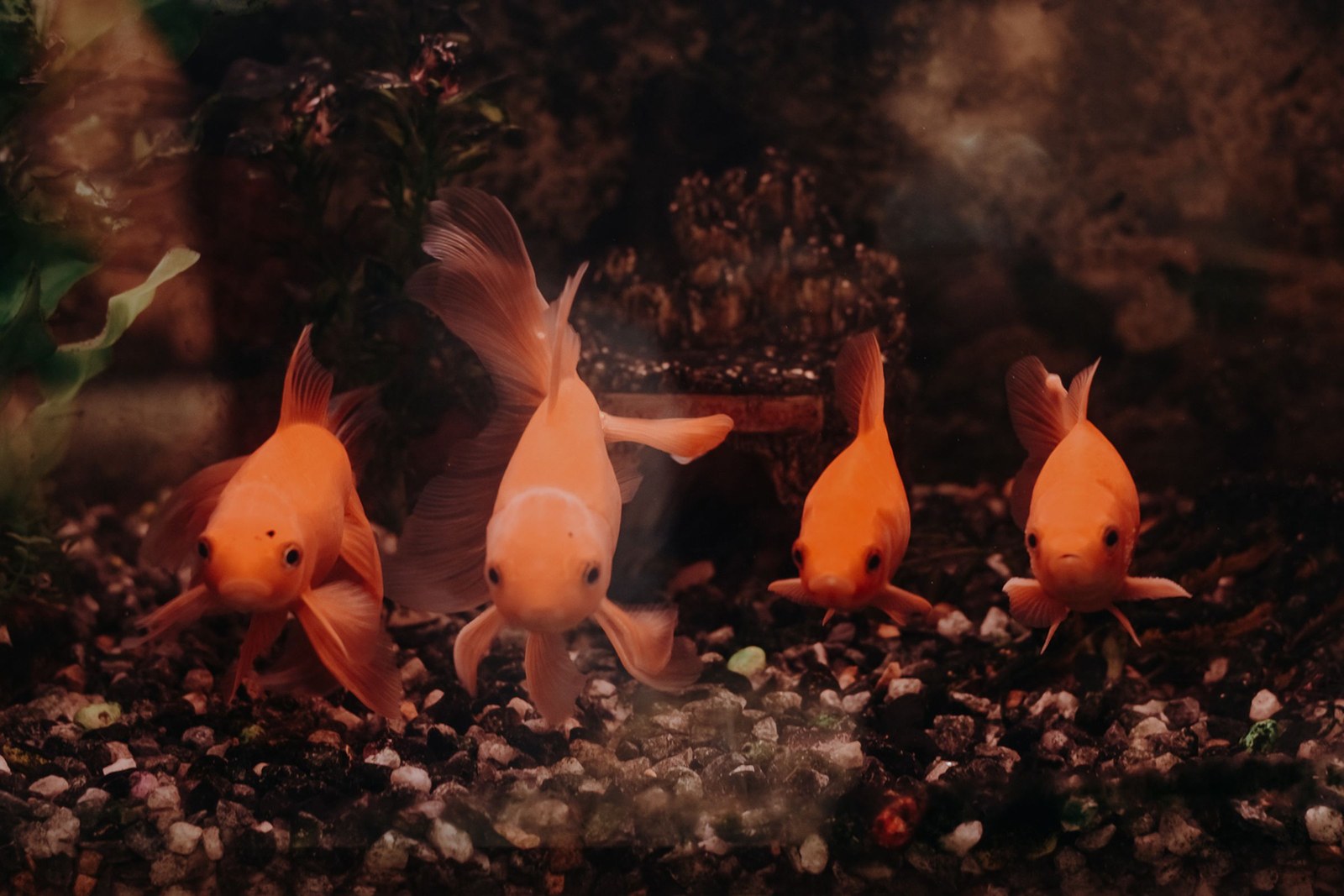
A fish that lists to one side, drifts up to the surface, or sinks and struggles to rise is showing a buoyancy problem, not a diagnosis by itself. In most aquarium fish, buoyancy is regulated by the swim bladder, an internal gas-filled organ that helps the fish hold depth without constant effort. When something interferes with that system — or with digestion, balance, or general strength — sideways swimming and upside-down floating are among the clearest visible signs.
Why balance and buoyancy go wrong
Several different causes can produce the same tilted posture, which is why guessing is risky. A digestive slowdown after heavy feeding can press on nearby organs, especially in deep-bodied fancy goldfish, whose compact shape leaves little spare room inside. Bettas and older fish can also look unsteady when they are weak or stressed. Water that has drifted — ammonia or nitrite present, a sudden temperature drop, or a pH swing — can leave a fish disoriented and unable to hold position. Injury from bullying, rough netting, or a collision with decor is another possibility, and internal infection can affect balance as it progresses.
The pattern matters more than the posture alone. Trouble that appears right after a large meal and eases within hours points the conversation toward digestion. A gradual lean over weeks, with fading appetite and clamped fins, suggests something longer-standing. Problems that start soon after new fish are added, a filter change, or a missed maintenance cycle make recent water conditions a central part of the story to report.
Details worth observing closely
Before you change anything, watch for a few minutes and write down what you actually see. Is the fish floating up like a cork, sinking to the bottom, or rolling only when it tries to swim? Can it still reach the surface and the lower levels, or is it stuck at one depth? Look for clamped or torn fins, redness, swelling, raised scales that give a pinecone look, pale patches, or rapid gill movement. Note whether tankmates are chasing it, whether it is still interested in food, and whether any other fish show even mild tilting.
Test the water and record the readings for ammonia, nitrite, nitrate, pH, and temperature, along with the time you tested. Compare those numbers with what is normal for your established tank, and note recent changes: new arrivals, a different food, a larger-than-usual feeding, a water change, or equipment trouble. That timeline often tells an aquatic veterinarian more in one page than a long description of the swimming alone.
When a veterinarian needs to be involved
Contact an aquatic veterinarian promptly if the fish cannot right itself at all, if breathing looks rapid or laboured, if scales are raised or the body looks swollen, or if redness or sores are visible. The same applies if the problem lasts beyond a short period of close observation, keeps returning, or begins in a second fish — spread through a tank changes the picture completely. Do not add medications to a community tank on guesswork: the wrong product can harm beneficial filter bacteria and stress healthy fish while the real cause goes unexamined.
An aquatic vet may examine the fish, review your water results, and decide what further checks are appropriate for that species and situation. Arriving with dated notes on feeding, symptoms, tankmates, and water readings helps the vet separate a one-off digestive episode from injury, infection, or a tank-wide water problem, instead of starting from a vague report that the fish 'looks sideways.'
Good records turn a worrying symptom into a clear case history, and that is where KinsLe's Pet Passport earns its place: it keeps your fish's feeding notes, symptom timeline, water-test results, and veterinary documents together, ready to share in one handoff when an aquatic vet needs the full story.