
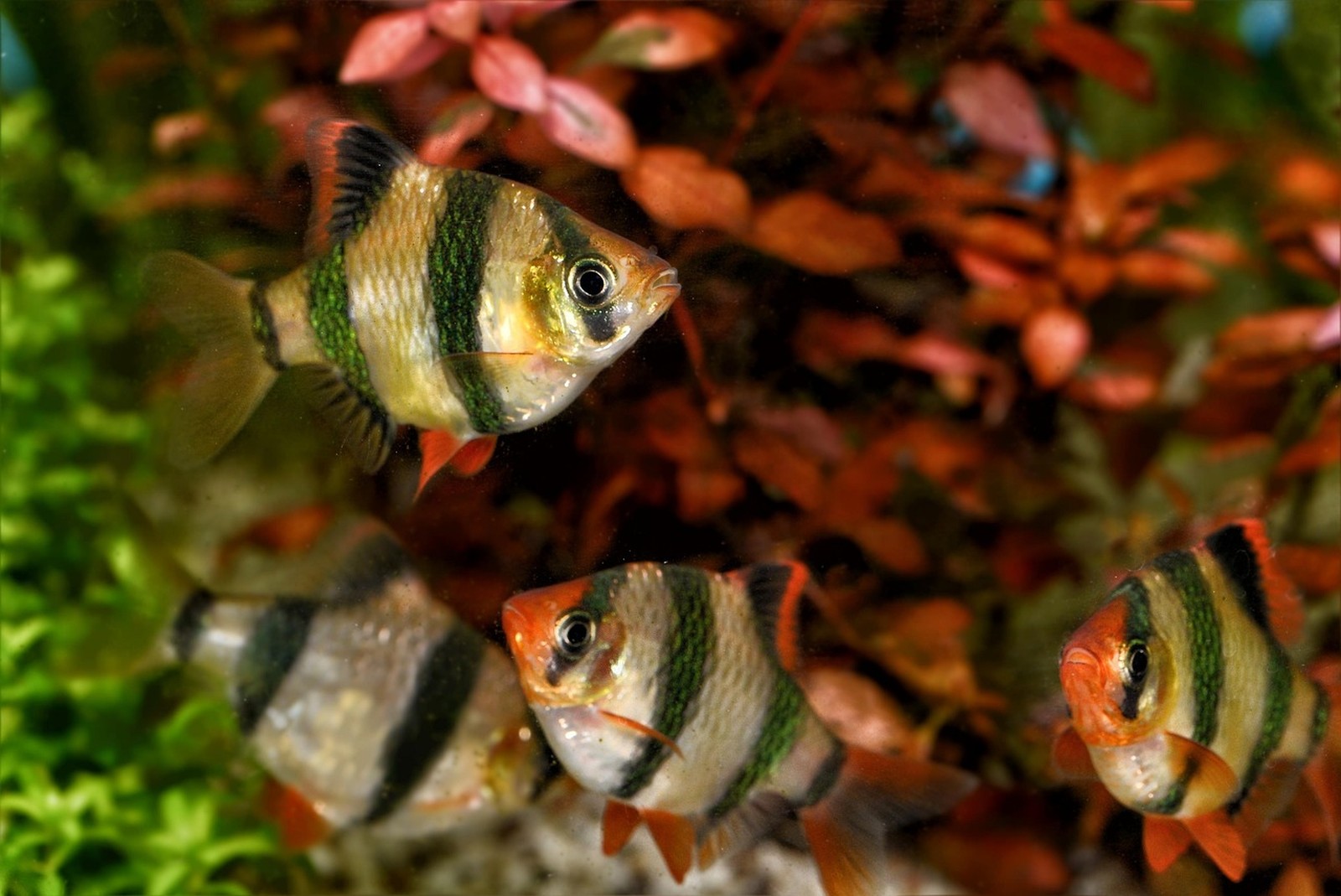
Chasing usually means one of four things: breeding behavior, a fish defending a favorite hiding spot, a tank that is too small for its residents, or a schooling fish kept alone and stressed. Watch for torn fins, a fish that stops eating, or one that hides constantly — those are the signs that chasing has crossed from normal behavior into a problem that needs intervention.
Reading the chase
Not all chasing is aggression. Livebearers like guppies and mollies chase constantly as part of courtship — a male pursuing a female is normal breeding behavior, not bullying. Cichlids and gouramis chase to defend a cave, a plant cluster, or a corner they have claimed as theirs; the chase ends at the territory boundary. The concerning pattern is different: one fish relentlessly targeting a single tank mate across the whole tank, nipping fins, or cornering it until it stops eating. Learn to distinguish the brief, looping courtship chase from the sustained, one-sided hunt.
The usual root causes
Overcrowding is the most common driver — too many fish in too little water means no escape routes and constant contact, which turns mild territoriality into nonstop conflict. Lonely schoolers are the second: a single tiger barb or danio kept without its group redirects all its social energy into harassing whoever is nearby. Wrong sex ratios matter too — too many male livebearers per female leads to exhausting pursuit; aim for at least two or three females per male. And breeding pairs of cichlids become dramatically more aggressive when guarding eggs or fry, which is temporary but intense.
What to do about it
Start with the environment: add plants, driftwood, or decorations that break sight lines so a chased fish can get out of view — out of sight genuinely means out of mind for most fish. Rearranging the decor resets established territories and can calm a bully that has claimed the whole tank. Check your stocking against the tank's size; if the tank is over capacity, the kindest fix is fewer fish, not more decor. Boost undersized schools up to proper numbers — six or more for most species — so social energy spreads. For persistent one-on-one bullying, a tank divider or a temporary timeout in a breeder box gives the victim a break while you decide on a permanent solution.
When rehoming is the kindest option
Some combinations simply do not work, and no amount of plants fixes a fundamentally incompatible fish. If one individual keeps injuring tank mates despite every adjustment, rehoming it — to a fish store, a local club, or another keeper with a suitable tank — is the responsible call, not a failure. Never release aquarium fish into local waterways; it is ecologically destructive and illegal in most places. A store credit or club adoption keeps the fish's life going in the right environment.
Move the profile with the fish
If rehoming becomes the answer, the fish's history should travel with it. KinsLe's Transferrable Profiles let you move a pet's profile and records to the new owner, so feeding notes, species details, and care history arrive intact instead of starting from zero. It is the kindest version of a fresh start — for the fish and the person taking it in.
Most chasing resolves with space, cover, and proper groups; the rest resolves with an honest decision. Transferrable Profiles on KinsLe completes that handover when the aggressor goes to another keeper: the fish's own profile passes across with feeding notes, species details, and its care history, so the receiving tank starts with the full story rather than a guess.