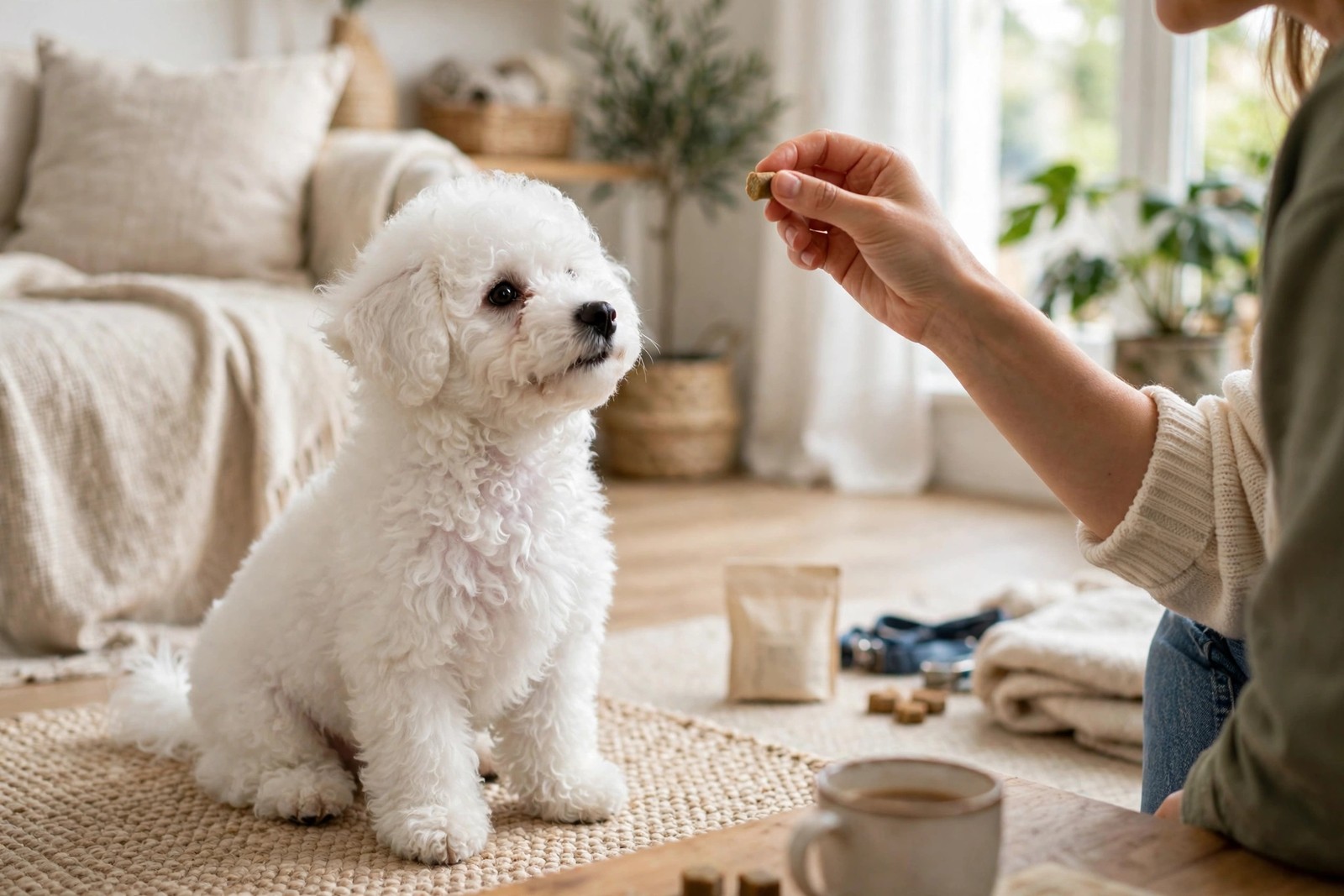
For most first-time owners, yes — with one part of training that needs real patience. A Bichon Frise is intelligent, people-focused, and keen to earn praise and treats, which makes everyday obedience enjoyable to teach. The part that surprises new owners is house-training: this breed is known for taking longer than average to become reliable indoors, and planning for that from day one makes the difference between a minor chore and months of frustration.
Why Obedience Usually Goes Well
Bichons read faces and tone quickly and genuinely enjoy short training games. Five-minute sessions, a few times a day, using small soft treats and praise, will teach the basics — name response, sit, come, and walking on a loose lead — faster than most beginners expect. Keep sessions upbeat and finish while your dog is still keen. A bored or scolded Bichon switches off, so harsh corrections are both unkind and useless with this sensitive breed.
House-Training: The Slow Part, Done Properly
Take a puppy out first thing in the morning, after meals, after play, after naps, and last thing at night, and stay out until they toilet, then reward on the spot. Use a crate or a small puppy-proofed area between trips, because a puppy loose in a whole house will simply find a quiet corner. Clean accidents with an enzymatic cleaner and never punish after the fact — your Bichon will not connect the scolding with the puddle. Many owners see real reliability arrive over several months, not weeks, and that is normal for this breed.
Habits That Help a Beginner
Start grooming handling early too: a Bichon needs regular brushing and professional grooming through life, so teach your puppy to accept paws, ears, and face being touched, a little each day, paired with treats. Socialise gently with friendly people and calm dogs so confidence grows alongside obedience. Written notes on which cues are learned and which are still shaky help everyone in the house use the same words.
When to Get Help
If house-training shows no progress after several consistent weeks, if your Bichon seems anxious when left alone, or if toileting changes suddenly in an adult dog, talk to your veterinarian to rule out a health cause, and consider a class for technique. Beginners improve fastest with a coach watching their timing.
That is exactly the kind of support KinsLe's Pet Services Directory is there for, connecting Bichon owners with nearby trainers, classes, and groomers in one place, so a first-time owner never has to guess who to call when training stalls.