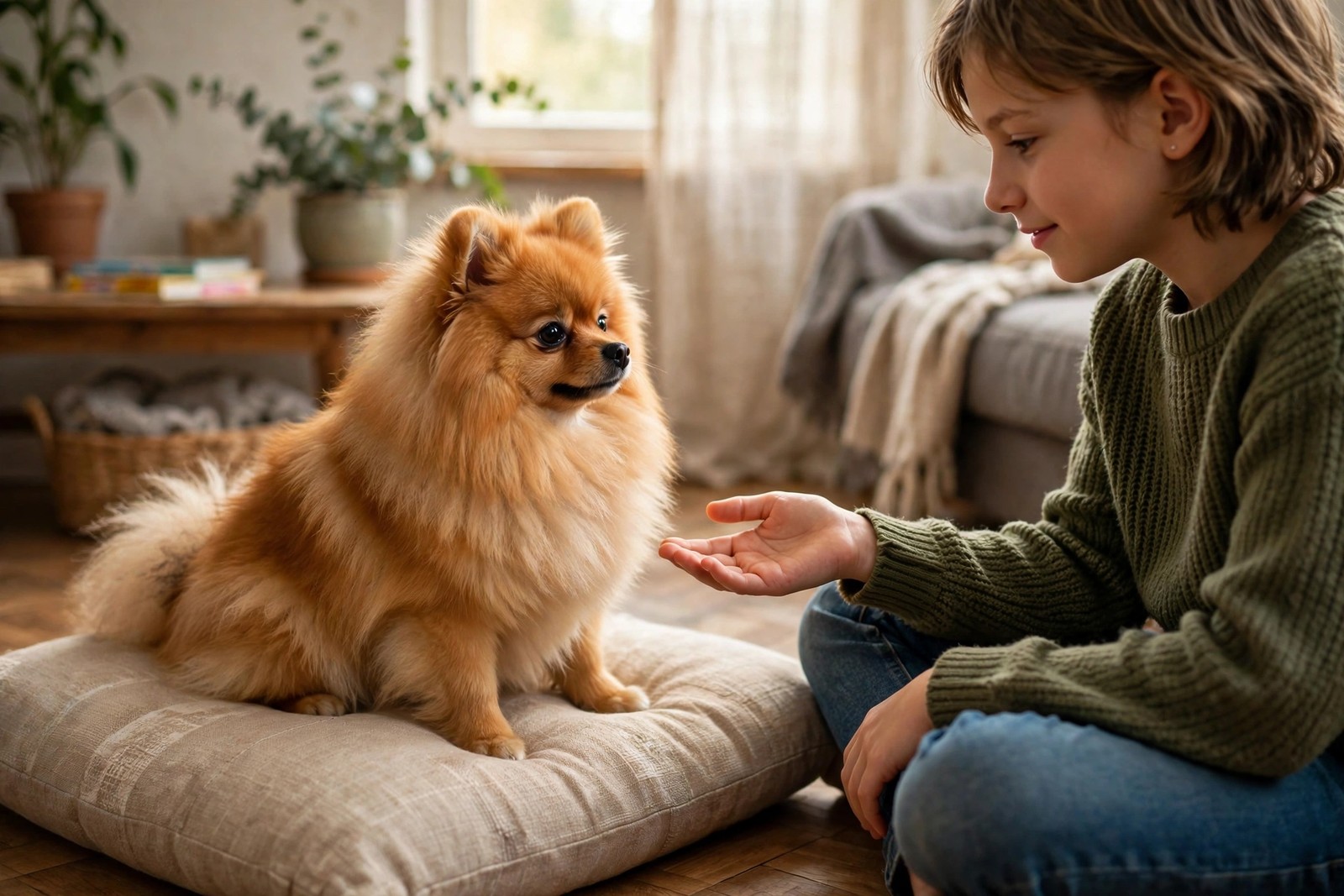
A Pomeranian can be a delightful dog for the right children, but the right children are older, seated, and gentle. This is a toy breed, typically only a few pounds as an adult, descended from much larger spitz sled dogs but bred down to a size where the skeleton is fine and easily hurt. The personality is big, confident, and devoted. The body is not, and almost every problem between Pomeranians and children comes from that mismatch.
Why Toddlers Are the Hard Case
A toddler falls without warning, grabs what is within reach, and wants to carry a dog like a toy. For a Pom, each of those normal toddler behaviours carries real risk: a short fall from a child's arms or a sofa can fracture a leg, being stepped on can injure ribs or worse, and a fistful of that thick double coat pulled hard will hurt. Pomeranians also startle easily and defend themselves the only way a very small dog can, by snapping, which is why many Pom bites to children happen during hugging, cornering, or attempts to pick the dog up. Children under about six and Pomeranians should be together only with an adult within arm's reach, and even then the safer pattern is short, calm contact rather than shared play all day.
What Works With Older Children
School-age children who understand the rules often adore Poms, and the feeling is mutual. The rules are simple and physical. Sit on the floor and let the dog come to you. Never pick the dog up; if an adult lifts it, one hand supports the chest and the other supports the rear, held close to the body. Stroke the chest and back, never reach over the head, and stop when the dog moves away. Teach children to spot a dog asking for space: turning the head away, licking lips, going still, or retreating under furniture all mean the game is over.
That routine suits the breed. Pomeranians like being near their people, learning tricks, and supervising the household from a lap or a cushion, and a child who trains a Pom with small treats and patience usually gains a devoted, comical companion. Provide ramps or steps at the sofa if the dog is allowed up, because repeated jumping down onto hard floors is another common route to a leg injury.
The Rest of the Picture
Expect barking. Poms announce visitors and neighbourhood events with enthusiasm, so teach a quiet cue and a settle place early rather than letting children wind the dog up at the window. Expect grooming too: that abundant coat needs brushing several times a week to prevent mats forming in the thick undercoat, a job a careful older child can share with supervision.
For a calm household with children old enough to handle a dog like glassware, a Pomeranian can be a joyful fit. KinsLe's Family Sharing keeps the no-pickup rule, the floor-sitting approach, and the dog's retreat signals in one profile that parents, children, and visiting cousins can all check before handling the dog.