
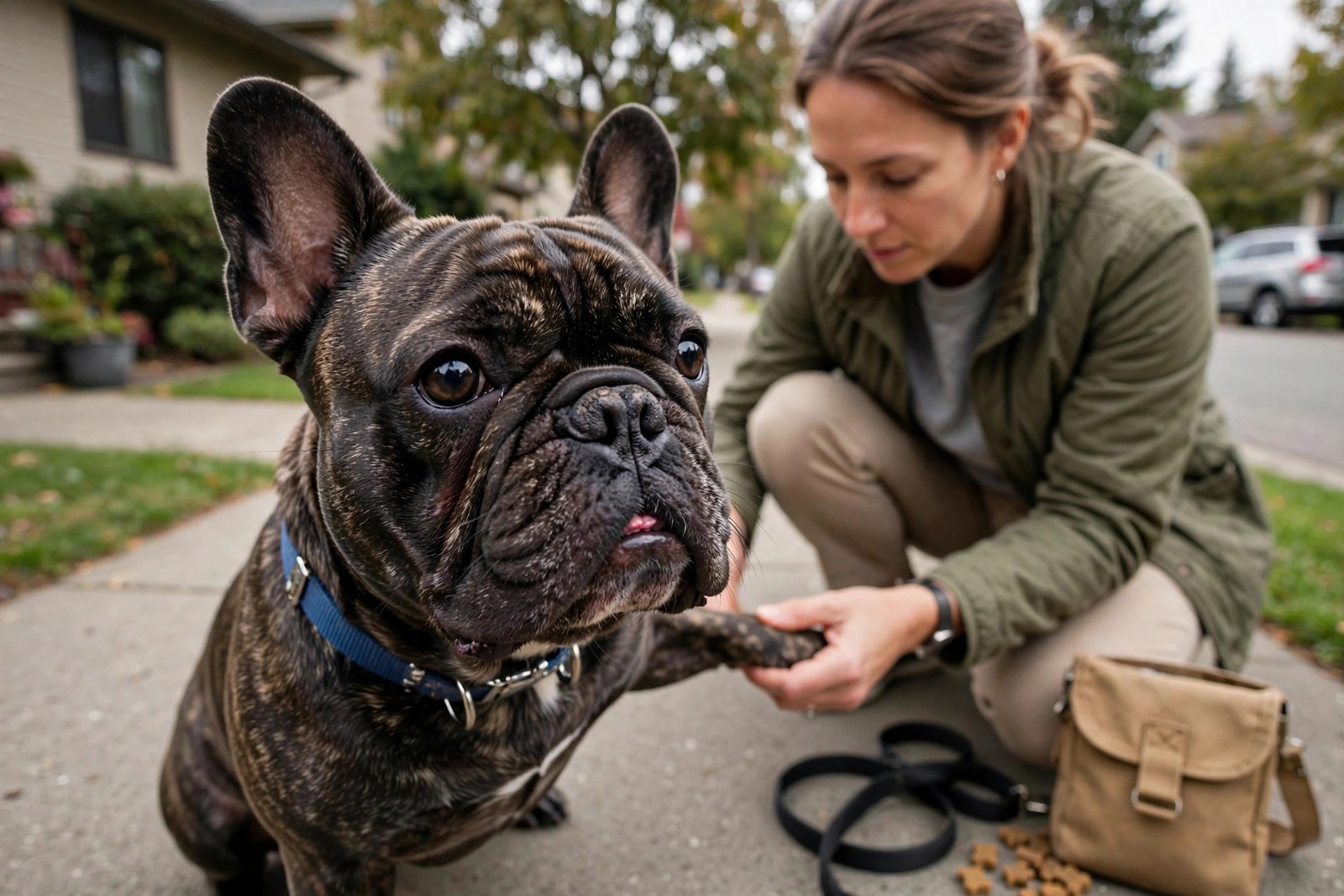
Yes, and of all the homes a French Bulldog might land in, an apartment with attentive people is one of the best fits. This breed was shaped as a companion, not an athlete. It is compact, content with modest exercise, and far more interested in being near its humans than in ranging across open ground. A yard adds little to its happiness. What apartment living must get right is not space but the breed's physical limits, and those deserve an honest look before the dog arrives.
Low Exercise Needs Suit Small Spaces
A French Bulldog's day runs on short walks, some indoor play, and long stretches of lounging close to its people. Two or three brief outings plus play at home satisfy most of them, which is exactly the rhythm apartment life imposes. There is no pent-up working drive demanding miles of running, and the dog's favorite room is whichever room you are sitting in. For city dwellers who want a dog whose exercise needs match a walk-around-the-block life, the breed fits naturally.
That easygoing energy has a flip side: the dog gains weight readily when food is generous and activity is small. Extra weight presses on breathing, joints, and heat tolerance all at once, which makes portion discipline part of apartment care. Measure meals, keep treats small and counted, and weigh the dog regularly so a slow creep upward gets caught while it is still easy to correct.
Heat Is the Breed's Serious Limit
The flat-faced shape that gives this breed its look also narrows its airways, and that makes heat genuinely dangerous. A French Bulldog cannot cool itself by panting as efficiently as a longer-nosed dog, so warm rooms, midday summer walks, and excited play in hot weather can push it into trouble fast. Apartment life helps here when the home is kept cool: air conditioning or strong fans in summer, cool water always available, and exercise moved to early morning and evening during warm spells.
Time warm-weather walks to the cool hours, keep them short, and watch the dog rather than the clock. Heavy panting, slowing down, or seeking shade are signals to stop and head home, not to finish the route. Never leave the dog in a parked car or a stuffy room, and treat a hot apartment as a welfare problem to fix before the dog comes home, not after.
Water, Sleep, and Everyday Noise
Two smaller breed facts belong in an apartment plan. A French Bulldog's heavy front end and short muzzle make it a poor, unsafe swimmer, so it should never be left near a pool, pond, or deep tub, and any time around water calls for close supervision and a proper dog life vest rather than confidence. The breed also tends to snore, sometimes impressively, and to be only a modest barker, which apartment neighbors generally count in its favor, though a dog fretful at being left alone can make its feelings heard through a door.
Stairs, Loneliness, and the Individual Dog
Frequent stair climbing is hard on this breed's back and joints, so an upper-floor apartment calls for planning: an elevator building is kinder, and a puppy or an older dog may need carrying on stairs rather than daily climbs. Company matters just as much. This is a people-attached breed that can fret when left alone for long working days, so arrangements for midday company belong in the plan.
Finally, judge the individual. Through KinsLe's Transferrable Profiles, an adopter can read one dog's own record before committing: its breathing and heat tolerance, how it manages stairs, its weight history, and the daily routine it is used to. Inside KinsLe, the Transferrable Profiles record for a single dog spells out its heat limits, walk timing, and weight history, which is exactly what apartment living asks a family to judge.