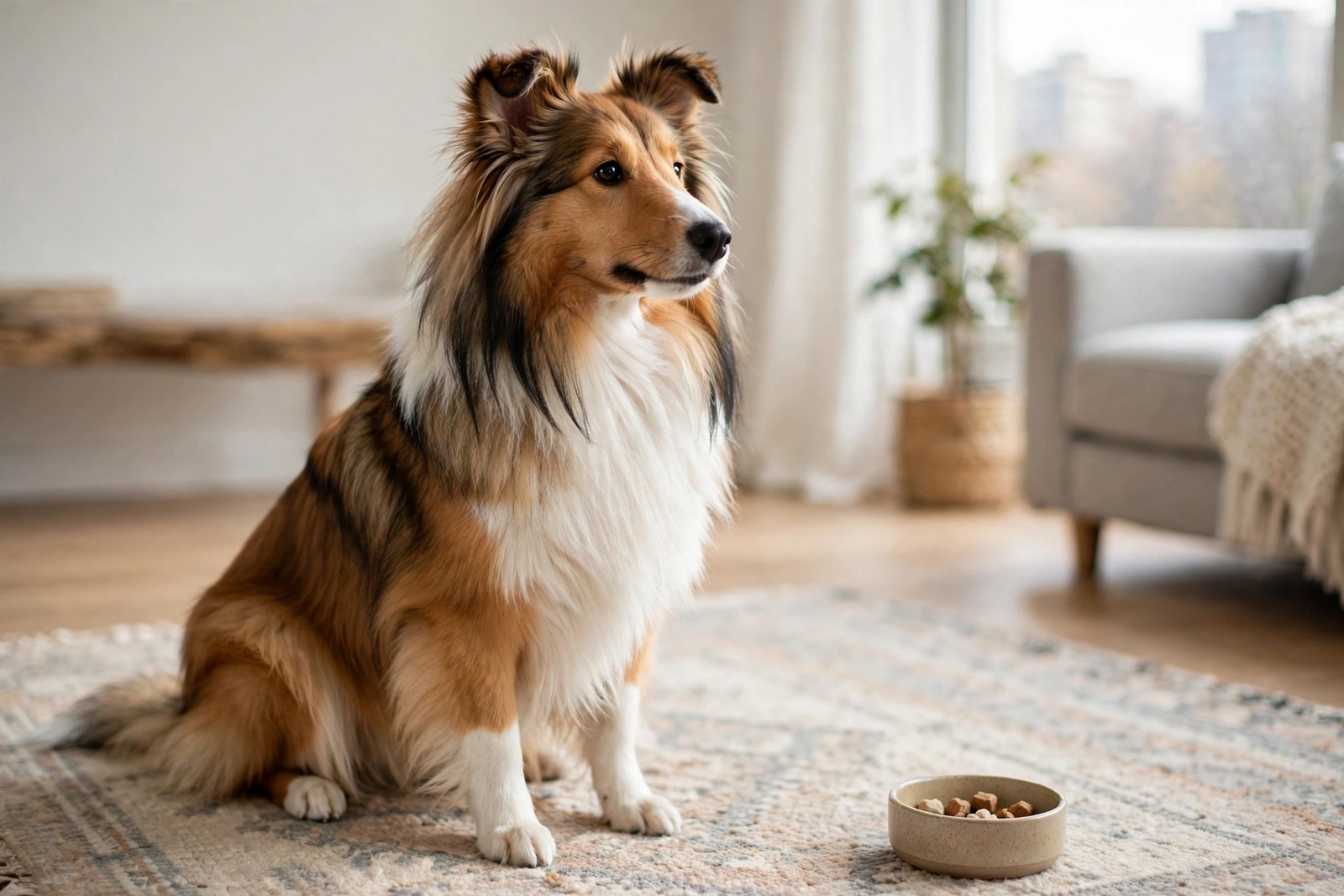
A Shetland Sheepdog can be a very happy apartment dog. Shelties are compact herding dogs — bright, devoted, and usually eager to please — and they do not need a large home so much as a predictable one. Owners who succeed in flats plan for the breed's three defining traits: a ready bark, a sensitive temperament, and a lot of coat on a small dog.
Manage the bark before it manages you
Shelties were bred to alert and to move stock with their voices, and many bark at corridor footsteps, the lift, visitors arriving, and excitement during play. In a flat that habit affects your neighbours daily, so train it early and positively. Teach a quiet cue by rewarding your dog for stopping barking and turning to you, and practise around real triggers at low intensity — a recording of hallway sounds, a soft knock at the door — while rewarding your dog for settling. Keep a mat station away from the front door, and avoid shouting over barking, which a Sheltie simply hears as joining in.
Sensitivity needs deliberate socialisation
Many Shelties are reserved with strangers and easily startled by sudden noise or movement. Apartment life throws up exactly those challenges: children racing in corridors, scooters, delivery trolleys, and neighbours' parties. Build confidence in small doses — let your puppy or new dog observe building life from a comfortable distance, reward calm looking, and retreat before the dog is overwhelmed. Ask visitors to ignore the dog until it chooses to approach, and never force greetings. A well-socialised Sheltie is polite and relaxed in shared spaces; an under-socialised one may bark from fear at every passer-by, which looks like a noise problem but is really a confidence problem.
Exercise and the herding brain
Around an hour a day of combined walks, play, and training suits most adults, and Shelties excel at absorbing training — trick training, obedience, and scent games in the flat all count. Without mental work, a bright Sheltie invents jobs: herding children, policing movement, or barking at the window. Short, frequent training games indoors are a genuine part of this breed's exercise, not an extra.
Coat care in a small space
The long double coat sheds steadily and heavily in season. Brush several times a week, working through the thick ruff and behind the ears where mats form, and expect hair on soft furnishings — washable covers help. Bathing and thorough drying take time in a small bathroom, so many apartment owners alternate home brushing with professional grooming.
KinsLe Care Teams helps by letting everyone at home log your Sheltie's walks, quiet-cue practice, and brushing sessions in one shared plan, so confidence-building and coat care stay steady rather than occasional.