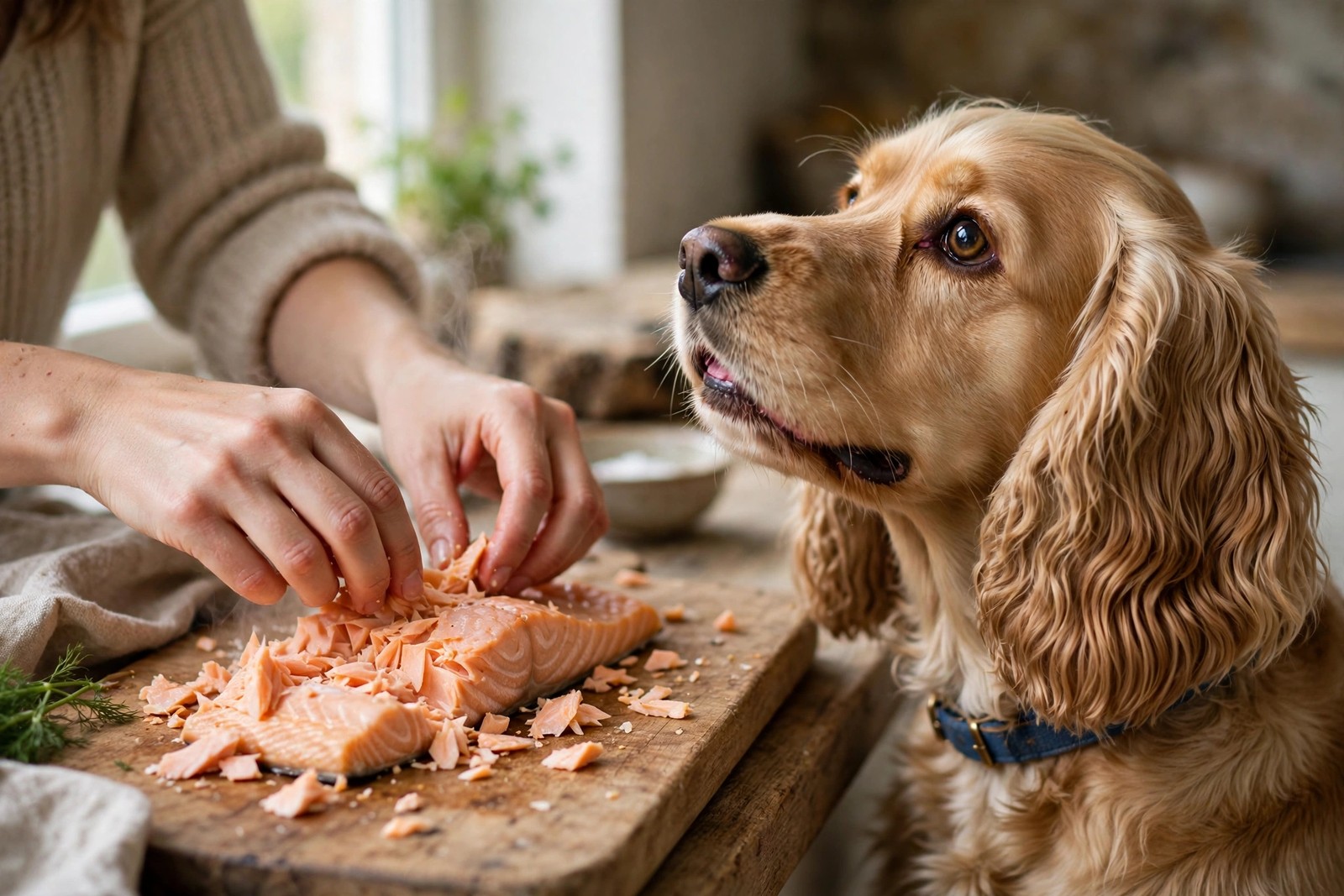
Yes, dogs can eat salmon when it is boneless, thoroughly cooked and served with no seasoning at all. Cooked salmon offers quality protein and omega-3 oils that support skin and coat, which makes it one of the more worthwhile extras an owner can share. The word cooked is doing heavy work in that sentence. Raw and undercooked salmon can carry parasites that cause salmon poisoning disease in dogs, a serious illness seen particularly with fish from Pacific waters, so this is never a food to serve pink, cured or raw.
Cooking Salmon for a Dog
Bake, steam or poach a plain fillet with no salt, oil marinades, garlic, onion, lemon butter or sauces, and cook it until the flesh flakes easily and is opaque all the way through, with no translucent centre. Let it cool, then work through it slowly with your fingers, feeling for the fine, flexible pin bones that run through fillets; they are easy to miss visually and can lodge in the throat or irritate the gut. Skin that is fully cooked and unseasoned can be offered in a tiny amount, but it is fatty, so most owners discard it. Smoked salmon is too salty for dogs, and canned salmon packed for people should be checked for added salt and bones before any of it is shared.
If your dog does eat raw salmon, for example by raiding a sushi plate or fishing remains, contact your veterinarian promptly and mention raw fish specifically. Early signs of trouble can include vomiting, diarrhoea, fever and low energy, and they may not appear for several days, so the history matters.
Portions and Frequency
Salmon is rich, so treat it as a weekly extra rather than a daily topper. A few flakes suit a small dog, a quarter of a modest fillet a medium dog, and half a fillet a large dog, served over or alongside the normal meal. Rich fish can loosen the stool of a dog who is not used to it, so start smaller than you think and build to the full portion over a couple of servings. Dogs your veterinarian manages for pancreatitis or strict weight loss may be better skipping fatty fish entirely; ask before adding it to their routine.
Bones Beyond the Fillet
Never offer a cooked salmon carcass, head or frame for a dog to pick over. Cooked fish bones become brittle and splintery, and the frame concentrates exactly the bones you carefully removed from the fillet. Bin fish remains in a sealed, dog-proof bin, because the smell draws determined raiders and a stolen carcass combines the bone risk with any raw sections left near the head and tail. At barbecues and picnics, plates of salmon scraps left on low tables are a classic route to an emergency visit.
Fish night in a busy house is where a raw piece and a cooked piece can be confused on the same board. KinsLe Care Teams lets you record 'cooked through, finger-checked for bones, flakes only' as the serving instruction, so your dog's portion is prepared the safe way by whoever plates up.