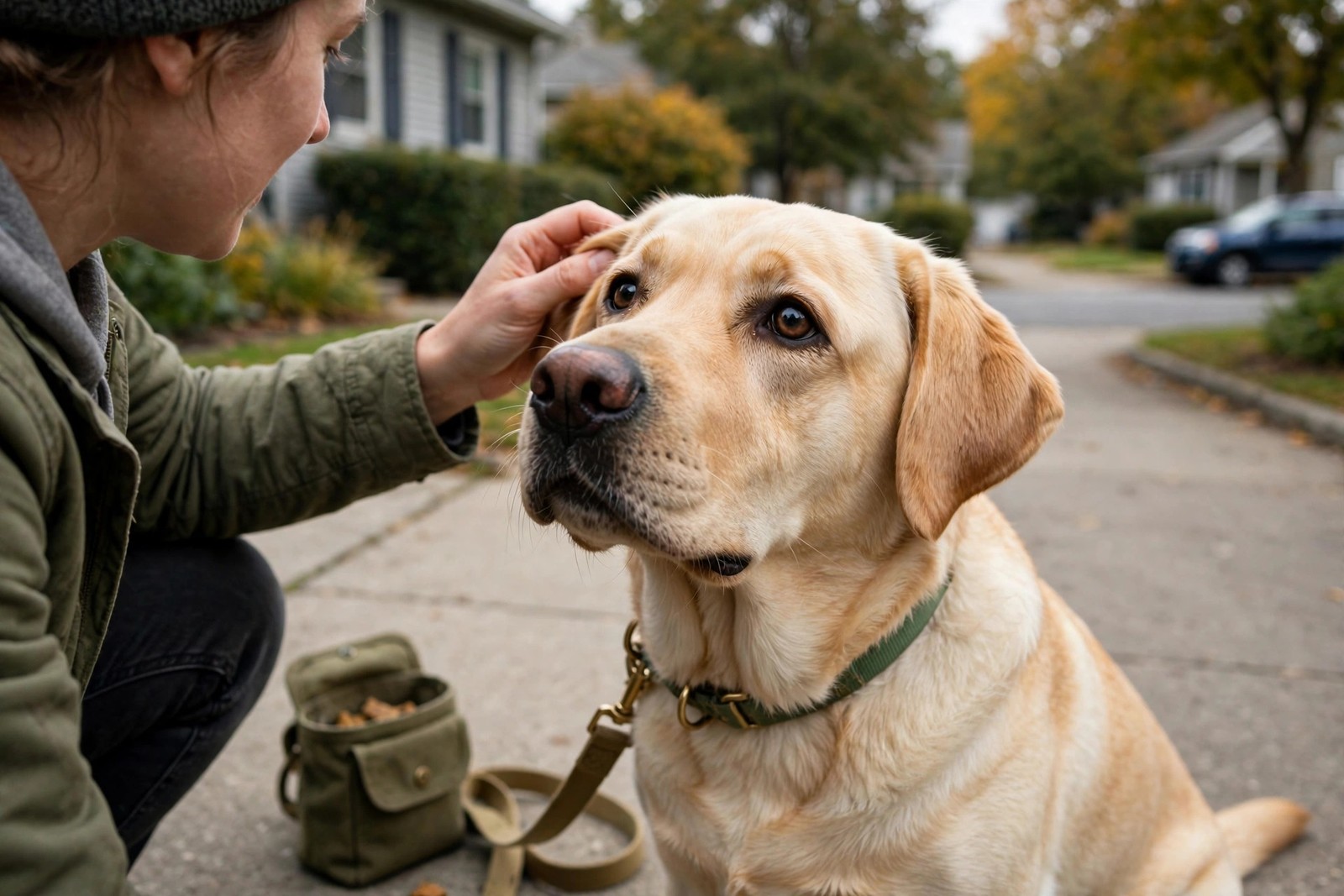
Yes — a lot, continuously, and with seasonal surges that fill brushes and vacuum canisters at a pace new owners consistently underestimate. The Labrador's coat was engineered for retrieving in icy water, not for tidy homes, and it performs its original job faithfully indoors: shedding old hair and growing new insulation without pause. Anyone ranking breeds by tidiness should place the Labrador near the demanding end, whatever its many other virtues.
Anatomy of a Heavy Shedder
Two layers do the work. The topcoat is short, straight, and dense, lying like overlapping tiles to shed water. Below it, the undercoat is soft, thick, and woolly, trapping warm air against the skin. Both layers cycle, so hair falls year-round, but the undercoat is replaced in bulk: in spring it comes out to leave a lighter summer insulation, and in autumn the summer coat gives way to a denser winter one. During those blows, which run for several weeks, you can pull loose tufts from the hindquarters with your fingers and the dog still has more to give.
The hairs themselves are part of the household problem. Short, straight, and stiff, Labrador hair threads itself into woven fabrics and carpet pile and resists casual vacuuming, and it comes in three colours, all of which show on something: black hair on pale floors, yellow hair on everything dark, chocolate hair in between. Puppies again give false hope — the soft, single puppy coat sheds modestly, and the serious double coat develops across the first year.
A Brushing Routine Equal to the Coat
Once or twice a week in ordinary weeks keeps a Labrador manageable; every other day, or daily for ten minutes, is realistic during a spring or autumn blow:
- Begin with an undercoat rake or shedding tool, working in sections in the direction of growth, to draw out the loose woolly layer before it migrates to your floors.
- Follow with a bristle or slicker brush to clear the topcoat and distribute its natural oils, which give a healthy Lab its characteristic sheen.
- Brush outdoors when you can, or on a hard floor you can sweep in a minute.
- Bathe only when the dog is genuinely dirty — Labradors find mud and water professionally, so this may still be often — and brush thoroughly first, because wet undercoat felts into dense mats against the skin.
Do not shave a Labrador in summer to reduce shedding or 'keep him cool.' The double coat insulates in both directions and protects the skin; a clipped Lab sheds short hairs instead and may regrow the coat unevenly, sometimes permanently patchily.
Shedding, Skin, and the Labrador Appetite
Even shedding with calm skin is normal, however heroic the volume. Book a vet visit for bald patches, hot spots the dog chews at, flaky or greasy skin, a sour coat smell that bathing does not shift, or scratching alongside hair loss — Labradors are prone to allergies and skin infections that thick coats conceal. A dull, thinning coat with weight gain in an older Lab should also be raised with the vet, as thyroid trouble is a recognised cause worth ruling out.
Weight itself affects the coat picture owners see: an overfed Labrador — and this breed's appetite is legendary — carries more skin surface and often a duller coat, and the weekly hands-on brushing session is a good moment to feel the ribs and notice gradual gain before it becomes obvious.
Living With Labrador Hair
The households that cope best treat hair as weather: expected, planned for, never a surprise. Washable covers on dog-approved furniture, car seat covers, hard flooring where possible, a vacuum genuinely rated for pet hair used frequently in short bursts, and a house rule about which clothes are dog-walking clothes handle almost all of it. What remains is the honest Labrador bargain — constant hair in exchange for the breed's famously steady, joyful temperament. Sharing the brushing keeps the bargain sustainable, and KinsLe Care Teams does the sharing by assigning your Labrador's weekly brushing, coat-blow sessions, and bath days to named family members, every completed duty marked with a timestamp.