
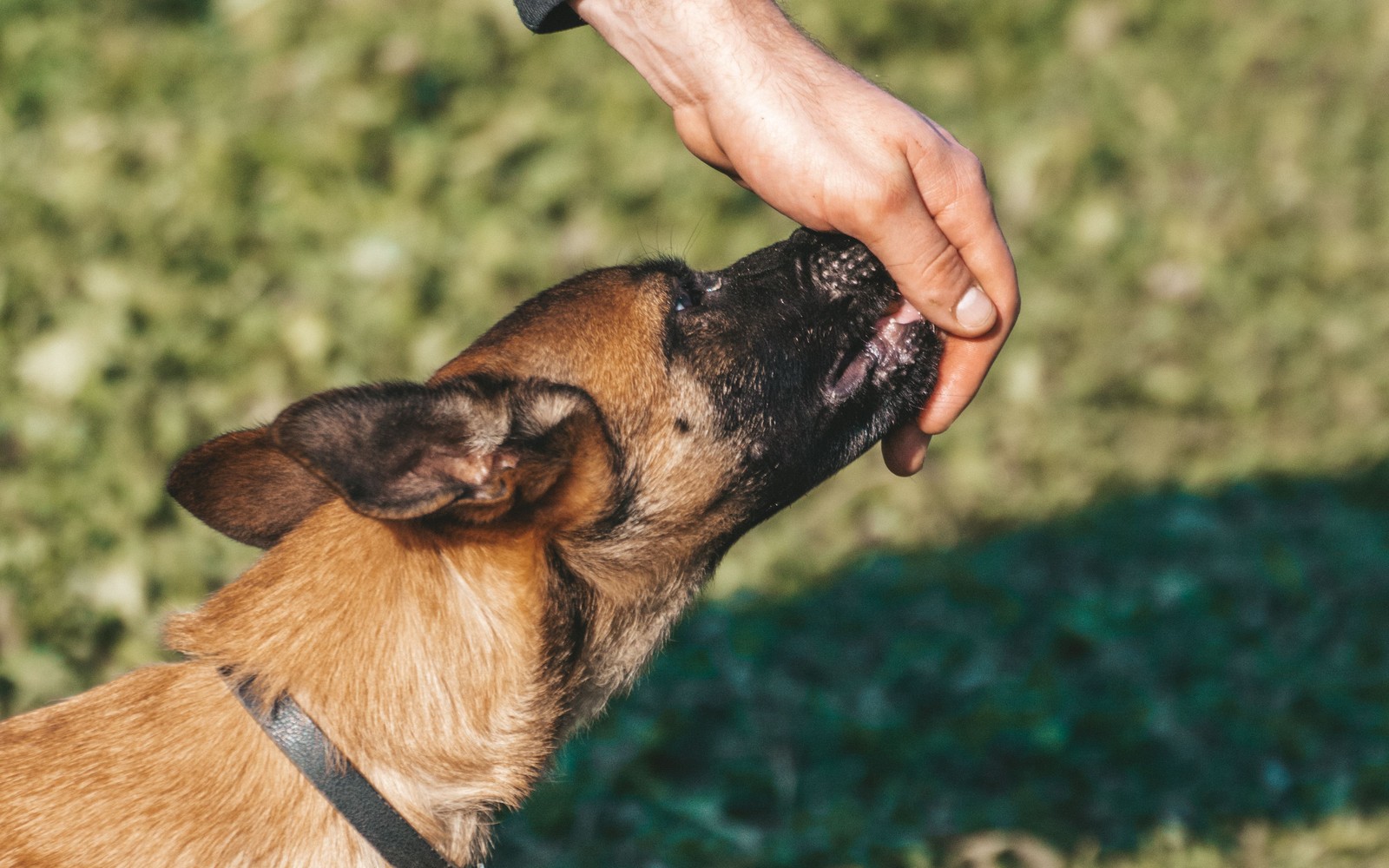
Start any new trick by slicing it into tiny steps and paying for each one, lifting the difficulty only once your dog is succeeding roughly eight tries out of ten. When progress stalls, quietly return to the last step your dog understood rather than repeating a cue louder. That single loop — split, reward, raise, retreat when needed — works for everything from a bow to closing a door.
Step one: choose a trick and slice it thin
Pick one trick and write down its smallest pieces before you start. Take "roll over" as an example: the slices are a down, a head turn toward the shoulder, weight shifting onto one hip, rolling onto the side, then completing the roll. Your dog only ever has to learn one slice at a time, and each slice earns its own rewards.
Choose tricks that suit your dog's body and temperament. Deep-chested or senior dogs may find rolling uncomfortable; a chin rest, a bow, or backing up might be kinder wins. Puppies should skip anything involving jumping or repetitive twisting while their joints develop. When in doubt, ask your vet or a trainer which tricks fit your dog's build.
Step two: capture the first slice without the cue word
Use a treat lure or simply wait and reward any movement in the right direction — trainers call this shaping. For that head turn in roll over, hold a treat by your dog's nose and draw it slowly toward the shoulder; mark with "yes!" the instant the head follows, and feed. Don't say "roll over" yet. Dogs learn the physical behavior first and attach the word later; naming a move they don't understand just creates a cue they learn to ignore.
Keep these working rules:
- One to three minutes per round, several rounds a day beats one long session
- Reward within a second of the right move so the connection is clear
- If three reps in a row fail, the step is too big — slice it thinner
- Train in a quiet room first; the garden, park, and visitors are later levels
Step three: chain the slices and add the cue
Once each slice is reliable, link them in order, rewarding at the end of the chain and occasionally mid-chain to keep enthusiasm high. Fade the treat lure gradually — same hand motion, empty hand, then a smaller motion — so your dog responds to your signal, not the sight of food. Only now add the verbal cue, said once, just before the behavior: cue, pause, gesture, reward.
Then proof the trick slowly: different rooms, then the garden, then with a family member across the room. Expect temporary wobbles in each new place; drop back a level, rebuild, and move on. A trick that works only in your kitchen isn't finished — but it's well on its way, and that staged proofing is exactly how reliable, anywhere-tricks are made.
Step four: keep the whole household on the same page
Nothing scrambles a new trick like three people using three different words, gestures, and rules — one person saying "shake," another "paw," a third rewarding a half-finished attempt and teaching sloppy form. Write the cue word, the hand signal, and the current step where everyone can see it, and agree that nobody jumps ahead to a harder step solo.
Write the trick-in-progress on a household training sheet by the door, and your teenager, partner, and dog walker can all reinforce the identical behavior from it. Ready to choose a next skill for your dog? When you open the profile to relatives you have selected, they can reach it through Family Sharing in KinsLe.