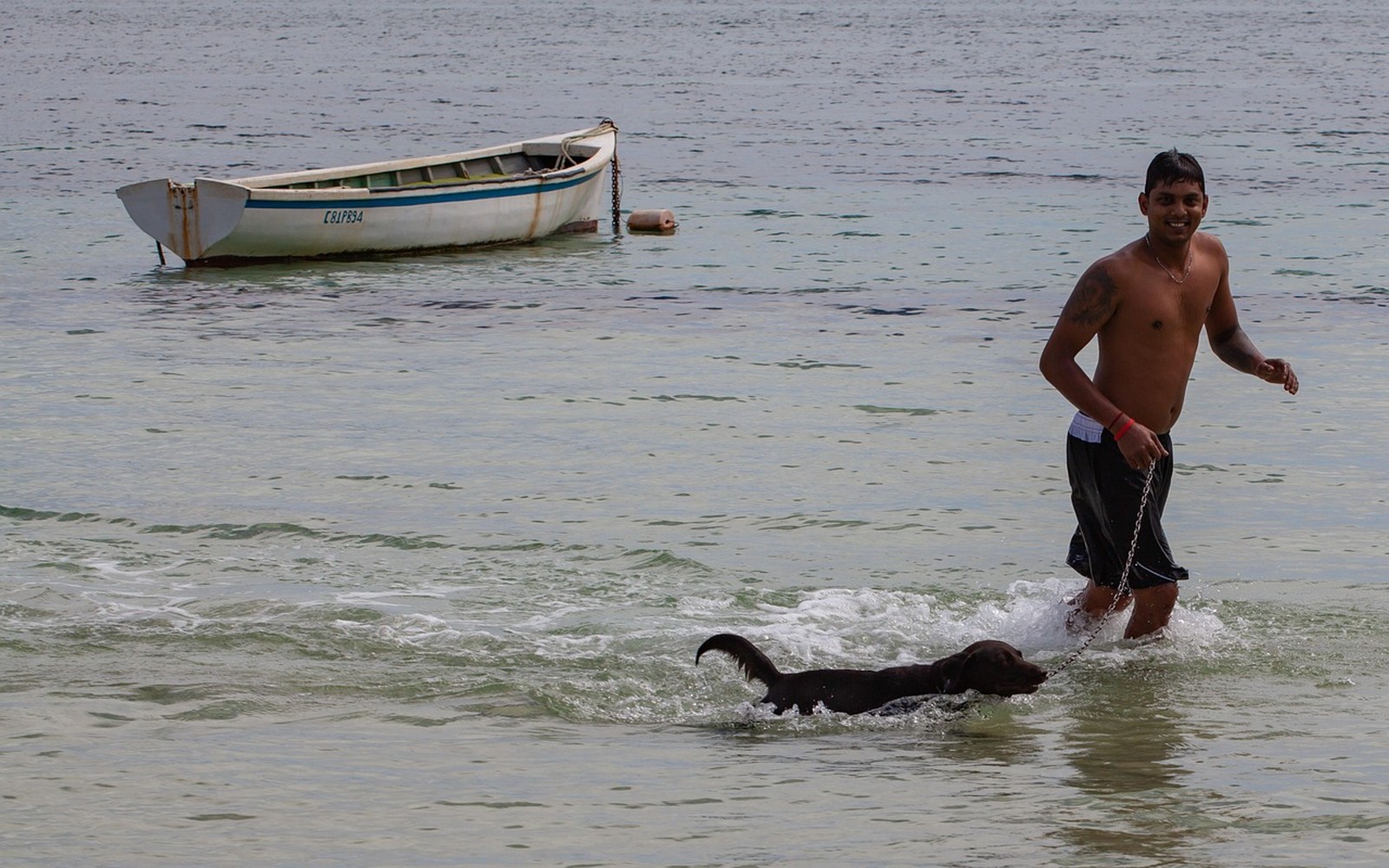
A keen dog at the water's edge is a wonderful problem to have. The dog who launches himself in without thinking is not a natural swimmer showing off; he is a novice whose confidence arrived before his skills, and confidence sinks just as fast when fatigue, depth, or a mouthful of water arrives mid-plunge. Swimming lessons for this dog are really lessons in structure: how to enter, how to move, how to get out, and how to stop, taught in short, jacketed sessions where every success ends on dry land.
Gear and Water He Can Walk Out Of
Start with a properly fitted dog life jacket, snug enough that the handle on the back can genuinely support his weight, and let him wear it around the house and garden first so the jacket itself is unremarkable by lesson day. Choose the first water carefully. A gently shelving shore, a walk-in pool entry, or wide steps matter more than size, because entries and exits he can walk out of let him control the depth he experiences and retreat the moment he wants to. Never throw him in, carry him out to depth, or let children drag him deeper for fun; a dog pushed past his depth learns that water is where control disappears, and the keenest launcher can turn into a panicked scrambler in one bad minute.
Short Sessions and Honest Signals
Keep early sessions short, a handful of brief swims with rest and play on shore between them, and end while he is still eager rather than tired. Watch his body the whole time. A relaxed swimmer moves level in the water, hind end up, paddling quietly and breathing easily. Frantic paddling, front legs slapping high and splashing, a vertical body with the rear sinking, fixed eyes, or repeated attempts to climb you or the wall all mean the session pauses now, guided by the jacket handle back to the exit. Gulped water deserves its own attention: a dog who snaps at waves, retrieves with an open mouth, or comes out coughing after swallowing a lot has taken in more than is comfortable, and that shapes the rest of the day, with no more swimming and a close eye kept on him afterward. Rinse his coat and ears once you are home, since pool chemicals, algae residue, and lake water left in ears set up itching and ear trouble that can overshadow an otherwise good lesson.
Teach the Exit as Its Own Lesson
The single most valuable skill in the whole program is not paddling; it is finding the way out. Teach the exit ramp or steps as a separate lesson, rehearsed until it is automatic. From the shallows, lure and praise him up the ramp again and again, then from a short swim beside you, then from slightly different angles, so the route out is a habit stored in his body rather than a puzzle for a tired moment. A dog who knows exactly where the exit lives swims calmer, tires slower, and never wastes strength clawing at walls, and that one skill transfers from pool to lake shore to boat dock better than any other part of the training.
Swallowing a lot of water carries a real risk that owners should respect: if he becomes unsteady, vomits, or seems distressed afterward, call the veterinarian the same day and describe how much water he took in and when. Add the session length, how the exit practice went, and any gulped water to the Pet Passport record on KinsLe while the details are fresh, so the pattern across lessons is visible and any single worrying episode has its facts preserved. Most keen dogs settle into sensible swimmers within a handful of structured lessons, keeping the joy and losing the recklessness, and their confidence becomes earned rather than merely loud. KinsLe's Pet Passport keeps each swim session, exit practice, and post-swim check together, giving future lessons and vet visits the same reliable history.