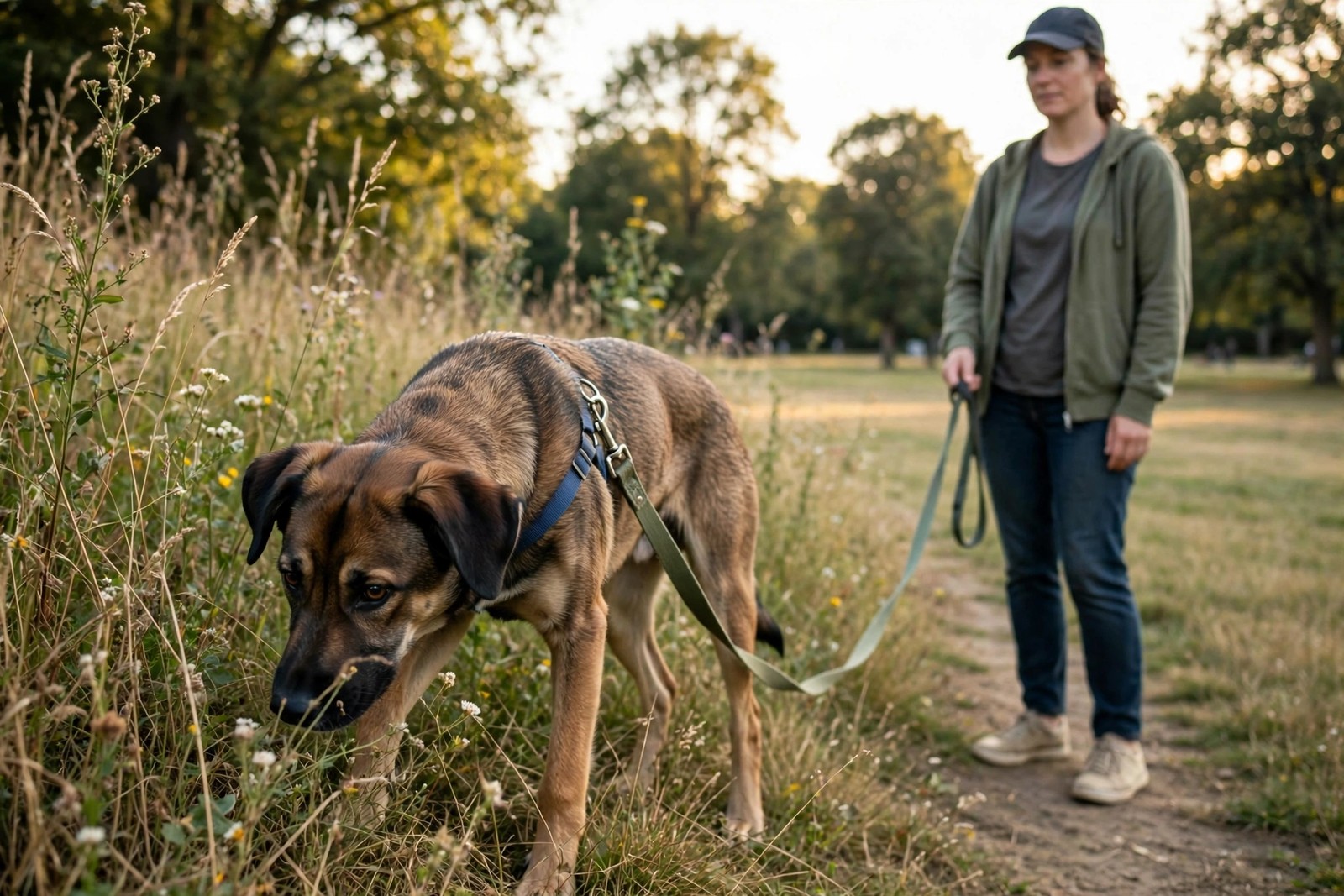
Many owners of an eight-month-old dog know this week well: the recall that was flawless in spring evaporates, the lead walking dissolves, the chewing returns, and a dog who seemed trained behaves as though the lessons were a rumour. Sex hormones are rising, the brain is pruning and rewiring connections, confidence swings between bold and suddenly fearful, and the social world becomes interesting. Your puppy has not forgotten anything and is not staging a coup; the knowledge is present, but access to it under distraction is temporarily unreliable.
What is actually changing under the surface
Adolescence in dogs runs from six months into the second year, with timing shaped by size and breed: small dogs often start and finish earlier, while large and giant breeds can still be adolescents past eighteen months. Many dogs pass through a second fear period somewhere in this window, during which things they previously ignored — a statue, a man in a hat, a rattling bin — suddenly bother them. Chewing surges again as adult teeth settle and jaws strengthen. Socially, your dog is moving from puppy licence, where adult dogs indulged her, to adult rules, where rude approaches earn corrections from other dogs. Sleep still matters enormously: adolescent dogs need far more rest than their energy suggests, and much evening chaos in teenage dogs is plain overtiredness.
Change the training, do not abandon it
The correct response is to train like she is younger than she is. Shorten sessions to a few minutes and end while she is still succeeding. Raise the value of your rewards, because yesterday's kibble cannot compete with a squirrel, and reserve her favourite food and games for recall and lead work. Drop every skill back a step: practise recall on a long line in the garden rather than off lead in the park, refresh loose-lead walking on quiet streets, and re-teach stays from a few seconds upward. Keep sessions cheerful and end frustrating days early.
Management does the heavy lifting for a while
While reliability is patchy, management prevents rehearsal of the behaviours you do not want. The long line replaces off-lead freedom anywhere she might blow a recall, gates and pens return if chewing has restarted, and greetings with other dogs are chosen carefully: calm adults are gold at this age, while packs of adolescents teach wrestling and deafness. Give the energy somewhere legal to go — sniff-heavy decompression walks, scatter feeding, supervised destruction of cardboard, and settle training on a mat afterwards, because a teenage dog who has used her brain and nose is far easier to live with than one who has only been exercised into fitness. If she is entire, discuss timing of neutering with your vet as an individual decision, and keep her managed through seasons; do not expect surgery to function as a behaviour programme.
Know the difference between adolescence and a problem
Normal adolescence is messy but general: silliness, deafness at distance, mouthing returning, sleep fighting, and enthusiasm overwhelming manners, with steady improvement when you simplify. Book professional help instead if you see genuine aggression, fear that is deepening week on week, guarding that escalates, or any sudden behaviour change, which always deserves a vet check for pain or illness first, whatever her age. A qualified behaviourist or an adolescent training class can also make the phase less lonely, because half the relief is hearing that every other owner in the room is living the same month.
Hold the line together until the adult arrives
Dogs typically emerge from adolescence between about eighteen months and two and a half years, gradually rather than on a birthday, and the owners who fare best are the ones who kept expectations low, management tight, and training kind through the dip. KinsLe's Care Teams helps the household hold that shared line, because care duties such as long-line walks, settle practice, and chew supervision can be assigned and timestamped, so your teenage dog gets one consistent regime from everyone instead of a different set of rules at every door.