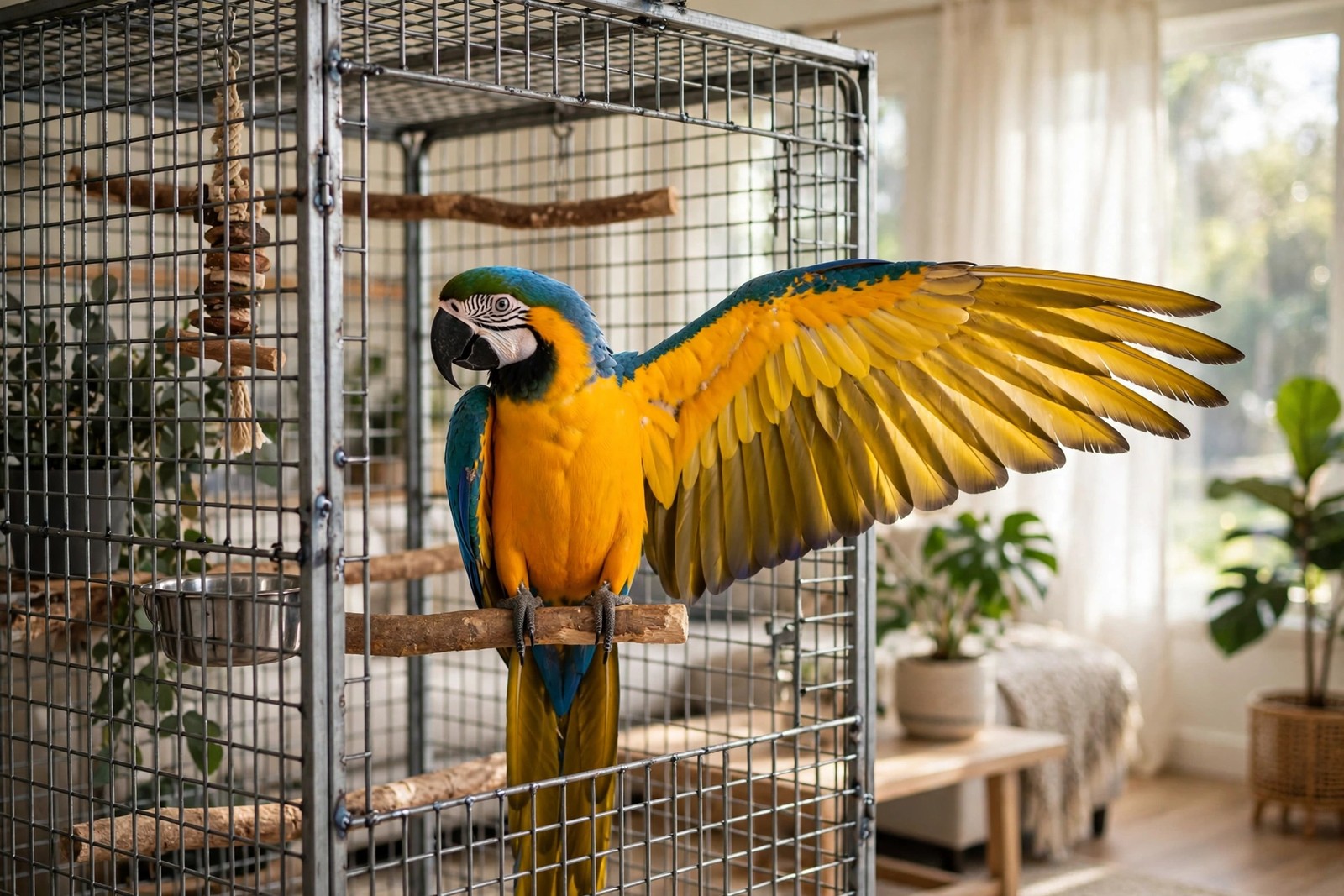
A large macaw, such as a blue-and-gold or a green-winged, needs far more cage than most first-time buyers expect. Plan on at least 48 inches wide, 36 inches deep and 60 inches tall as a true minimum, and treat bigger as better whenever the room allows. A macaw's wingspan can approach 40 inches or more, and the bird should be able to stretch both wings fully, flap without striking the bars, and turn around on a perch without its long tail bending hard against the cage wall. Width and depth matter more than extra height, because macaws climb and move sideways far more than they fly upward inside a cage.
Bars, Doors and Build Strength
Bar spacing for a large macaw should sit between 1 inch and 1.5 inches. Wider than that, and a curious bird can push its head through and become trapped; the spacing also has to stay even, with no bent or sprung bars opening a wider gap anywhere. Strength matters as much as spacing. A macaw's beak can crack hard nuts, splinter thick wood and work at welds for hours, so look for heavy-gauge, properly welded wire with a bird-safe finish, and reject any cage with flaking paint, rust, or sharp weld points. The main door should be large enough for the bird to step out onto your hand without folding its wings, and every door and feeder hatch needs a lock a determined beak cannot slide, lift or unscrew, because macaws study latches and practise on them daily.
Furnishing the Cage So the Space Works
A big shell is wasted if the inside is arranged badly. Fit two or three sturdy perches of varied diameter, roughly 1.5 to 2 inches thick, placed so the tail clears the bars and the food bowls when the bird turns. Natural, chewable wood perches will be destroyed over time, and that chewing is healthy work, so budget for replacements rather than choosing indestructible materials that are hard on feet. Hang toys for shredding and foraging at different heights, keep one clear flight path across the cage, and put food and water bowls where droppings from the favourite perch will not fall into them. Rotate one shredding toy each week so the chewing work stays interesting without cluttering the space the wings need. A play stand outside the cage extends the bird's territory, but it never substitutes for cage size, because the cage is where the macaw sleeps, eats and spends its unsupervised hours.
Living With a Cage This Size
Measure the room, the doorway and any hallway turns before ordering, because a 48-inch-wide cage often arrives as a flat pack for good reason, and check that you can pull it out for cleaning behind and underneath. Wheels help, since droppings, feathers and shredded toy debris collect fast around a macaw. Position the cage against a wall in a social room, out of direct midday sun and away from kitchen fumes, and expect to spend real time each day on out-of-cage exercise and company, because no cage, however large, replaces that contact. Watch how your own bird uses the space: a macaw that rarely flaps, or one whose tail feathers stay bent and frayed, is telling you the cage is too small in practice. KinsLe's Care Teams lets you assign the daily lock check, bowl wash and out-of-cage session to specific family members for your macaw, and each completed duty is marked with a timestamp, so the routine behind a cage this demanding never depends on one person's memory.