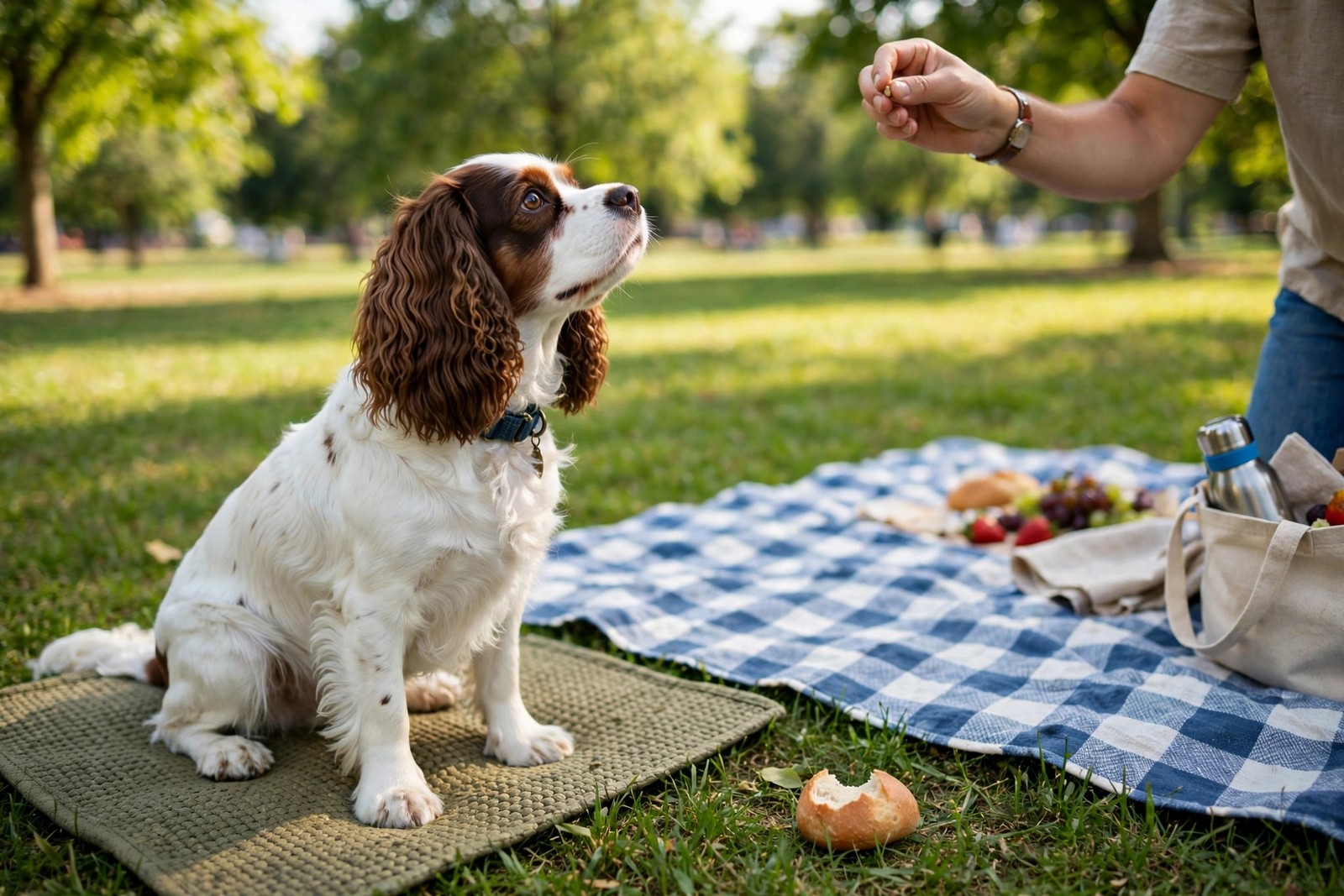
Build 'leave it' in layers that copy real life, because a dog who ignores a biscuit in a training game may still dive for a chicken bone that skitters across the kitchen tiles. The cue has to work for food that is dropped, moving, and unplanned, in the two places this question is really about: beside your feet while you cook, and beside a blanket outdoors where other people's lunches are within nose reach.
Start With a Closed Fist, Then the Kitchen Floor
Hold a plain treat in a closed fist and let your dog sniff, lick, and paw at your hand. Say nothing at first. The instant your dog backs off or looks away, mark that choice and pay with a different, better treat from your other hand. Never pay with the food in the fist, or your dog learns that pestering eventually releases the very item you asked for. Once backing off is immediate, add the words 'leave it' just before you present the fist.
Next, place the plain treat on the kitchen floor under your foot, where you can cover it instantly if your dog dives. Reward looking away with the better treat. When that is easy, uncover the food, then set it down while your dog watches, then drop it from a low height so it lands and rolls the way dropped cooking scraps do. Practice beside the counter and near the table, not only in the middle of the room, because location is part of what your dog learns.
Give the Picnic Blanket Its Own Rules
Set up a blanket in the garden before you try a real picnic. Put a mat beside the blanket and teach your dog that the mat, not the blanket, is the station: settling on the mat earns a steady stream of rewards and a long-lasting chew, while stepping onto the blanket earns nothing and ends the game briefly. Practice with empty plates first, then with covered food, then with an open picnic while a helper drops safe scraps on the grass away from the blanket.
Take the same setup to the park with the blanket well away from other groups at first. Keep a lead on, keep the food drops staged, and reward every voluntary glance away from a dropped crust. Shorten the distance to other picnics only when your dog can ignore your own dropped food without tension on the lead.
Keep Sessions Short and Always Winnable
Keep every session to two or three minutes and end while your dog is still succeeding. If your dog grabs the food at a new layer, you have not met stubbornness; you have moved too fast. Go back one layer, make the dropped item duller, increase the value of the reward you pay with, and rebuild. Do not repeat the cue over and over, snatch food from your dog's mouth, or rehearse beside real hazards. Practice with safe foods only, because the real targets of this cue, cooked bones, grapes, chocolate, and dropped medication, are dangerous to use as training props and can mean an urgent vet visit if swallowed.
A strong leave it is therefore not one lesson but a ladder: fist, floor, dropped food, garden blanket, park blanket, each rung paid better than the item left. With KinsLe Care Teams, you can assign each rung as a care duty to the people who feed and walk your dog, and each completed practice is timestamped, so the ladder is climbed in order by everyone.