
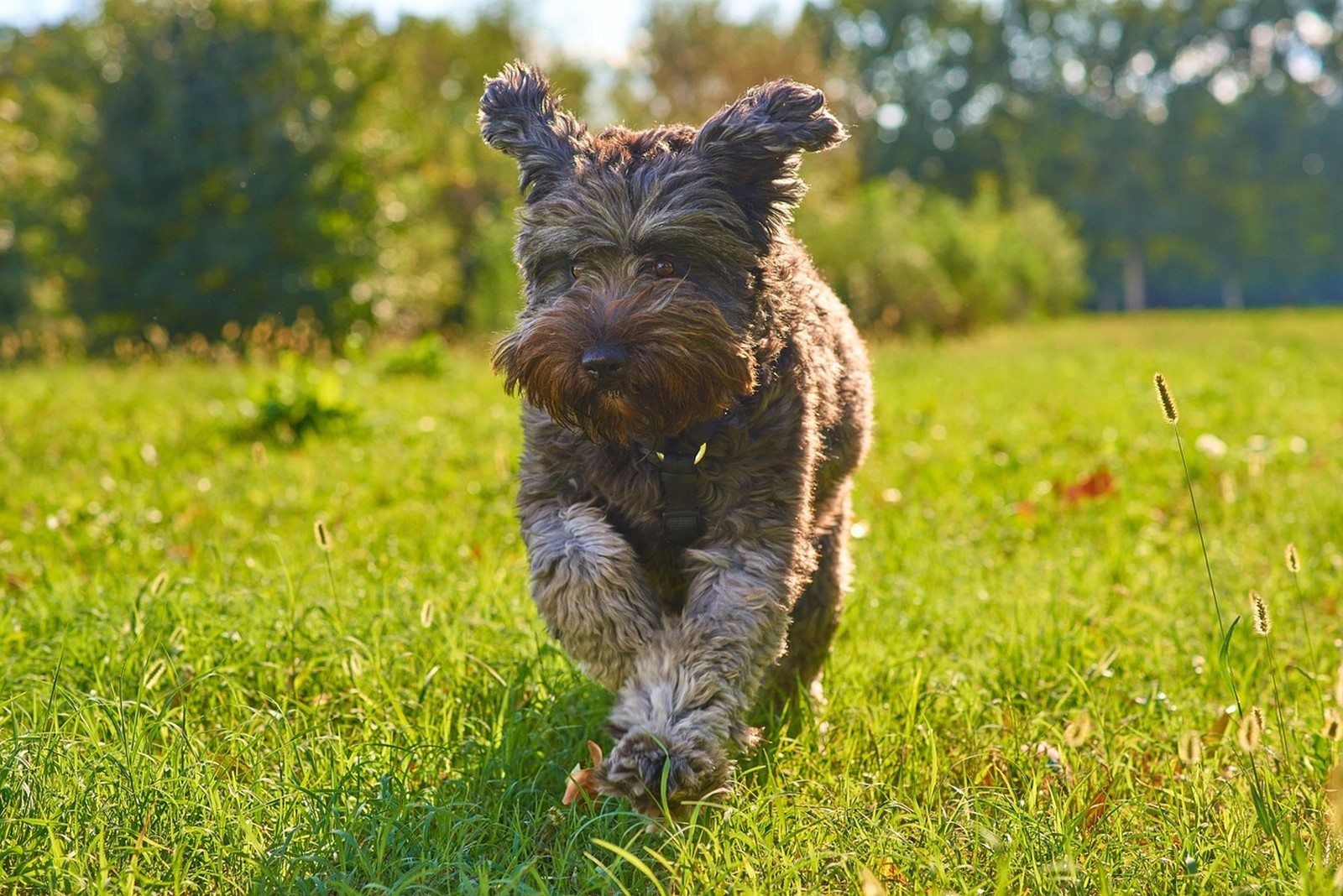
Grass eating unnerves owners mainly because it sometimes ends in vomiting on the carpet, but for most dogs it is a normal, unremarkable part of a walk. Watch how your dog does it and you will see two quite different behaviours sharing one name, and telling them apart matters more than the grass itself.
The Two Styles of Grass Eating
The relaxed grazer browses. She selects particular blades, chews them thoroughly, and wanders on, in the same unhurried way she sniffs a hedge. This kind of eating looks like grazing for its own sake: fresh grass, especially tender spring growth, has a taste and texture many dogs plainly enjoy, and mild boredom or simple opportunity fills out the explanation. These dogs are rarely sick afterwards and show no other signs of feeling unwell.
The frantic eater behaves differently. She makes straight for grass, gulps it down barely chewed, often with lip-licking, swallowing, and drooling before or after, and may vomit a short while later. That pattern fits a dog with an unsettled stomach reaching for the fastest available remedy, though whether dogs deliberately eat grass in order to vomit is genuinely unclear, and often the nausea came first either way. A single episode in an otherwise bright dog is a watch-and-wait event. A pattern is information for your vet.
The Real Risk Is What Is on the Grass
Grass itself is not the hazard. What has been sprayed or spread on it can be:
- Keep your dog off lawns recently treated with weedkiller, pesticide, or fertiliser, including neighbours' verges, parks after treatment signs go up, and your own garden until the product label's waiting period has passed.
- Graze-proof your own patch if she is a keen browser, by skipping lawn chemicals on the area she uses.
- Watch for more than grass going in. Some dogs snatch at other plants on the same outing, and slug pellets and unknown mushrooms in damp grass are genuine dangers worth a prompt vet call if eaten.
On walks, a well-practised leave-it cue and a few minutes of allowed sniffing give her legal ways to use her nose, so grass is not the only entertainment on offer.
When Grass Eating Earns a Vet Visit
Book a vet appointment if vomiting happens repeatedly, if she retches without producing anything, which always deserves prompt attention, or if grass eating arrives with appetite loss, diarrhoea, blood in vomit or stool, marked lethargy, drooling, or a swollen or painful-looking abdomen. Take a note of frequency: how often she grazes frantically, how often she vomits, and what she ate that day. Sudden grass eating in a dog who never bothered before is also worth mentioning, since a change from her own baseline is the signal that matters. Keep that running record where your vet can see it in one place, because a clear episode history turns a vague worry into a useful consultation, and KinsLe Pet Passport does exactly that by holding those dated grazing and vomiting notes alongside her vaccination and treatment records.