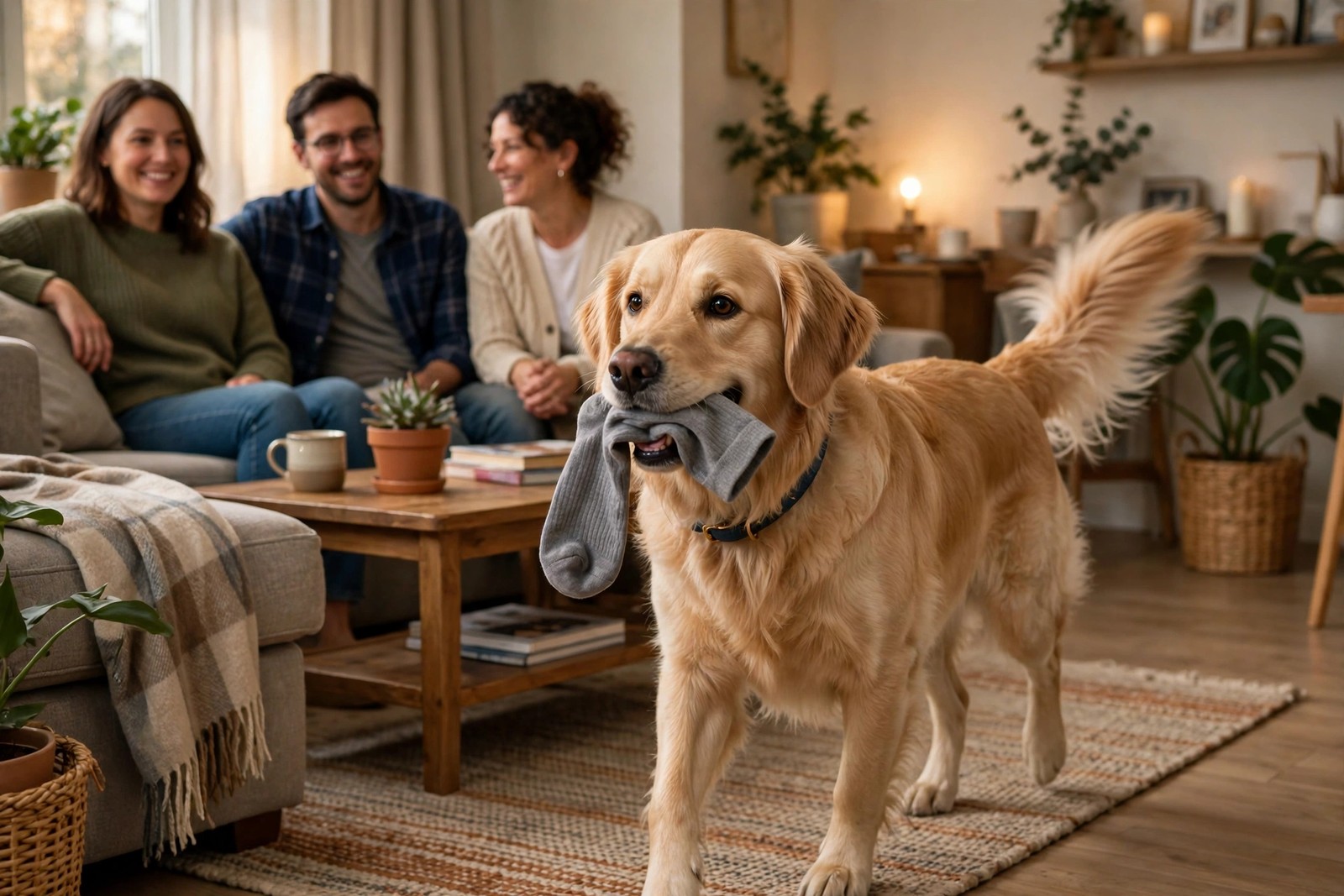
Watch what he actually does with the sock and the mystery dissolves. He does not sneak it away to a corner and destroy it, as he does with prizes he wants to consume. He collects it when visitors arrive, carries it in a loose parade around the room, body wiggling, presenting it to each guest in turn without really offering to give it up. That is showing behaviour, not chewing behaviour, and the sock has been chosen for its meaning rather than its texture.
Why Socks Beat Every Other Stolen Item
A worn sock is a heavily scent-saturated portable object in the home. Feet produce strong scent, socks absorb it all day, and laundry baskets and bedroom floors put them at exactly dog height. To your dog, that sock is essentially you in carryable form, which gives it a value no clean toy matches. Socks are also soft, floppy and easy to carry without hurting his mouth, and they have a long history of being noticed: few stolen items produce a faster human reaction than a sock in a dog's mouth. Shoes are heavier and get him told off more sharply, tea towels hang higher, and toys are his already, so stealing them starts no game at all. The sock combines maximum scent, easy carrying and a guaranteed audience response in a single object, which is why it wins over his other prizes.
Parading Is the Point, Not a Prelude to Chewing
Dogs commonly greet people they are excited about while holding something: a toy, a blanket, occasionally a shoe. Carrying an object during greeting seems to channel excitement, gives the dog a job within the greeting, and reliably produces warm human reactions, namely laughter, praise, reaching hands and a gentle chase. Visitors raise the stakes: new people, heightened voices, more movement, and a dog who may be both thrilled and slightly overwhelmed by arrivals. His parade routes that arousal into a ritual that has always ended well for him. Notice that he parades rather than guards: a loose, wiggly body and an offered, wagging circuit of the room mark this as display. If a stolen item ever comes with stiffening, hard staring or growling when approached, that is a different behaviour, guarding, and it needs its own approach rather than the swaps described here.
Swapping the Sock for a Parade Toy of His Own
Do not chase him, because the chase is the jackpot and it teaches him that sock theft starts a prized game in the house. Stay calm, offer a fair trade, a favourite treat or toy in exchange for the sock, praise the swap, and pick the sock up without ceremony. Then give the ritual a legal version: keep a designated parade toy by the door, hand it to him as visitors arrive, and let guests greet the dog who proudly presents it. Many dogs transfer the whole performance to the official toy happily, because the audience reaction they wanted still follows. Reduce supply at the same time: laundry into a closed basket, bedroom doors shut during visits, and socks off the floor as a household rule rather than a hope. If he swallows fabric, or starts eating socks rather than carrying them, manage access strictly and talk to your veterinarian, because swallowed socks are a genuine blockage risk that outranks any training plan.
Agree the swap routine with everyone, guests included, since one visitor who chases him laughing can retrain the theft in a single evening. KinsLe's Care Teams lets you assign the door greeting, parade toy and laundry duties to named family members, with each task marked complete with a timestamp so the routine holds even on busy visiting days.