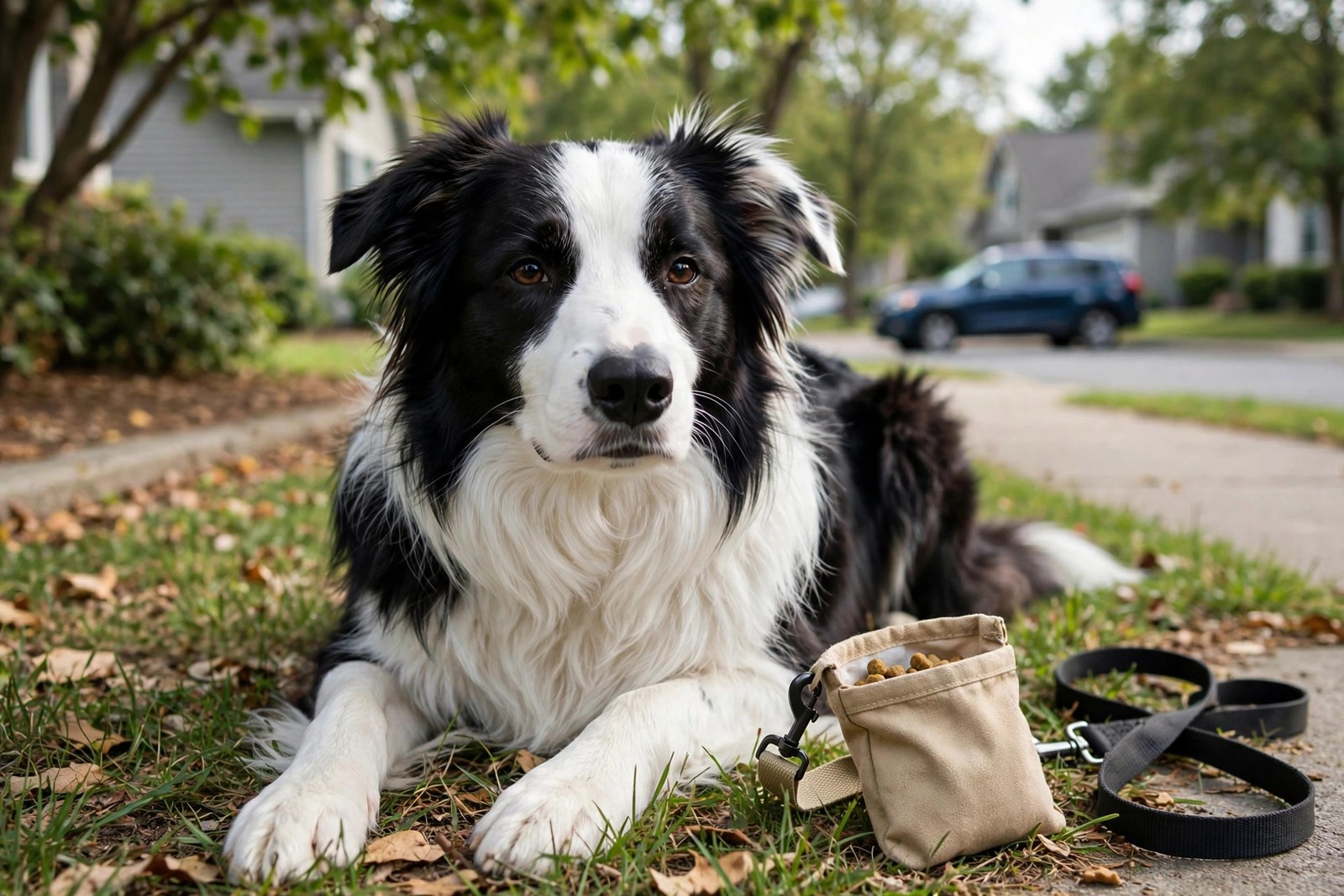
Border Collies can be wonderful with children — loyal, playful and deeply bonded to their families — but they come with a specific warning label that matters more than general friendliness. This is a herding breed, and children, especially small fast ones, look remarkably like the job.
The Herding Problem, Explained Plainly
A working Collie controls sheep with a sequence: stare, stalk, chase, and nip at heels to turn stragglers. In a garden, a group of running, squealing children can switch that sequence on in a pet dog with no malice in it at all. The results range from a dog obsessively circling and staring at the children, to barging them into a group, to nipping ankles and clothing — frightening for a child, and the single most common reason family Border Collies are rehomed.
It is most intense in puppies and adolescents and in dogs from strong working lines. It can be trained and managed — redirecting onto toys, teaching a solid recall and leave-it, interrupting the stare early — but it cannot simply be loved away, and toddlers, who run unpredictably and cannot follow rules, are the hardest age to pair with it.
The Energy Equation in a Family Home
A Border Collie needs one to two hours of exercise and mental work daily, and an under-exercised Collie is measurably worse around children: more reactive, more herding, more noise-sensitive, more inclined to invent games involving the children's belongings. Families must be honest about whether school runs, homework and bedtime leave that much structured dog time, every day, for the next twelve or more years.
- Channel the instinct: fetch with rules, tug with a drop cue, scent games and, for older children, junior agility or trick training together
- Football games with the dog loose in the garden are the classic flashpoint — manage with a lead, a separate space or the dog's own game alongside
- Teach children to freeze and call an adult if the dog starts circling or staring, rather than running, which feeds the chase
- Any nipping pattern that is escalating, or a dog showing stress signals around children, means a qualified behaviourist, promptly
When It Works Beautifully
The successes are real: for children of eight or ten and up who want a dog to do things with — train, hike, play structured games — a well-exercised Border Collie is an extraordinary companion, sensitive to their moods and tireless in their games. The failures almost always involve toddlers plus an under-worked dog.
Go in with the workload shared and the herding managed from day one, and the match can be superb — KinsLe's Care Teams supports exactly that, letting parents split your Border Collie's walks, training sessions and play duties into assigned, time-stamped tasks, so the exercise this breed needs around children actually happens on school-day schedules too.