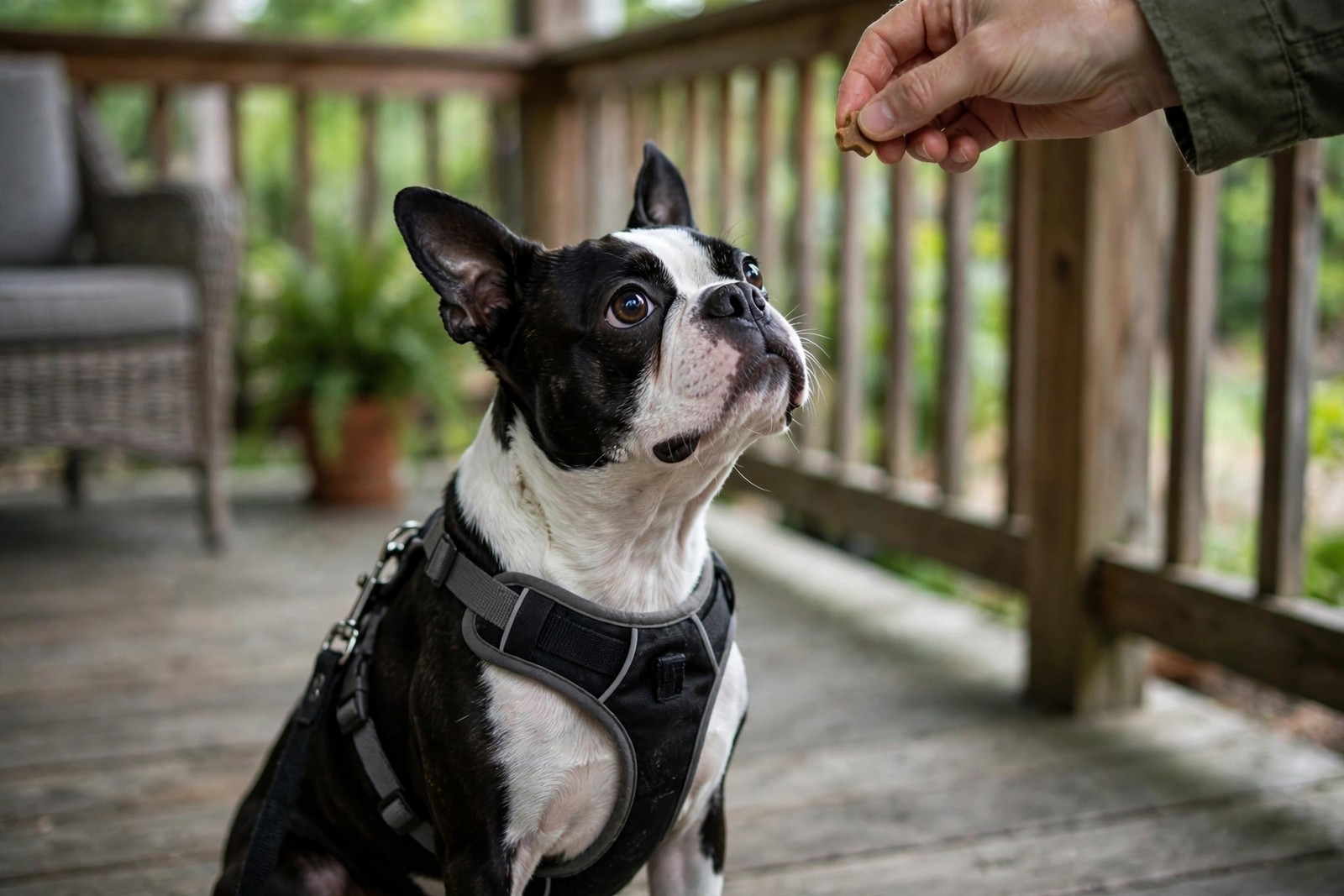
Yes — a Boston Terrier is one of the kinder introductions to dog training. This breed is intelligent, tuned in to its owner, and genuinely wants to get things right, which forgives a beginner's imperfect timing. What first-time owners need to understand is the combination underneath: real sensitivity wrapped around a stubborn core. Train with that pairing in mind and a Boston is easy; fight it and training stalls.
How a Boston Learns Best
Keep sessions to about five minutes, several times a day, and make them feel like a game. Bostons respond beautifully to praise, play, and small tasty rewards, and they pick up household routines — where to toilet, where to settle, how to greet — quickly when the routine never changes. Teach one cue at a time, reward the moment the behaviour happens, and end on a success. Because they are people-pleasers, your visible delight is a powerful reward in itself.
Managing the Stubborn Streak and the Sensitivity
Every Boston owner meets the moment the dog plants its feet and declines. That is not defiance to crush; it usually means the dog is confused, bored, distracted, or uncomfortable. Shorten the step, raise the value of the reward, or change location and try again. Never rely on shouting or physical corrections: a Boston that is scolded harshly often becomes anxious and less trainable, not more obedient. Calm repetition beats pressure with this breed every time.
Flat-Face Realities That Shape Training
Bostons are a short-faced breed, so they overheat and breathe hard far sooner than a long-nosed dog. Train and exercise in the cooler parts of the day, keep active sessions short in warm weather, use a harness rather than pressure on the neck for lead work, and stop for rest and water at the first noisy, laboured breathing. House-training follows the usual puppy pattern of frequent trips outside and rewards on the spot, and most Bostons get there steadily if the schedule is consistent.
Consistency Across the Household
A Boston learns exactly what each person allows, so one family member slipping the dog food from the table or allowing jumping that others discourage will undo lessons fast. Agree the cue words, the house rules, and who handles each training session before the puppy or rescue dog arrives, and note progress so sessions build on each other instead of repeating day one.
That shared structure is simple to keep when it is written down and assigned, and KinsLe's Care Teams lets you split your Boston's training, walks, and meals between household members with each job marked done, so a first-time owner's good consistency survives busy weeks.