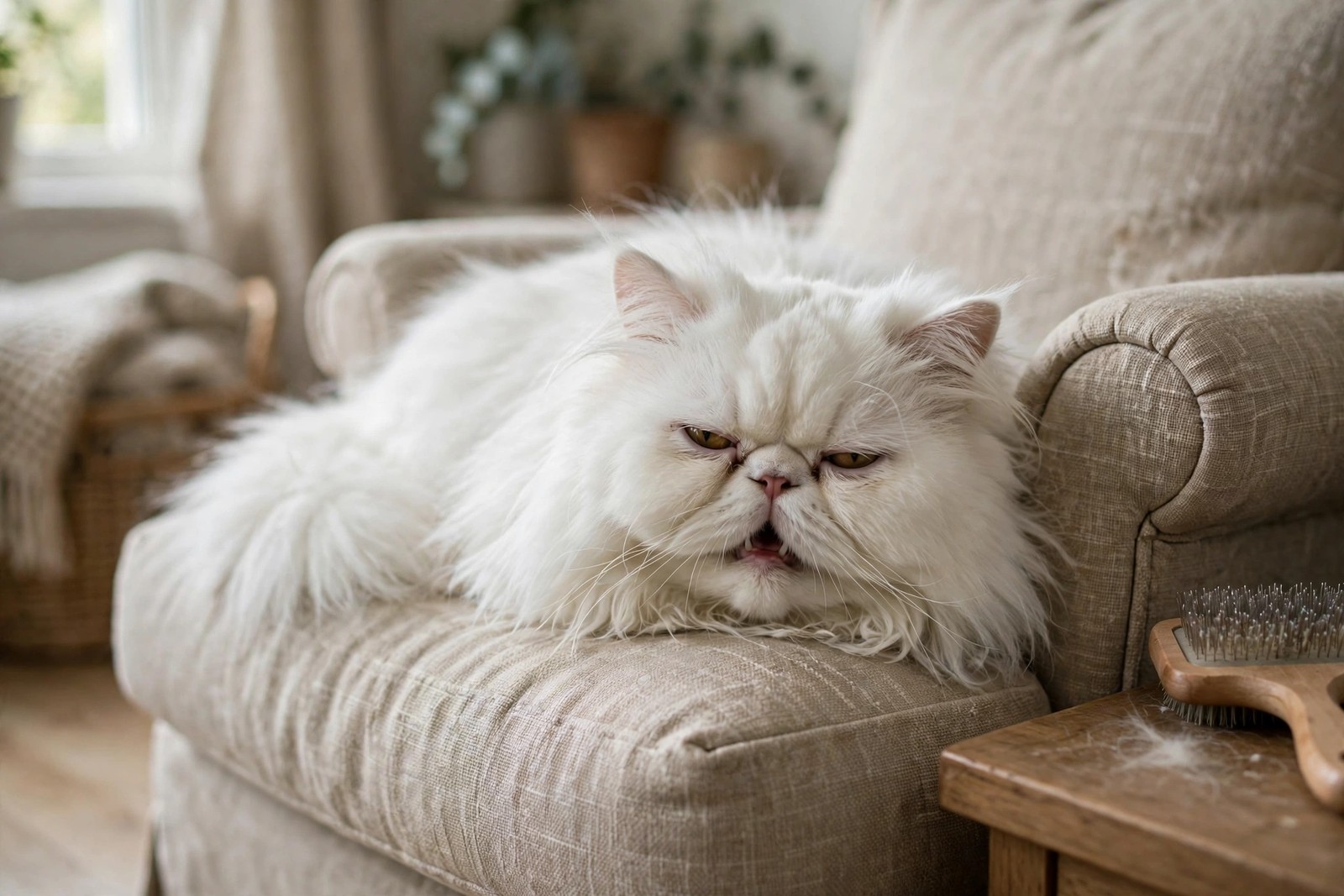
No. A Persian is close to the opposite of a talkative cat. This is a placid, dignified breed with a soft, almost delicate voice, kept in reserve and produced only occasionally. Many Persian owners hear their cat's actual meow so infrequently that they comment on it when it happens. If your household prizes calm and quiet, a Persian's vocal restraint is one of its defining virtues, matched by a temperament that prefers a settled routine and a comfortable, predictable perch from which to observe the home.
What a Persian Sounds Like on the Rare Occasions It Speaks
The typical Persian vocalisation is a short, soft mew, higher and gentler than most breeds, given for a specific and usually reasonable cause: a meal noticeably overdue, a favored person arriving home, or, uncommonly, discomfort or a wish to be lifted down from somewhere. Some Persians purr steadily when content, and purring is often the loudest sound they produce. Sustained meowing, crying through the night, or calling from room to room is not Persian behavior, and breeders will tell you a noisy Persian is a Persian with something wrong, a change at home, pain, or an unmet need that has not been spotted because this breed asks so quietly in every other way.
Communication by Presence, Not Protest
Persians ask with their eyes and their placement. The breed is famous for settling in a chosen spot, often in the room where the family gathers, and simply being beautifully, patiently present until attention arrives. A Persian who wants grooming, which this long-coated breed needs daily, will position itself near the brush or the usual grooming chair. Food requests are conveyed by appearing near the bowl at the expected hour, not by announcing them. This quiet style suits owners who read animals well, but it raises the owner's share of responsibility: a cat who never complains loudly will not escalate when something actually hurts, so humans must go looking for changes rather than waiting to be told.
The Changes Worth Acting On in a Quiet Breed
Watch the pattern, not the volume. A Persian who stops purring, leaves its usual room, hides, or lets its coat go unkempt because grooming itself has become uncomfortable is communicating as clearly as a loud cat crying, just in a dialect owners must learn. Repeated mewing, especially with litter-box visits, reduced appetite, or breathing changes, warrants a prompt vet visit; Persians as a flat-faced breed can have breathing and eye issues, and vocal changes in any cat can accompany pain or illness. Equally, a sudden spate of meowing in an elderly Persian who was silent for a decade is a classic presentation owners report before a diagnosis, so never dismiss it as the cat finally finding its voice.
Who the Persian's Quiet Suits Best
Persians thrive in calm, adult-paced homes without relentless noise and grabbing hands, and their low vocal output makes them excellent for flats and shared buildings. Their demands are not sonic; they are temporal. Daily coat care, regular eye wiping, a stable routine, and people who notice subtleties are the price of this serenity. Owners who want interaction announced and exuberant should look elsewhere; owners who want a quiet companion who communicates in glances will find the breed deeply rewarding.
Because a Persian's requests are so easy for a newcomer to miss, setting them out in a KinsLe Care Pass before a sitter or groomer visit, noting the soft mew that means something and the usual spots and routine, gives a temporary carer the translation guide this reserved breed genuinely needs.