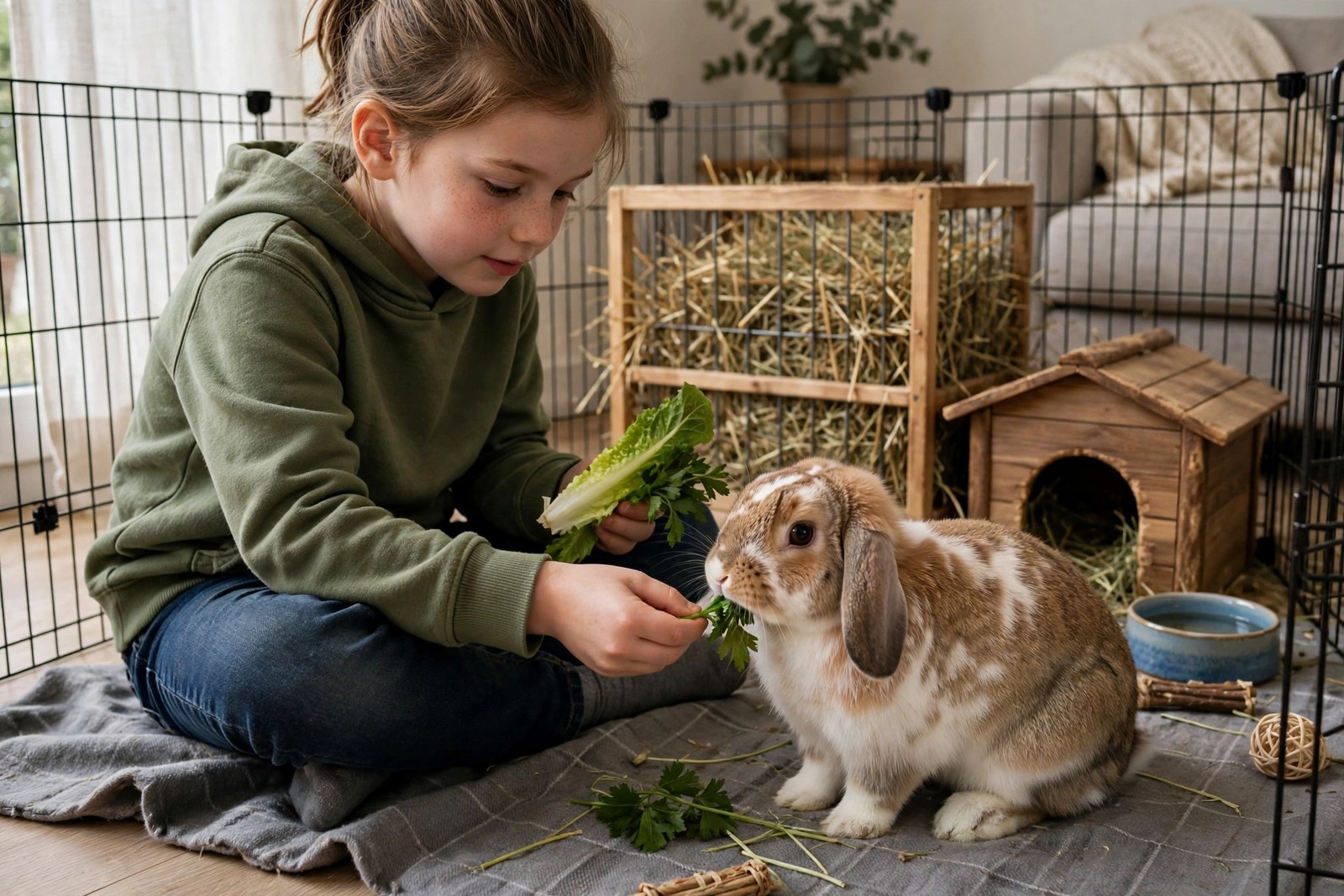
Rabbits can be excellent family pets, but the honest answer depends on what a child expects from a pet. A rabbit is a prey animal who lives at ground level, bonds through quiet company, and usually tolerates rather than enjoys being held. Families who understand that gain a gentle, characterful companion. Families expecting a floppy toy who loves cuddles often end up with a frightened rabbit in a hutch and a disappointed child by the second month.
The Fragile Spine Problem
A rabbit's skeleton is light for its size, while the hind legs are powerful. When a rabbit panics in someone's arms and kicks out, the force can twist or fracture its own spine, and a fall from a child's hold height is a genuine emergency rather than a tumble. Lifting also removes the one thing a prey animal needs, which is contact with the ground and a route away. The handling rule that follows is non-negotiable: children do not pick the rabbit up. An adult who must lift one supports the chest with one hand and scoops firmly under the rear with the other, holding the rabbit close and low. Everyone else interacts the way rabbits prefer, sitting on the floor inside a pen while the rabbit chooses to approach, sniff, and accept a stroke along the back.
What Children Can Do Brilliantly
Children shine at the care jobs rabbits actually need. They can fill the hay rack, and unlimited hay is the backbone of the diet, keeping teeth worn and the gut moving. They can wash a handful of leafy greens, refill water, scatter-feed vegetables in the exercise pen for foraging, and sit reading aloud while the rabbit flops nearby, which is how trust is built with this species. They can learn body language a dog-loving adult might miss: a relaxed flop means contentment, thumping means alarm, and teeth grinding softly can mean pleasure while loud grinding can signal pain worth a vet visit.
Space, Time, and Years
A rabbit needs a large enclosure attached to a roomy exercise area, several hours out to run and binky each day, a rabbit-proofed space with cables protected, and ideally a bonded companion rabbit, because this is a social species. The lifespan is the part most often skipped at purchase: eight to twelve years is normal, so the rabbit chosen for a seven-year-old is still the family's responsibility when that child leaves for college. Adults must be willing owners in their own right, with children as enthusiastic helpers rather than the sole carers. Daily checks also matter, because a rabbit who stops eating or produces no droppings needs a vet the same day, not a wait-and-see.
Chosen with that understanding, a rabbit teaches children patience, observation, and quiet handling better than almost any pet. KinsLe's Care Teams turns the daily routine into age-appropriate assignments, with hay, water, pen time, and health checks allocated to named family members and marked complete, so a parent can see at a glance that the rabbit was actually looked after.