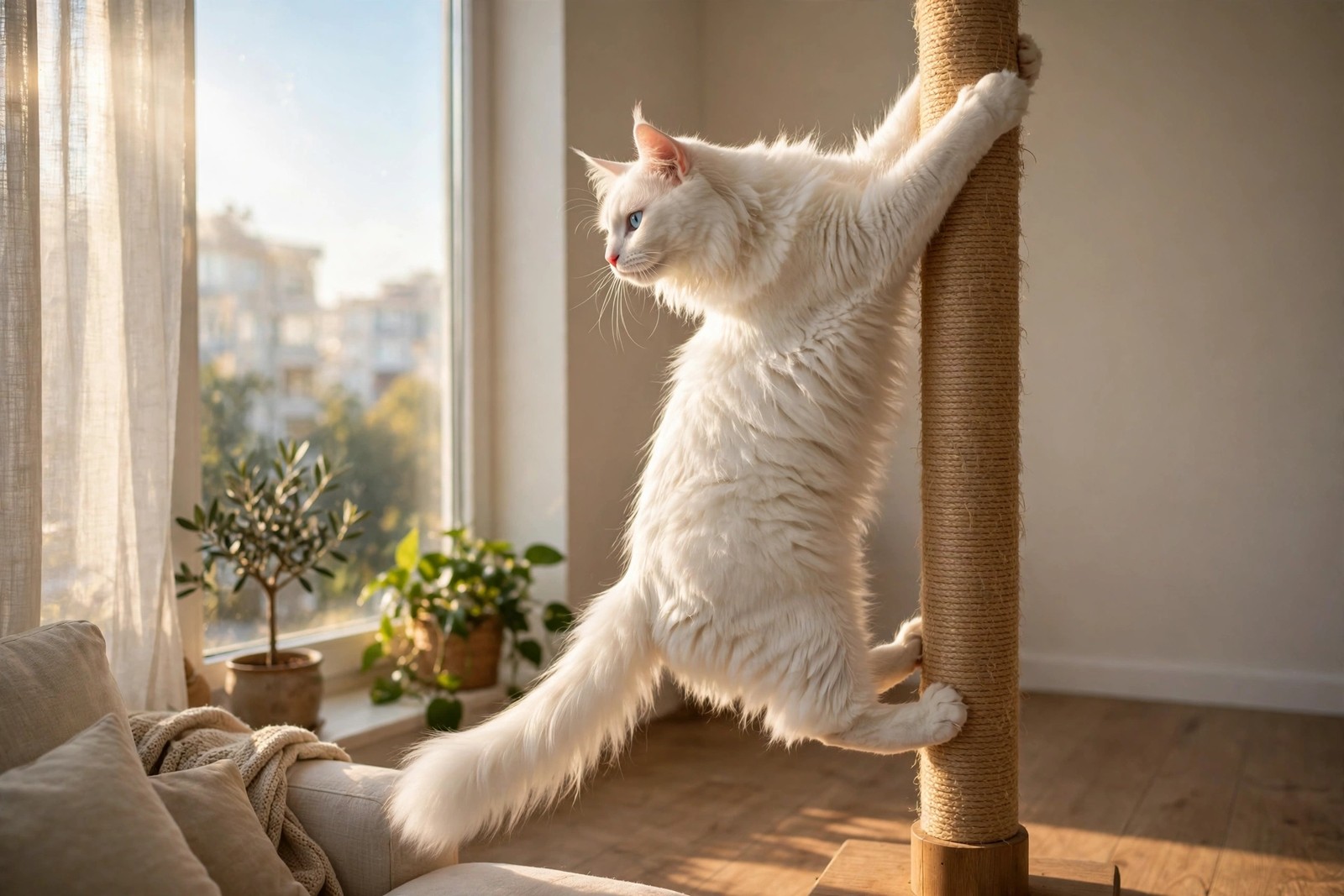
Yes — a Turkish Angora can be genuinely happy indoors, and indoor life also protects that long, fine, single coat from matting, dirt, and parasites. The condition is stimulation. This is not a placid lap breed that sleeps all day. Angoras are athletic, intelligent, and famously persistent: they investigate high shelves, follow their people from room to room, and often choose one favourite person to shadow.
Build the vertical home an Angora expects
Floor space matters less than height. Provide at least one tall, stable scratching post or cat tree, plus a cleared shelf or windowsill route so climbing has an approved destination. A window perch with a view of birds or street activity can occupy an Angora for long stretches. Keep fragile ornaments off the routes your cat actually uses, and secure any tall furniture that could tip if a determined cat launches from it.
Rotate small toys every few days rather than leaving a large pile out, and store wand toys away after play because string left loose is a swallowing hazard.
Play, training, and company
Plan two or three interactive play sessions a day, around ten to fifteen minutes each, ending with a small meal or treat so the hunt-catch-eat sequence completes. Angoras often learn quickly, so short reward-based training sessions — teaching a high-five, a recall, or walking to a mat — give their minds real work. Many also enjoy fetch with a light toy.
This breed bonds closely and can become frustrated if left alone for long stretches every day. If the household works full days, consider a companion cat introduced carefully, extra puzzle feeders for the empty hours, and a midday visit where possible. Watch for frustration signals specific to an under-stimulated Angora: night-time yowling, racing circuits at dawn, chewing wool or fabric, and pestering that escalates into ankle-grabbing during play.
Health and grooming indoors
Indoor Angoras still need routine veterinary care, parasite control as your vet advises, and attention to litter habits. The silky coat needs combing once or twice a week to prevent tangles, especially behind the ears and under the front legs. White Angoras in particular should be kept out of strong sun behind glass for long periods, because pale ears can burn.
Feed measured meals rather than leaving food down all day. An indoor cat with constant access to food and too little play gains weight quickly, and an agile breed can hide extra weight under a glamorous coat, so feel the ribs regularly and weigh your cat monthly.
When indoor life is not working
Reassess if your Angora is pacing at doors, spraying, over-grooming, or losing interest in play despite a rich setup. Rule out pain or illness with your vet first, then add enrichment, and only then consider safe outdoor access such as a secured enclosure or harness walks if your cat enjoys them.
KinsLe Care Teams supports that routine by letting your household assign and tick off your Angora's play sessions, combing, and litter checks, so the enrichment this breed needs actually happens every day.