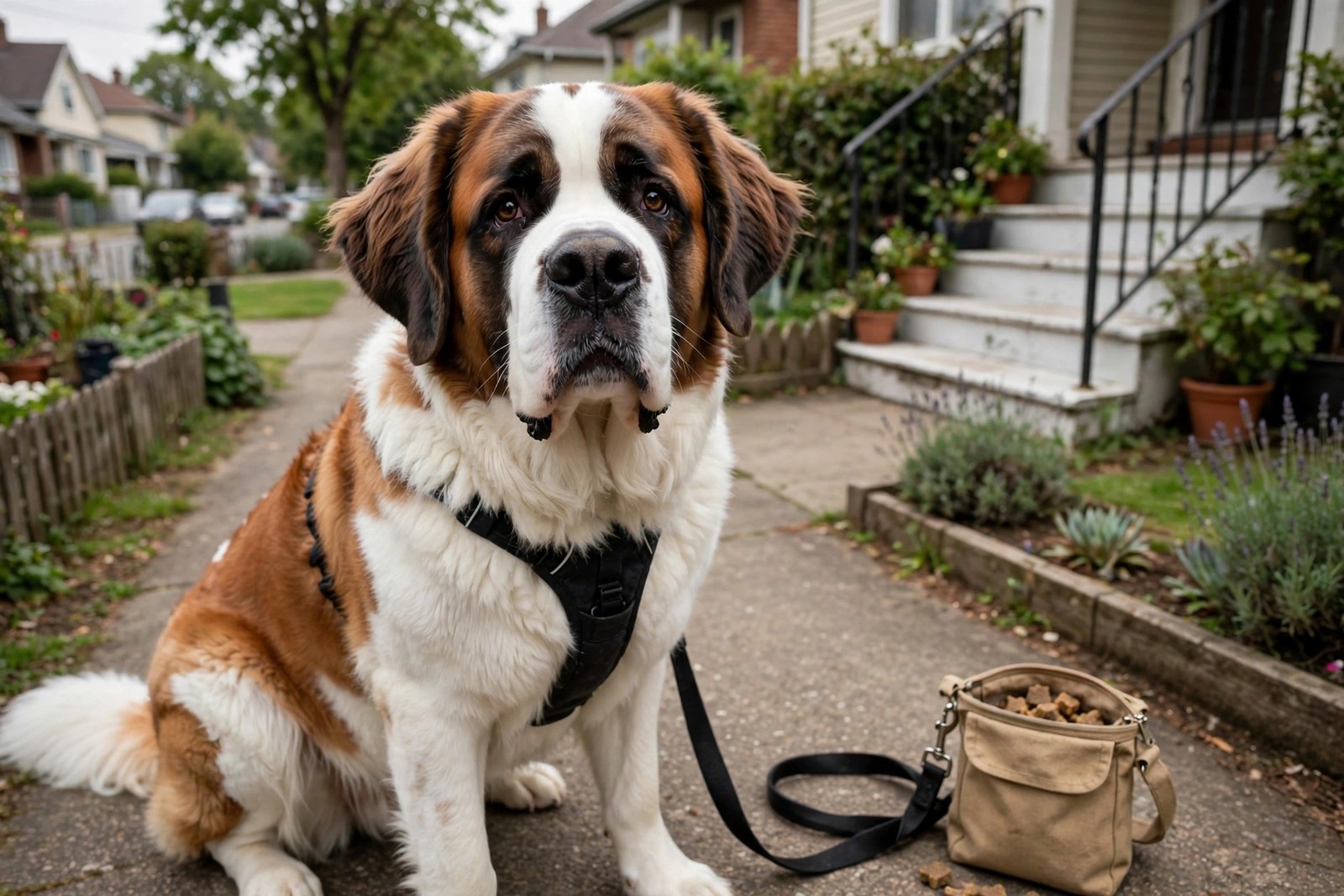
A modest garden is not the obstacle for a Saint Bernard; the staircase decides whether the house works. A fit adult can take ordinary stairs in stride now and then, but daily life should be arranged downstairs, because repeated climbs load giant joints, a growing puppy should be carried or kept below, and an elderly or injured Saint is simply too heavy for anyone to lift. What the breed asks of a home is floor space to stretch and turn, cool rooms, and secure fencing — not acreage.
What Owners Need to Know
Judge the house by the dog's body, not by the breed's postcard image. A Saint needs a turning circle in the rooms he uses most, doorways he can pass without squeezing, and floors that do not send a heavy dog skidding when he rises. Heat matters as much as space: thick-coated giants overheat indoors, so a cool resting room counts for more than an extra bedroom upstairs. The garden's job is modest — a toilet area, shade, and room to amble — while real exercise happens on walks of around half an hour to an hour at a steady, unhurried pace.
Steps That Make the Difference
Set the house up around the stairs before the dog arrives:
- Keep bed, water and feeding on the ground floor from the first day
- Carry puppies on stairs, or confine them downstairs while their joints develop
- Fit a sturdy gate so an adult Saint cannot charge the stairs uninvited
- Lay non-slip runners where a heavy dog turns, rises or hurries to the door
- Check that garden fencing is high and sound enough for a leaning giant
- Plan now for old age: a ground-floor sleeping spot that works when stairs stop being possible
- Keep a ramp or wide, shallow route to the car for vet trips
If every bedroom and the only living room sit up a steep, narrow flight with no downstairs alternative, that layout — not the garden's size — is the honest reason to reconsider the breed for this house.
Day to Day, Done Well
Ground-floor living suits the breed's rhythm. Saints alternate short, moderate outings with long, committed rest, and a cool floor near the family is their preferred headquarters. Feed where the dog eats calmly without guarding a bowl in a busy doorway, keep fresh water downstairs at all times, and watch weight closely, because every extra kilo is carried by joints already managing a giant frame. Note changes in how he climbs, rises or settles; a dog who hesitates at a step he once took easily is giving information worth a vet conversation. And if circumstances change and another home becomes the right answer, KinsLe supports that handover through Transferrable Profiles: his feeding notes, vet history and daily routines travel with him to whoever cares for him next.