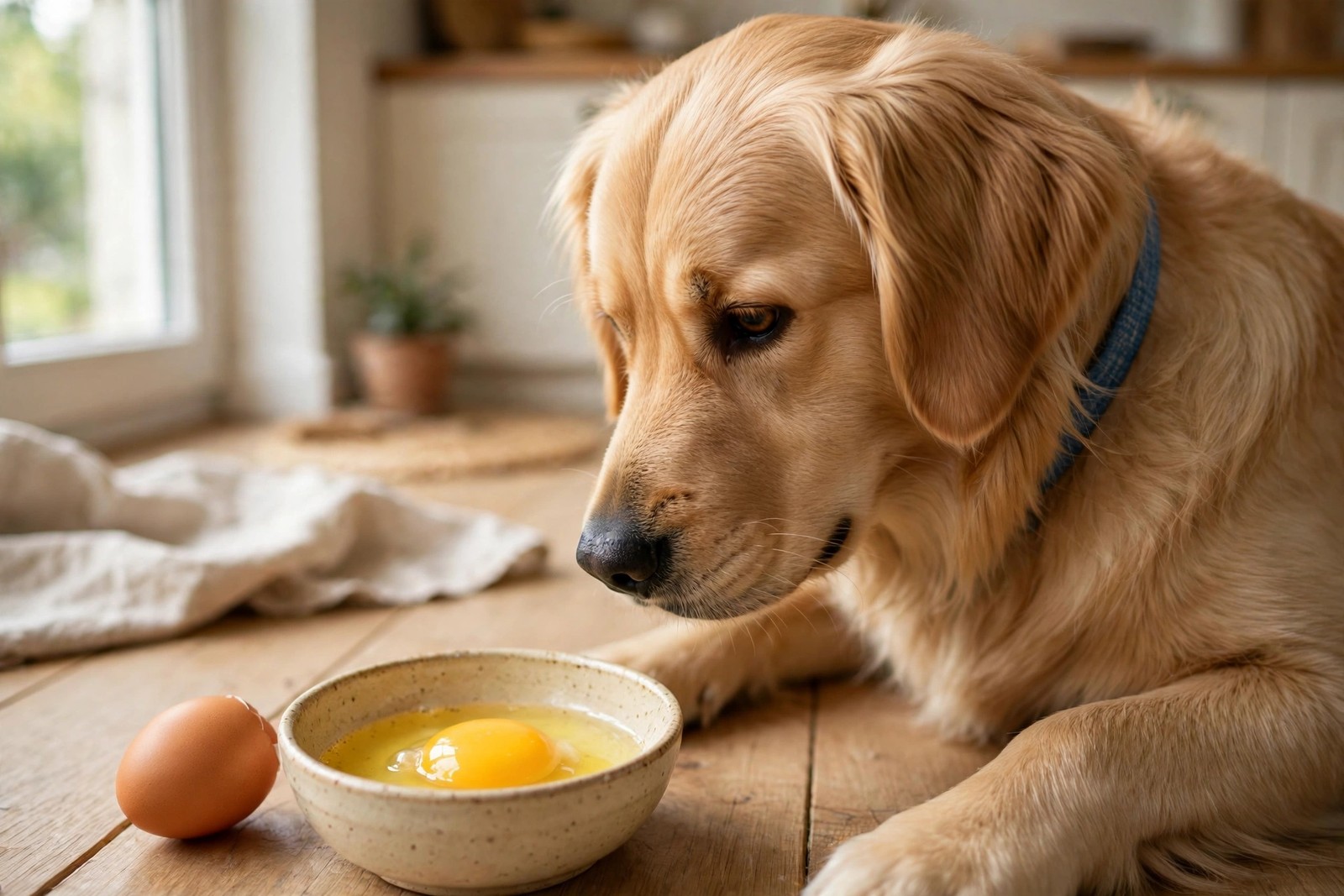
Eggs themselves are not the problem — dogs digest cooked egg very well, and plainly cooked egg is a useful, protein-rich extra. Serving the egg raw is where the trouble enters, because the raw version carries risks for the dog and for the household that the cooked version simply removes, while offering nothing extra in return.
The Two Risks Inside a Raw Egg
The first is salmonella. Raw shell eggs can carry the bacteria, and a dog who eats them may develop vomiting, diarrhoea and fever — or may shed the bacteria in stools and on bedding while looking perfectly well, which is how the risk reaches the people who wash the bowls and cuddle the dog. The second risk is quieter: raw egg white contains avidin, a protein that binds biotin, one of the B vitamins, and blocks its absorption. A single raw egg is unlikely to matter on that front, but fed regularly, raw whites work against the vitamin status of the whole diet. Cooking answers both problems at once, destroying the bacteria and deactivating the avidin while leaving the protein intact.
Cooked Egg Keeps Everything Worth Having
Boiled egg, chopped, or egg scrambled in a dry non-stick pan with nothing added gives a dog the same protein, the same digestibility and the same enthusiasm at the bowl, with none of the raw version's baggage. There is no need for butter, oil, milk, salt or seasoning — all human refinements that add fat or salt a dog does not need. Shell is sometimes offered as a calcium source, but it is not necessary for a dog eating a complete food, and this article's simpler rule avoids the question altogether: cook the egg, skip the extras, and let the dog's normal diet do the nutritional heavy lifting.
Serving Cooked Egg Sensibly
Folded into the week's routine, cooked egg is easy to manage:
- Boil or scramble the egg plainly, with nothing added to the pan
- Chop it small and mix it through the normal meal, or offer it as a training extra
- Keep it occasional — an egg shared across the week, not a daily second breakfast
- The first time, serve a small amount and check the next day's stools
- Wash hands, bowls and surfaces after handling raw eggs, for the household's sake
Those habits keep egg where it belongs in a dog's life: a small, safe pleasure with a clear place in the week.
When an Egg Disagrees With Your Dog
An occasional dog finds even cooked egg rich, and answers with loose stools or gas; that is individual information, not a disaster, and the response is simply to retire egg from that dog's menu. Repeated vomiting or diarrhoea after any new food, a dog who goes off meals entirely, or signs in a puppy or senior who declines quickly, are reasons to stop experimenting and call your veterinarian with the details of what was eaten and when. Keep new foods to one at a time and you will always be able to give that account clearly.
With Care Teams in KinsLe, the cooked-eggs-only rule can sit inside the written feeding plan itself, so whoever prepares the dog's breakfast sees it, follows it, and records when the job was done for the rest of the household.