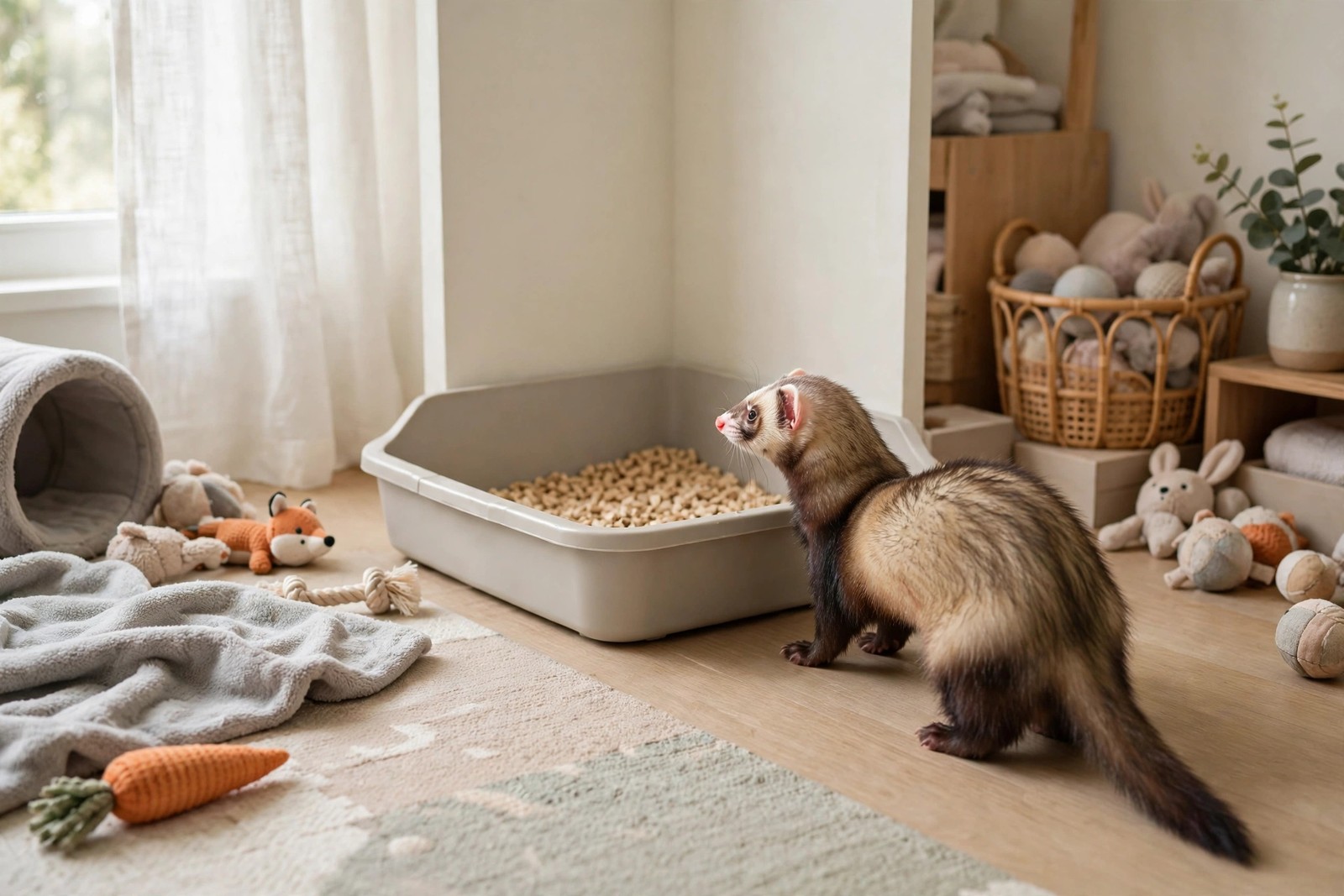
Yes, ferrets can be litter trained, often to a good standard, as long as you build the system around how a ferret actually behaves. A ferret does not seek out a designated toilet the way a cat does. It backs into a corner, tail end first, and goes where it stands. That single habit is the whole training plan: instead of teaching the ferret a new location, you place the right equipment in the locations the ferret has already picked, and then you keep those boxes clean enough that the ferret keeps choosing them.
Boxes Go Where the Ferret Already Chooses
Start by watching before you buy anything. Let the ferret settle into its cage and its play space and note which corners it uses; most ferrets show clear favorites within a day or two. Put a box in each chosen corner rather than moving the habit to a corner that suits you better. Fighting the ferret's selection rarely works, because the corner, not the box, is what the ferret chose. When a box lands in the right corner, many ferrets begin using it with almost no further teaching, since you have simply made their toilet official.
Choose low-sided corner boxes shaped to fit the angle of the wall. A ferret in urgent need will not scale a high tray wall, and a box with one low entry side lets it back in quickly and comfortably. Secure boxes so they do not tip or slide when the ferret digs, line them with a suitable litter or a liner the ferret tolerates, and scoop them often. A dirty box is the fastest way to teach a ferret to use the floor beside the box instead.
Expect a Good Hit Rate, Never a Perfect One
Set your expectations at the ferret's biology. A ferret that has just woken up needs to go almost immediately, and a sleeping ferret that wakes in a play area will use the nearest corner rather than travel to a distant cage box. Digestion is quick and urgent in this species, so distance is destiny: the box must be close when the need arrives. Even a well-trained ferret misses sometimes, particularly when excited, unwell, or playing somewhere new, and a realistic household plans for a strong majority of hits with occasional cleanups, rather than demanding cat-like perfection the species cannot deliver.
That is why boxes live in the play area too, not only in the cage. Every room where the ferret runs loose needs at least one corner box, ideally placed in the corner the ferret tests first in that room. Praise and a small treat right after a box is used reinforce the habit far better than scolding a miss you found later, which the ferret cannot connect to the act at all. Clean misses thoroughly so the spot does not smell like an approved toilet next time.
Keeping Boxes Clean Is a Shared Job
The system holds together on cleaning and placement, which makes it a natural fit for KinsLe's Care Teams: the daily plan can give Leah the morning box scrub across the cage corners and Marcus the evening spot-check of the play-area boxes, noting any new corner the ferret has started testing. Fresh boxes get used; neglected boxes get bypassed, and a time-stamped record shows at a glance whether today's cleaning actually happened. In KinsLe, the Care Teams rotation can give Leah the morning box scrub and Marcus the evening spot-check, with misses noted beside the corner where they happened.