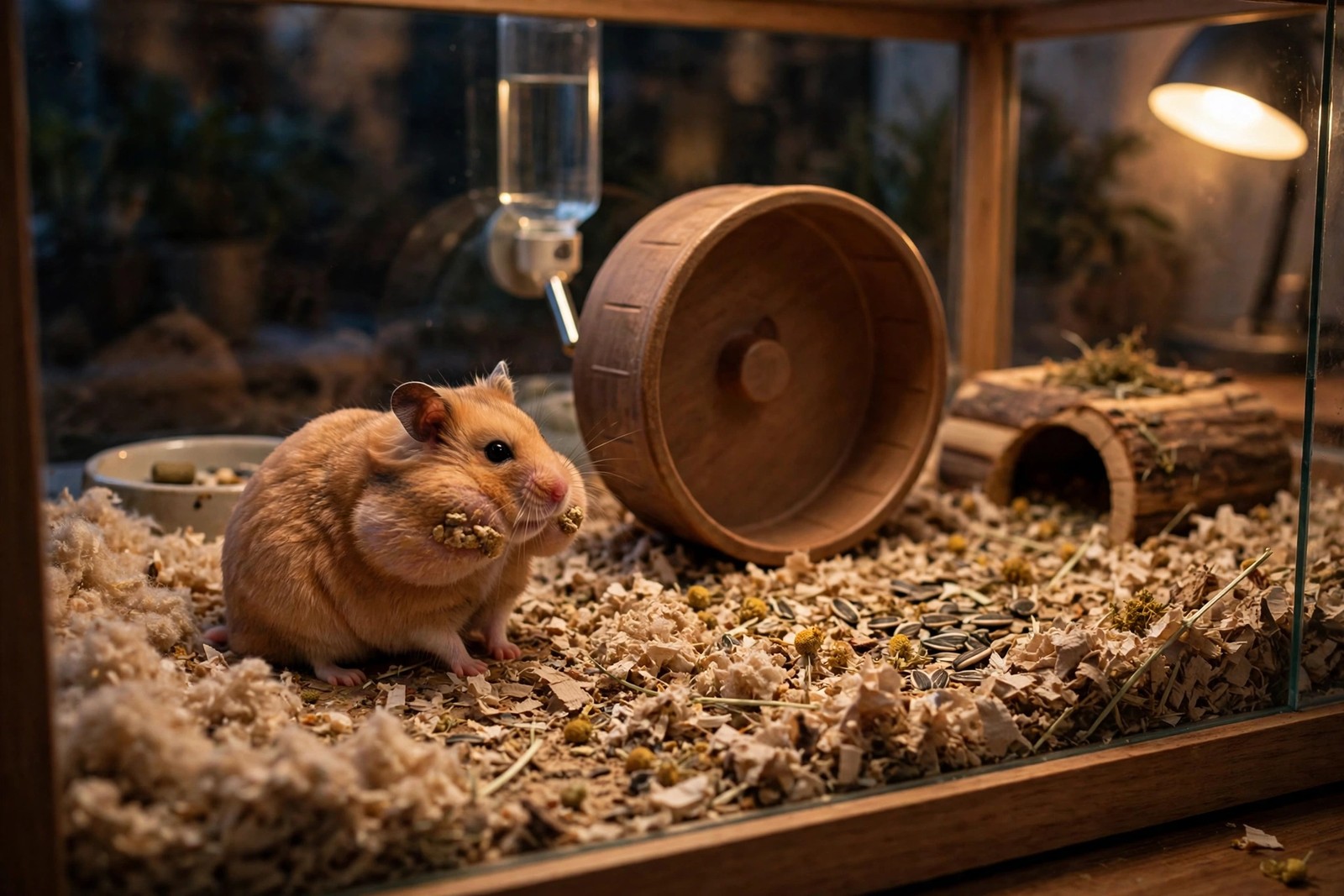
The pet shop cage with several hamsters piled together is the most misleading picture in small-pet keeping. Those are babies. Syrian hamsters, the large familiar species, become fiercely territorial as they mature at around eight to ten weeks, and from that point a second hamster in the enclosure is not company but an intruder. Owners who miss that transition can find one animal badly wounded or dead after a night that began peacefully, and because hamsters are nocturnal, the fight usually happens while the household sleeps.
Why Syrians Must Live Alone
In the wild, adult Syrians live in separate burrows and meet mainly to mate. They communicate by scent, and a shared cage gives neither animal any way to leave the other's territory, which is what turns normal territorial behaviour into a trapped fight. Stress signs in a forced pair include one hamster sleeping outside the house, weight loss in the animal being kept from food, squeaking, chasing, and small bite wounds around the face and rear that owners discover late under thick fur. There is no training, cage size, or introduction method that makes adult Syrian cohabitation safe, and neutering is not a routine or appropriate answer for this species. One Syrian, one enclosure, is the settled advice of vets and welfare organisations.
The Dwarf Pairing Exception, With Its Warnings
Campbell's, winter white, and Roborovski dwarf hamsters are sometimes kept in same-sex pairs or small groups, usually siblings raised together who have never been separated. Even then, keepers describe sudden fallouts months in, triggered by maturity, illness, or nothing visible at all. A dwarf pair needs a genuinely large enclosure, two wheels, two houses, two food and water points, and no dead-end spaces where one animal can corner the other. Scatter feeding reduces food guarding. You must also own a complete spare setup before you need it, because separation, when it comes, is permanent and immediate; reintroducing a fighting pair rarely works and risks a repeat of the injury. Many experienced keepers now house dwarfs singly too, judging that the risk outweighs a benefit the animals do not clearly need.
Setting Up One Hamster Properly
A solo hamster is not a bored hamster if the enclosure does the work: deep bedding for burrowing, a solid-surface wheel sized so the back runs straight, chew items, tunnels, a sand bath for dwarf species, and food scattered or hidden to encourage foraging. Handle a new hamster only after a few settling days, in the evening when it wakes naturally, and never wake it from deep sleep for company. A solitary animal that builds nests, runs nightly, hoards food, and takes treats calmly from fingers is showing contentment in hamster terms, even though it would never choose a roommate.
If You Already Have Two Together
Do not wait for a fight to confirm the advice. Watch for chasing, one animal monopolising the wheel or house, and any wound, then separate at the first sign rather than after it, into fully independent setups that do not share items carrying the other's scent in a way that keeps tensions up. If either hamster is injured, a vet visit is needed, since bite wounds in small animals infect quickly and are easy to underestimate. Keeping a separate KinsLe Pet Pass for each hamster, with its species, age, and housing clearly recorded, prevents the dangerous mix-up of a well-meaning helper returning a separated animal to the wrong enclosure.