
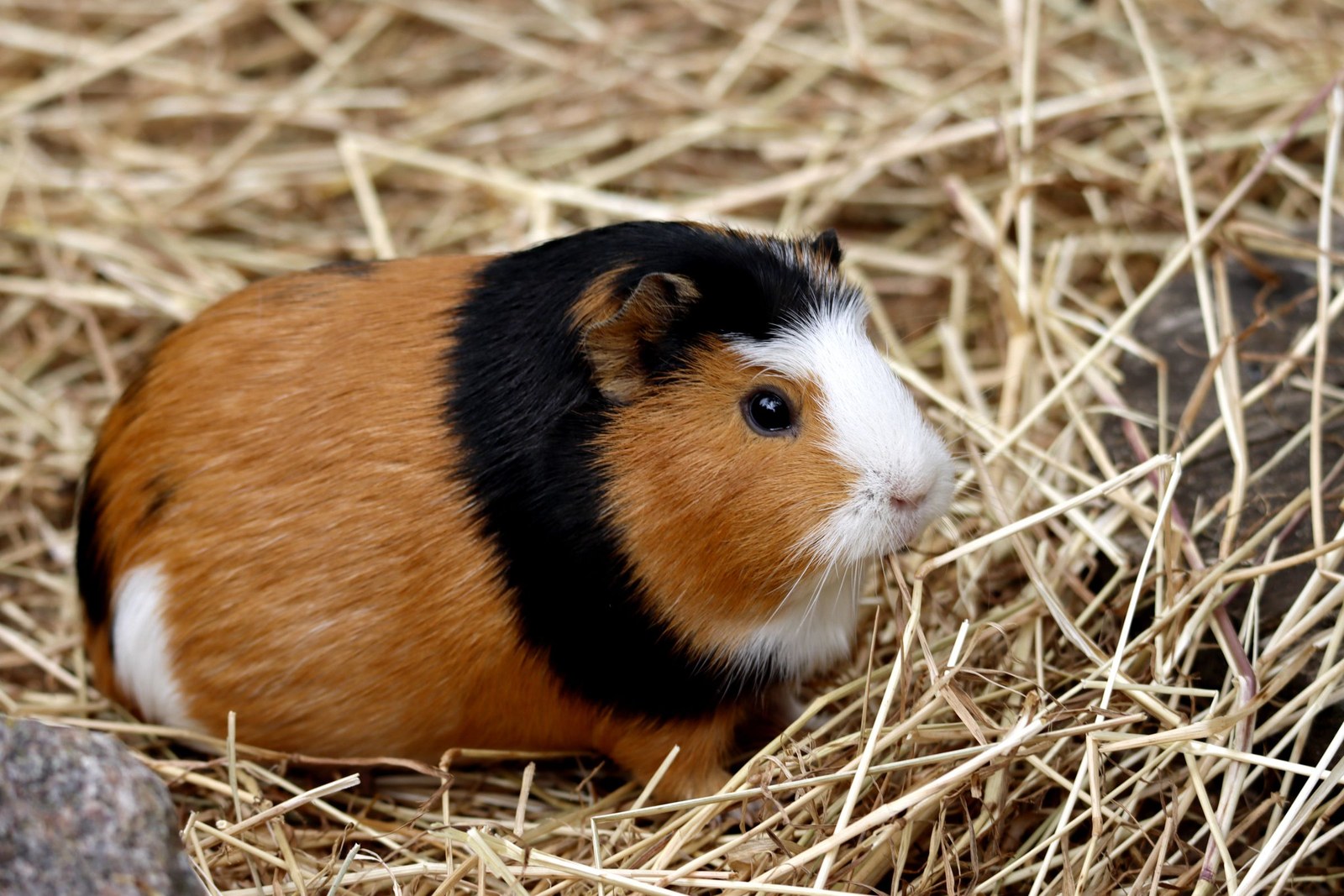
Yes — every guinea pig tooth grows continuously for the pig's whole life: the four front incisors you can see and the cheek teeth hidden at the back. That constant growth is normal and healthy as long as chewing wears the teeth down at the same rate, which is why unlimited hay and safe things to gnaw are not extras for a guinea pig — they are the dental care plan.
How the Wear System Works
A guinea pig's natural diet is abrasive. Long grass and hay fibres force long chewing strokes, and that grinding keeps both the visible incisors and the back molars at working length. Vitamin C matters here too, in a roundabout way: guinea pigs cannot make their own, and a pig short on vitamin C can develop sore joints and gums that change how it chews, which then changes how teeth wear. Fresh daily vegetables such as bell pepper, alongside a suitable diet, help keep the whole system honest.
Chew items support the process. Untreated willow or apple-wood sticks, woven hay toys, and cardboard tubes give pigs something to work on between meals. Avoid mineral stones marketed as tooth-wearers — pigs largely ignore them, and excess minerals are not helpful.
Signs the Balance Has Slipped
Because you cannot see the cheek teeth at home, behaviour is your early-warning system. Watch for a pig who approaches food eagerly but eats little, dribbles or drops half-chewed food, chews with a tilted or one-sided motion, or starts preferring soft vegetables over hay. Wetness under the chin, smaller droppings, and weight loss on your weekly weigh-in all strengthen the case. A pig whose front teeth look slanted or uneven when you gently lift the lip is showing you the visible tip of a bigger picture.
None of these signs diagnoses the problem by itself — mouth pain, jaw issues, and other illnesses can look similar — so they are prompts to book a vet check promptly, not conclusions.
What the Vet Does Differently
An exotics-savvy veterinarian can examine the back teeth with proper instruments, assess how the teeth meet, and decide whether any corrective treatment is needed. Only a vet should ever carry out dental work: never clip a guinea pig's teeth at home, because clipping can crack a tooth down its length and turn a manageable issue into a painful one. If your vet adjusts anything, ask what they found and note it down — pigs who have had one dental episode often benefit from closer monitoring afterwards.
Between visits, your best tools are boring ones: hay available at all times in more than one place, a weekly weight, and a quick look at the incisors while you are already doing health checks.
Turning Notes Into a Timeline
A single observation — "chewed oddly on Tuesday" — is easy to forget and hard to interpret a month later. A short dated trail of them is genuinely useful evidence at an appointment. KinsLe Messenger is the per-pet communications hub, and recording those weekly notes there gives you and your vet a clear timeline if chewing ever changes, instead of a guess about when it started. It also means a family member or sitter who notices something can add it to the same thread. For this guinea pig, the KinsLe Messenger thread on KinsLe holds scattered chewing notes, weekly weights, and dropped-food episodes in one dated sequence a veterinarian can follow from the first odd bite.