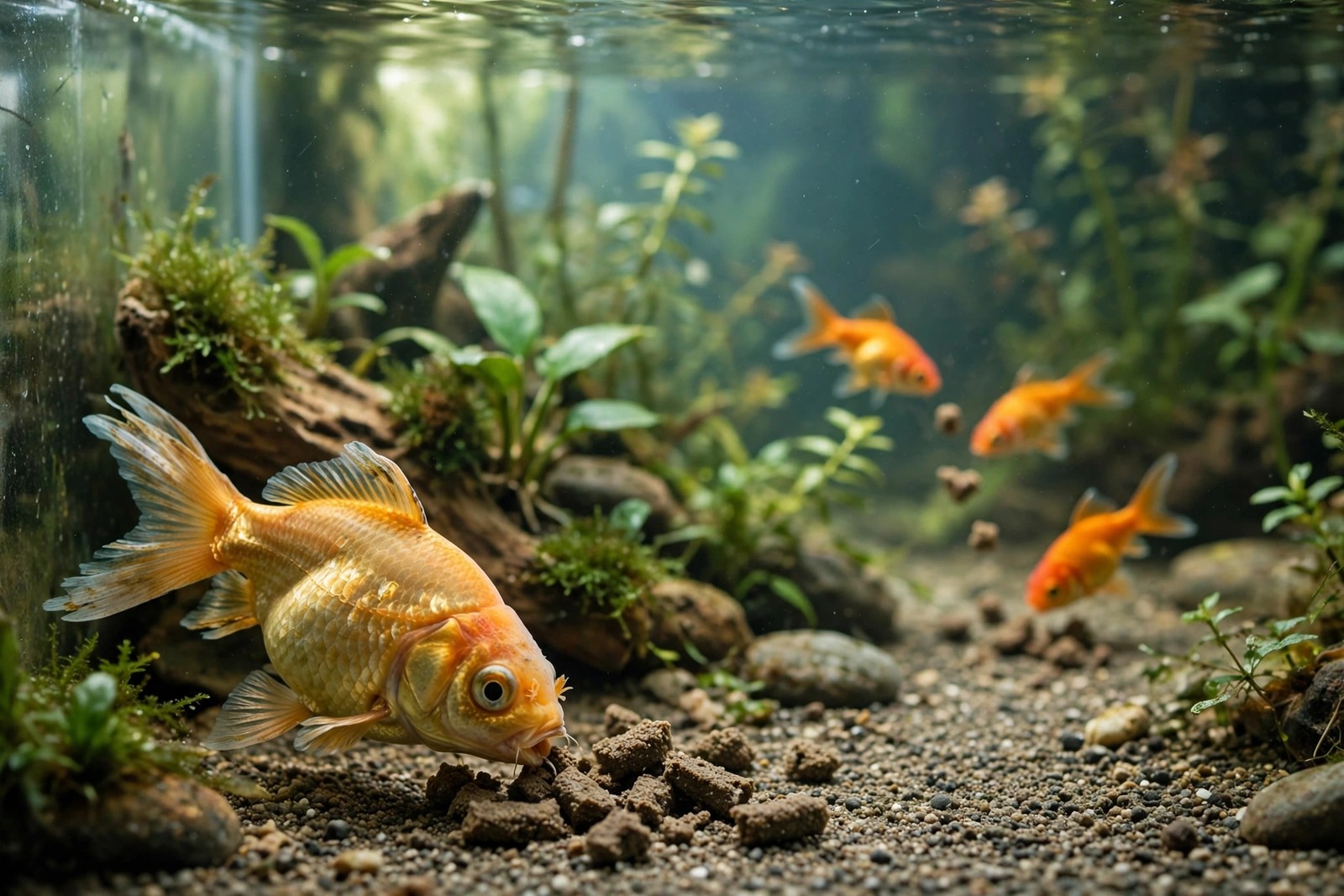
An old goldfish that once shouldered tankmates aside at the surface may, years later, arrive late to every feeding and leave thinner than it should be. Age changes a fish's mouth, digestion, eyesight, and stamina, so the food and feeding method that suited it at two years old can quietly fail it at ten. There is rarely a bag labelled senior fish food worth hunting for. The real adjustment is practical: make each mouthful smaller, softer, easier to find, and easier to digest, then make sure the old fish actually gets it.
What Changes in an Older Fish
Teeth in many species wear, and jaws weaken, so large hard pellets that were once crushed easily may now be mouthed and spat out repeatedly. Digestion slows and becomes less tolerant of very rich, high-protein feeding, which can leave an older fish bloated or constipated while uneaten food fouls the water. Eyesight and reaction speed decline in some individuals, and stiff fins or a curved spine make competing with younger, faster tankmates genuinely difficult. None of this is fixed by food alone, and a fish losing condition despite eating, developing lumps, buoyancy problems, or long trailing faeces, should be discussed with an aquatic vet, since those signs overlap with disease rather than simple ageing.
The Food Adjustments That Help
Pre-soak dry pellets and flakes in a little tank water for a few minutes so they soften and sink slowly instead of arriving as hard, expanding pieces. Move down a pellet size, crumble flakes smaller, and offer soft foods such as thawed frozen items chopped fine, soaked foods, and for herbivorous species, softened vegetables they can graze over hours rather than seconds. Feed little and often, two or three small meals instead of one large one, and reduce very fatty, rich items if digestion seems sluggish. For goldfish and other species prone to buoyancy trouble, sinking foods are usually kinder than floating foods that encourage gulping air at the surface. Variety matters more, not less, in old age, because a fish eating only one accepted food may be missing nutrients its younger body once extracted easily.
Feeding the Slow Fish in a Busy Tank
Technique often matters more than the food itself. Feed at the same calm corner each time, distract faster tankmates at the opposite end with their share, and give the older fish unhurried minutes before the current carries food away. A feeding ring, a turkey baster delivering food directly in front of a weak-sighted fish, or brief feeding in a separate container for a fish that is truly failing to compete can each be appropriate, with separation used gently and briefly to avoid stress. Remove uneaten food after a few minutes, because an older fish's tank cannot absorb waste spikes the way it once did, and water quality is the background condition under every senior fish problem.
Judging by Condition, Not by Birthday
Some fish stay vigorous and unchanged in diet into advanced age, while others need help surprisingly early, so let body condition lead. A healthy older fish keeps a gently rounded belly, steady weight, clear eyes, and interest at feeding time. Photograph your fish from above monthly to compare body width honestly, note which foods are accepted or refused and when appetite changes, and adjust one thing at a time so you know what helped. Recording that feeding history, from pellet size and soaking routine to weight trend and vet advice, inside KinsLe's Pet Passport gives anyone caring for your fish, including a vet meeting it for the first time, the full picture in one portable packet.